Appearance in the Lower House of Parliament
Pedro Sánchez, on the Adamuz accident: "The track complied with all control and maintenance protocols"
President's News - 2026.2.11
Lower House of Parliament, Madrid
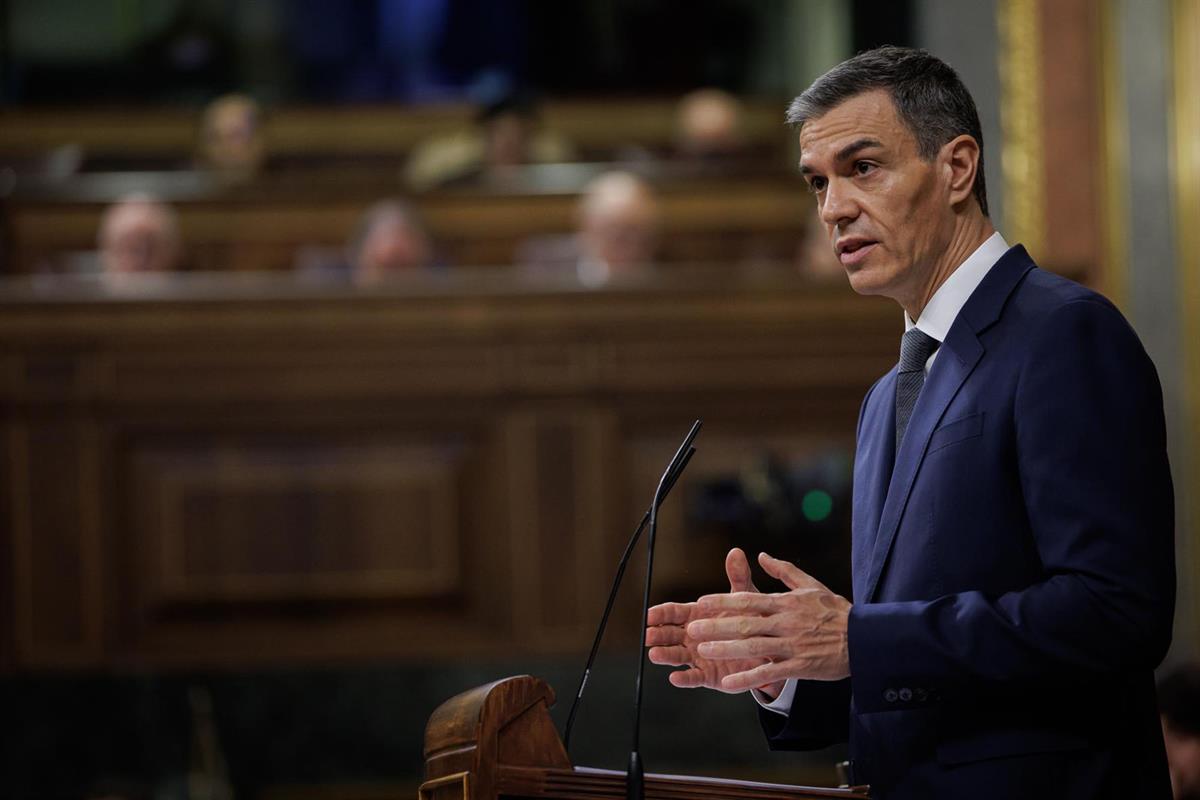 The President of the Government of Spain, Pedro Sánchez, during his appearance (Pool Congreso)





The President of the Government of Spain, Pedro Sánchez, asserted that the track where the Adamuz train accident occurred "strictly complied with all the control and maintenance protocols established by the Spanish and European authorities", after having been completely renovated in 2025, "in accordance with the highest quality standards", with an investment of €780 million.
"It is likely that one of the lessons we will learn from this terrible tragedy is that these protocols are not infallible. That the quality standards and control tests they comprise must be expanded and improved", the president added during his appearance before the Lower House of Parliament, where he reported on the ongoing investigation into the accident of 18 January.
Pedro Sánchez assured that the Government will be the first to strengthen these protocols, if it proves necessary, following the recommendations of the experts from the Railway Accident Investigation Commission (CIAF): "We will investigate rigorously, report transparently, and take the necessary measures to ensure that accidents like the one we mourn today never happen again", he concluded.
"One of the best railway systems in the world"
President Sánchez, who began his address by remembering the 46 victims of the Adamuz accident and the train driver who died in the Gelida accident, and by thanking all the institutions involved in the response to the disaster, passionately defended the Spanish railway sector.
"Despite its problems, our system is one of the best in the world. And I'm not the only one saying this; it is confirmed by the ninth report of the European Commission, the 'PRIME Report' of the Community infrastructure operators, and several studies by the European Federation for Transport and Environment", argued Pedro Sánchez, for whom the incidents recorded in such an "extensive and complex" infrastructure constitute "proof that the system detects, acts, and corrects".
At this point, the president refuted the accusations of underinvestment in railway infrastructure with data: "Since 2018, we have practically tripled investment, which has risen from €1.7 billion to nearly €5 billion in 2025". This investment effort has had "tangible" results, according to Pedro Sánchez, including an 11% reduction in accidents compared to the period 2012-2018, despite the fact that the number of passengers has increased by around 15%.
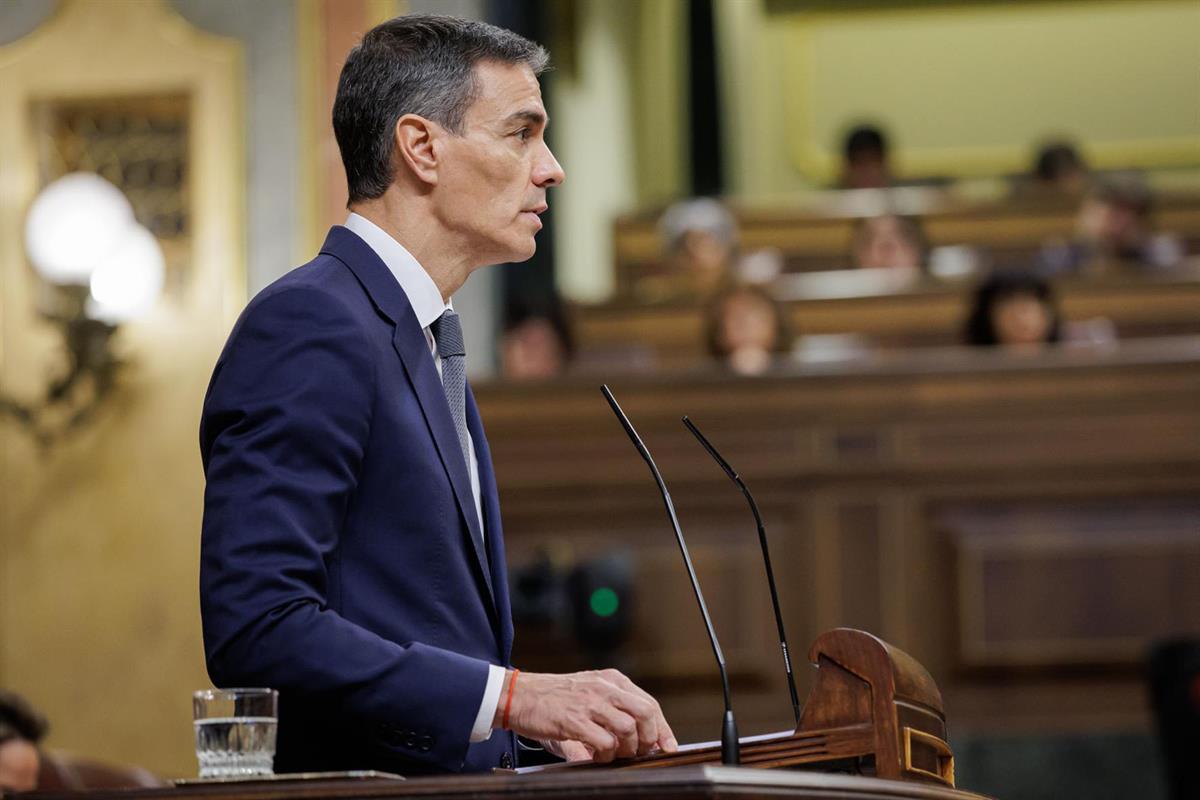 The President of the Government of Spain, Pedro Sánchez, during his appearance | Pool Congreso
Improvements agreed with the railway sector
During his appearance, the head of the Executive recalled the agreements reached with railway sector unions to strengthen the safety and satisfaction of passengers and workers: "We have agreed to increase investment in maintenance by €1.8 billion" and "we have also agreed to reinforce the Adif and Renfe workforces with 3,600 new positions in driving, stations, maintenance, and operations".
Furthermore, Pedro Sánchez indicated that the Government will "guarantee replacement rates of no less than 115% in the General State Budget" and "strengthen the State Railway Safety Agency with 50 additional professionals so that it can better carry out its inspection duties on the network".
The final measures he referred to are the creation of "a committee for the harmonisation and coordination of shared safety management, a group to monitor temporary speed restrictions and infrastructure, and another group for weather alerts".
Protection for travellers and support for victims
The President of the Government of Spain referred several times during his address to the government's commitment to the present and future of the victims of the Adamuz and Gelida accidents.
Pedro Sánchez recalled that on 27 January, the Council of Ministers approved a Royal Decree-Law to advance up to 20 million euros in accident insurance compensation and that physical and psychological support units have been established for the victims, in addition to Comprehensive Care Offices to facilitate the management of aid.
Along the same lines, he mentioned the entry into force of the Royal Decree-Law to prevent mobility companies from increasing their fares in emergency situations. The regulation establishes that when an emergency situation is declared, the price of goods and services cannot exceed the maximum price they had in the 30 days prior to the emergency.
The head of the Executive concluded his address by reminding the victims and their families that "the Government will stand by them today, tomorrow, and for as long as necessary". He also stated that they will reinforce the resources needed to improve the efficiency, safety, and punctuality of the railway. "We will invest in rail to bring people closer together, to integrate our regions, and to ensure that Spain continues to be a global leader in sustainable mobility", he concluded.
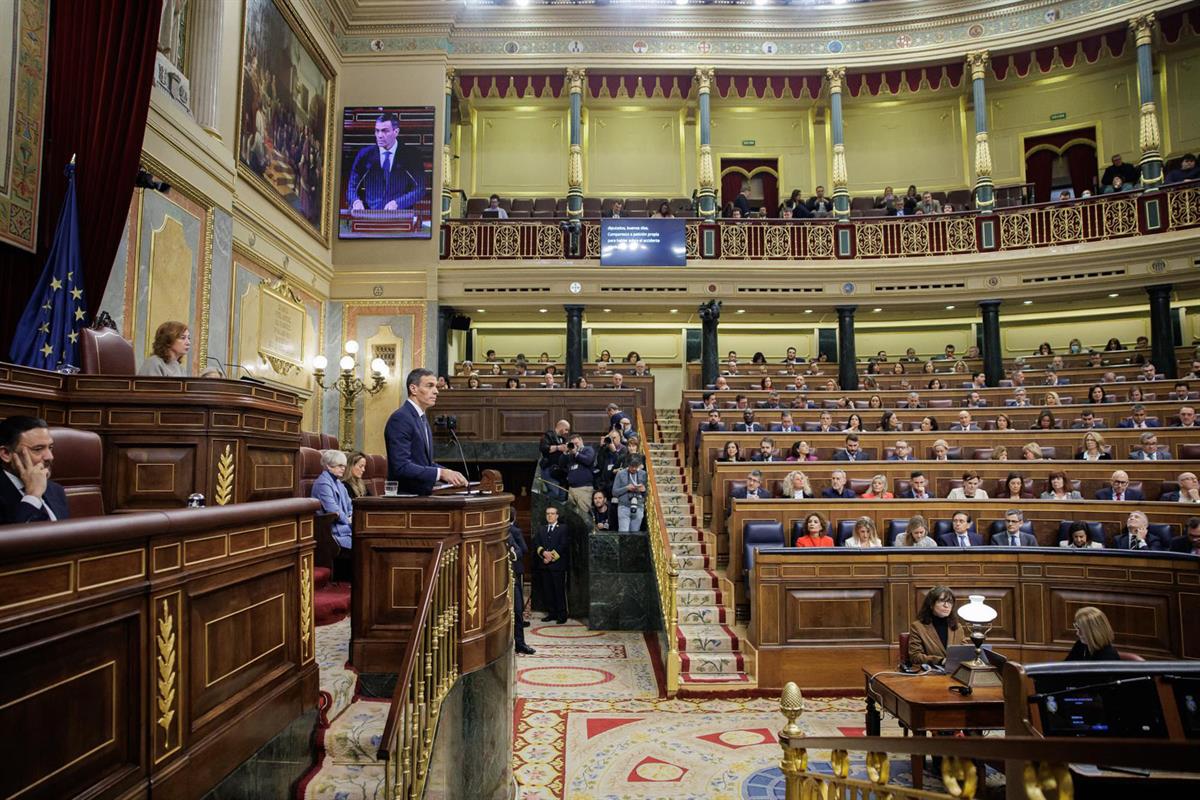 The President of the Government of Spain, Pedro Sánchez,, during his appearance before the Plenary Session of the Lower House of Parliament | Pool Congreso
International news: Iran, Venezuela and Ukraine
During the rebuttal period, President Sánchez added to his initial remarks an analysis of current international political issues, including the situations in Iran, Venezuela, and Ukraine. On the first issue, the president reiterated the government's "absolute and unequivocal" condemnation of the Iranian regime's actions.
With reference to Venezuela, Pedro Sánchez recalled that his government has joined countries like Colombia and Brazil in opposing the United States' intervention in Caracas. According to the president, this operation "sets a very dangerous precedent in the world and doesn't even seem likely to help initiate a democratic transition in the country", where "it is the Venezuelan people who must decide their own destiny with the support of the international community and without interference".
On Ukraine,the president acknowledges the lack of progress in the situation and insists on his support for the Ukrainian government: ""We will continue to support Ukraine in its fight for freedom", he affirmed, recalling his recent meeting with the Speaker of the Rada and that the European Commission is designing a prosperity package for the country, which Spain will also support, in accordance with "respect for international law and the multilateral order".
Greenland, Mercosur and Palestine
Also in line with the vision of respect for global law, the head of the Executive welcomed the change in the US administration's stance on Greenland, although he pointed out that this issue has not been resolved: "The underlying problem remains, and it is the idea that international rules are for everyone to comply with except one, that their validity is intermittent, and that they can be threatened to coerce countries that claim to be allies. Europe should not accept this international governance," he said.
In this complex context, Pedro Sánchez again celebrated the signing of the Mercosur agreement as "extraordinary news for Europe and Spain" and conveyed to farmers that the government is aware of the doubts this agreement may generate. In this regard, he highlighted the compensation mechanisms that the European Commission has established to protect them from potential market disruptions, should they occur.
Finally, the president addressed the situation in Gaza, where Spain has declined to join the Board of Peace organised by the United States, which Pedro Sánchez summarised as "an attempt to privatise the multilateral order". "Our commitment to peace in the Middle East remains unwavering", the president affirmed. "We will continue to be a strategic ally of Palestine and we will try to persuade the Israeli government that the best option is the recognition of two states".
Non official translation