Council of Ministers
The Government of Spain approves 21 measures to facilitate access to housing
Council of Ministers - 2026.10.6
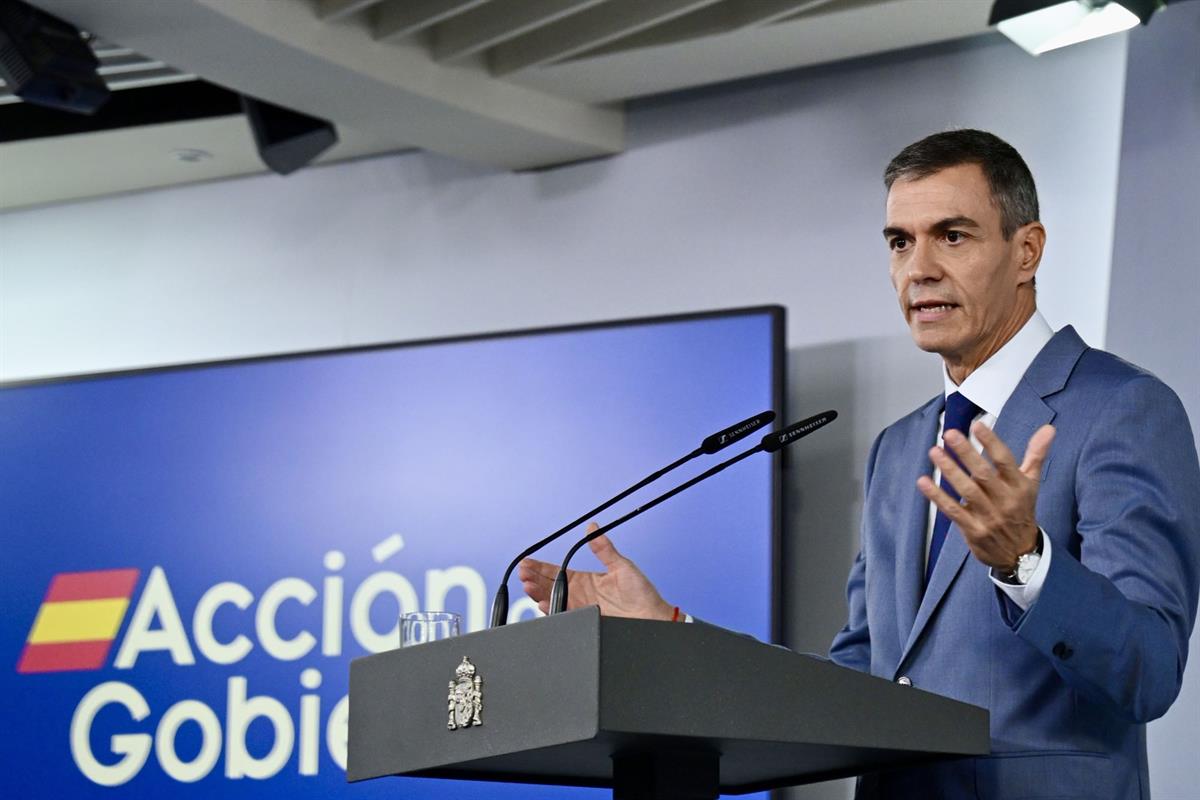
Pedro Sánchez during his speech after the Council of Ministers | Pool Moncloa/Borja Puig de la Bellacasa y Sandra Armada. 2026.10.6
-
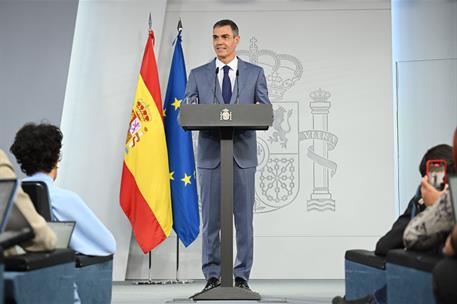 The President of the Government of Spain during the press conference held at Moncloa...
-
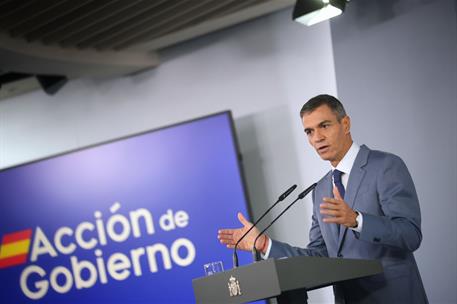 The President of the Government of Spain, Pedro Sánchez, during his speech to the media
-
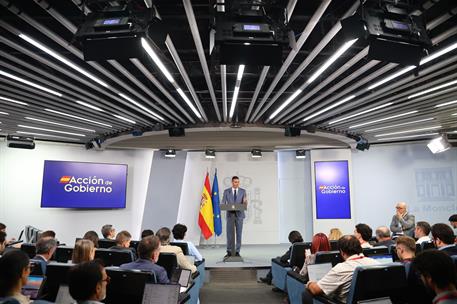 The President of the Government of Spain, Pedro Sánchez, during the appearance to explain...
-
 Pedro Sánchez during his speech after the Council of Ministers








Moncloa Palace, Madrid
The Council of Ministers has approved two Royal Decree-laws to tackle what, in the view of the President of the Government of Spain, Pedro Sánchez, is "one of the issues of greatest concern to the public": access to housing. At the press conference following the Cabinet meeting, the head of the Executive explained that the texts retain the essence of those approved by the Council of Ministers on 29 September, which lapsed as they were not ratified by the Lower House of Parliament. Alongside these "reasonable and necessary" measures, some other "very positive" ones have been added today, noted Pedro Sánchez. As the dissolution of Parliament and the calling of a general election were published today, the regulations must now be ratified by the Permanent Deputation of the Lower House of Parliament.
The president emphasised that these initiatives are "the result of many months of technical analysis and dialogue" with social organisations, the property sector, landlords' and tenants' associations, and parliamentary groups. "And these measures, if you ask me, are based purely on common sense and humanity", said Pedro Sánchez, who argued that they benefit small property owners and tenants and only harm "those who view housing as just another commodity to be speculated upon". The head of the Executive also emphasised that the measures enjoy "absolutely cross-party support that transcends ideologies", which demonstrates "that the public is strongly in favour of intervening in a market that does not operate according to the logic of supply and demand - a dysfunctional market that requires regulation".
Tax incentives, loans and an increase in the housing supply
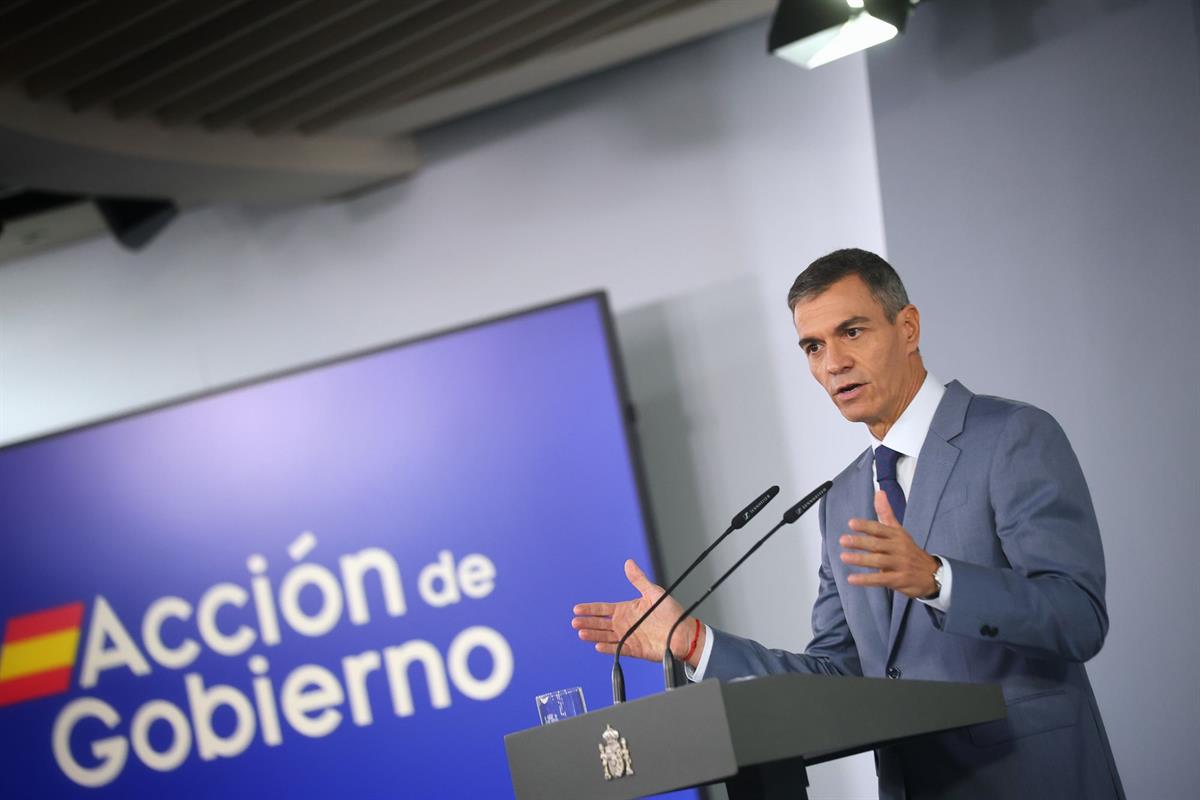 The President of the Government of Spain, Pedro Sánchez, during his speech to the media | Pool Moncloa/Borja Puig de la Bellacasa y Sandra Armada
The two Royal Decree-laws encompass 21 measures focused on four key objectives, as stated by Pedro Sánchez.
The first is to facilitate access to affordable rental accommodation and home ownership. Tenants, for one thing, will be able to claim a tax deduction on their income tax return for part of their rent. In the case of a rent of €800 a month, for example, the deduction will be around €1,000. Small landlords, on the other hand, will benefit from a tax incentive if they let their property at affordable rates. In addition, a €10 billion funding scheme is being set up to offer interest-free loans of up to €50,000 to those wishing to buy their first home. Managed by the Official Credit Institute (ICO), this scheme is designed to benefit all generations, although Pedro Sánchez emphasised that the initial deposit for a mortgage is the biggest obstacle to young people becoming independent.
A second key objective of the decrees is to increase the housing supply. To this end, €280 million are being allocated to guarantees to promote industrialised housing construction, which helps to shorten construction times and, consequently, increase the housing supply more quickly. A further €400 million will be allocated to support social housing providers. In addition, the public body Casa 47 is set to acquire thousands of properties from the Social Security system to facilitate access to housing for the most vulnerable groups.
Greater stability for tenants and small landlords
Thirdly, the decrees will serve to "provide reassurance and stability", according to the President of the Government of Spain. One of them extends the tenancy agreements of those who are up to date with their rent payments by up to two years and caps rent increases. The other decree provides for the automatic renewal of these tenancy agreements upon expiry, except in certain circumstances. Pedro Sánchez acknowledged that there is currently not a sufficient parliamentary majority to ratify this second decree; consequently, it will not come into force at the same time as the first decree - that is, following its publication in the Official State Gazette - but only after the Permanent Deputation has ratified it, should that happen.
The president emphasised the importance of establishing "clear rules" on when contracts are renewed, when they end and in which cases the owner can reclaim their property, as small landlords "are also an important part of the equation in resolving the housing crisis". The legislation approved today also includes provisions to protect vulnerable people with no alternative housing, "without this burden falling on small landlords, whom we protect with additional safeguards".
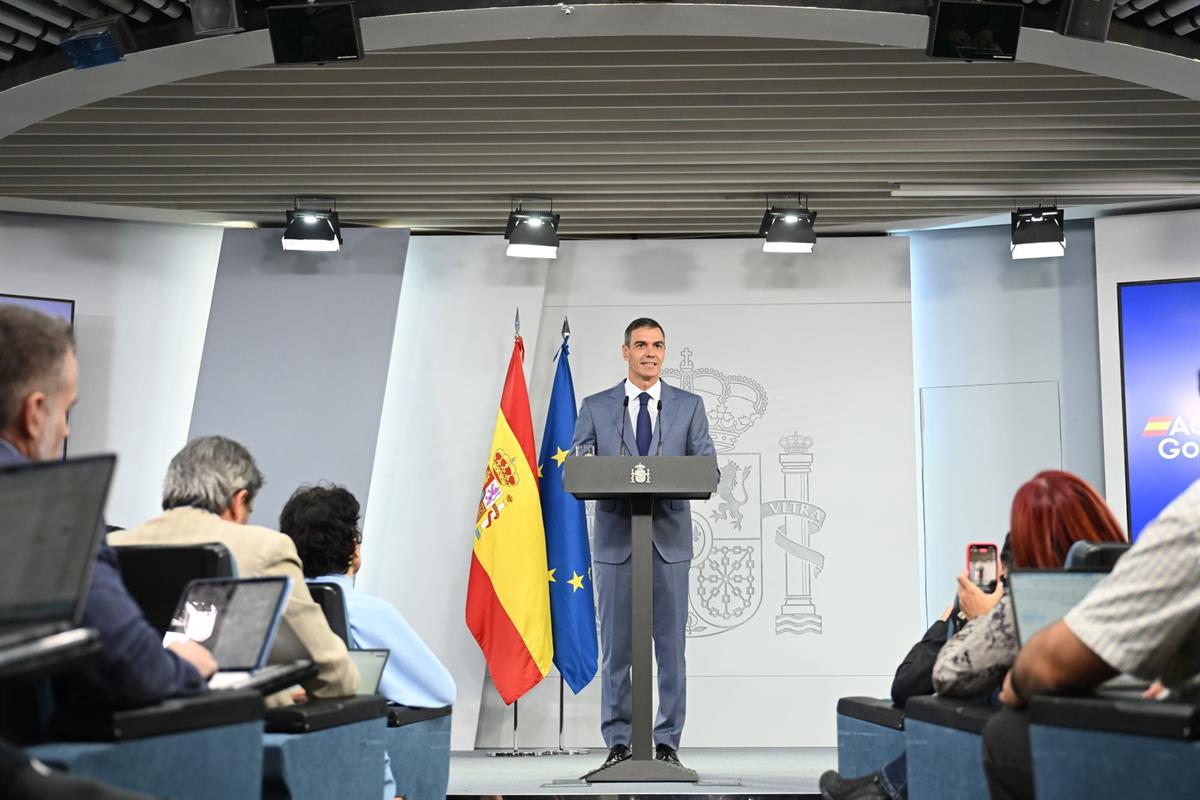 The President of the Government of Spain, Pedro Sánchez, appears at a press conference after the Council of Ministers | Pool Moncloa/Borja Puig de la Bellacasa y Sandra Armada
The fourth key objective of the legislation is to combat speculation and regulate seasonal and room rentals. The decrees restrict the purchase of property by so-called 'vulture funds', link the tax benefits of Listed Real Estate Investment Companies (Socimi) to affordable rental accommodation, and require tourist flats "to be taxed as what they are: a business", as Pedro Sánchez stated.
Other agreements of the Council of Ministers
The Government has authorised the urgent administrative processing of the Royal Decree on information to be provided prior to consent in cases of voluntary termination of pregnancy. The aim of the legislation is to ensure that women who exercise this right receive accurate, clear, objective, accessible and appropriate information, regardless of where they live.
Furthermore, the Council of Ministers has increased the budget allocated to subsidising the purchase of agricultural insurance in 2026 to €372.6 million. This represents an increase of more than 18 per cent on the initial budget.
In addition, the Government has approved four new basic civil protection guidelines designed to strengthen the capacity of public authorities to deal with emergencies arising from accidents involving hazardous substances, earthquakes, volcanic eruptions and situations requiring self-protection measures.
Non official translation