Council of Ministers
The Government of Spain allocates €7 billion to mitigate the effects of the storms in Andalusia and Extremadura
Council of Ministers - 2026.2.17
Moncloa Palace, Madrid
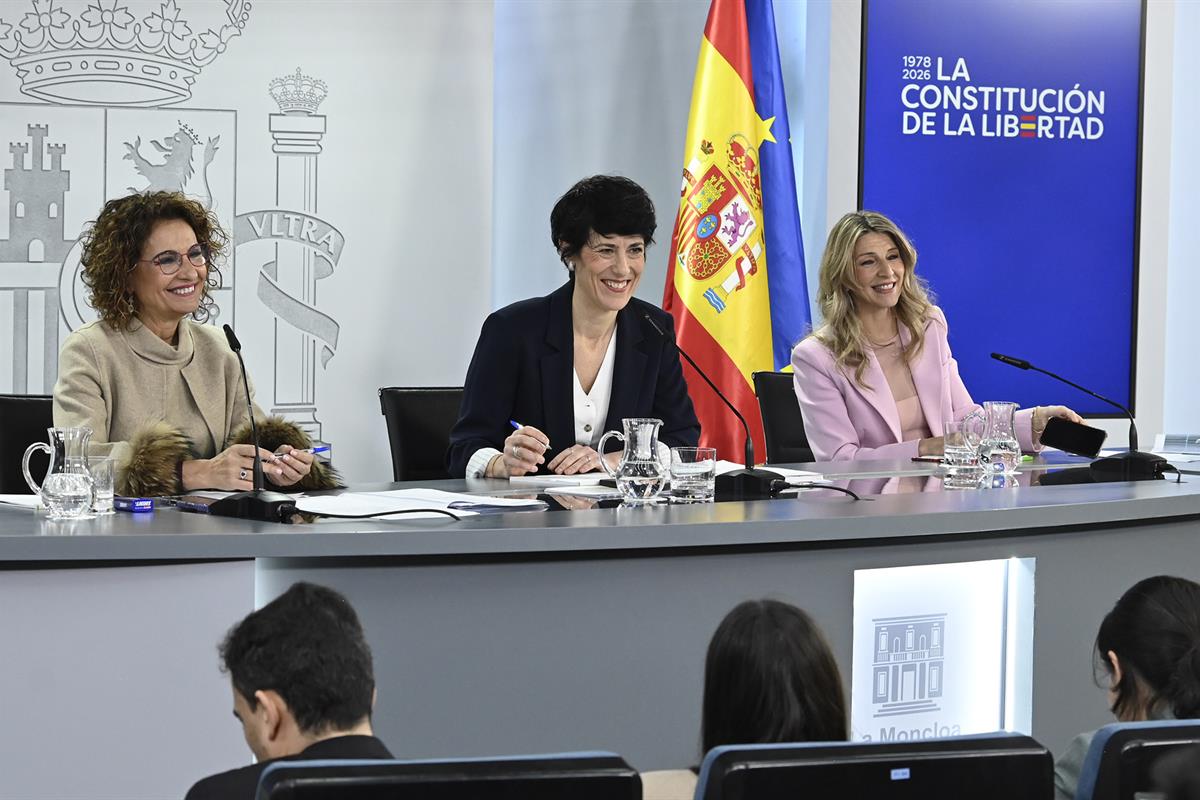 The First Vice-President and Minister for Finance, María Jesús Montero; the Government Spokesperson, Elma Saiz; and the Second Vice-President and Minister for Labour and Social Economy, Yolanda Díaz, at the press conference after the Council of Ministers (Pool Moncloa / José Manuel Álvarez)






The Council of Ministers has approved emergency aid to alleviate the situation of those affected by the severe rains and floods that have affected several municipalities in Andalusia and Extremadura in recent weeks. These measures are being adopted following the declaration of a civil protection emergency in these areas, approved last week.
The First Vice-President of the Government of Spain and Minister for Finance, María Jesús Montero, explained that measures and aid worth €7 billion will be mobilised to cover the damage caused in the municipalities and compensate more than 12,400 displaced people, as well as to mitigate the impact suffered by homes, businesses, and the agricultural and fishing sectors due to the heavy rains and river flooding. "The objective is not only to alleviate the damage, but also to promote the reconstruction of the affected areas and infrastructure", she emphasised.
Aid for families
During her remarks at the press conference following the Cabinet meeting, María Jesús Montero explained that the compensation established by law for those affected by personal injury, material damage to homes and belongings, and damage to industrial, commercial, or service establishments will be quadrupled.
The legislation includes a new specific aid payment of €150 per person per day for those displaced. As an example, the Vice-president pointed out that a family of four who have been displaced from their home for 10 days will receive direct aid of €6,000, which will be compatible with other aid, such as that for damage to their home. Montero also stressed that all aid will be exempt from Personal Income Tax (IRPF), as well as Corporate Income Tax for companies.
Aid for municipalities
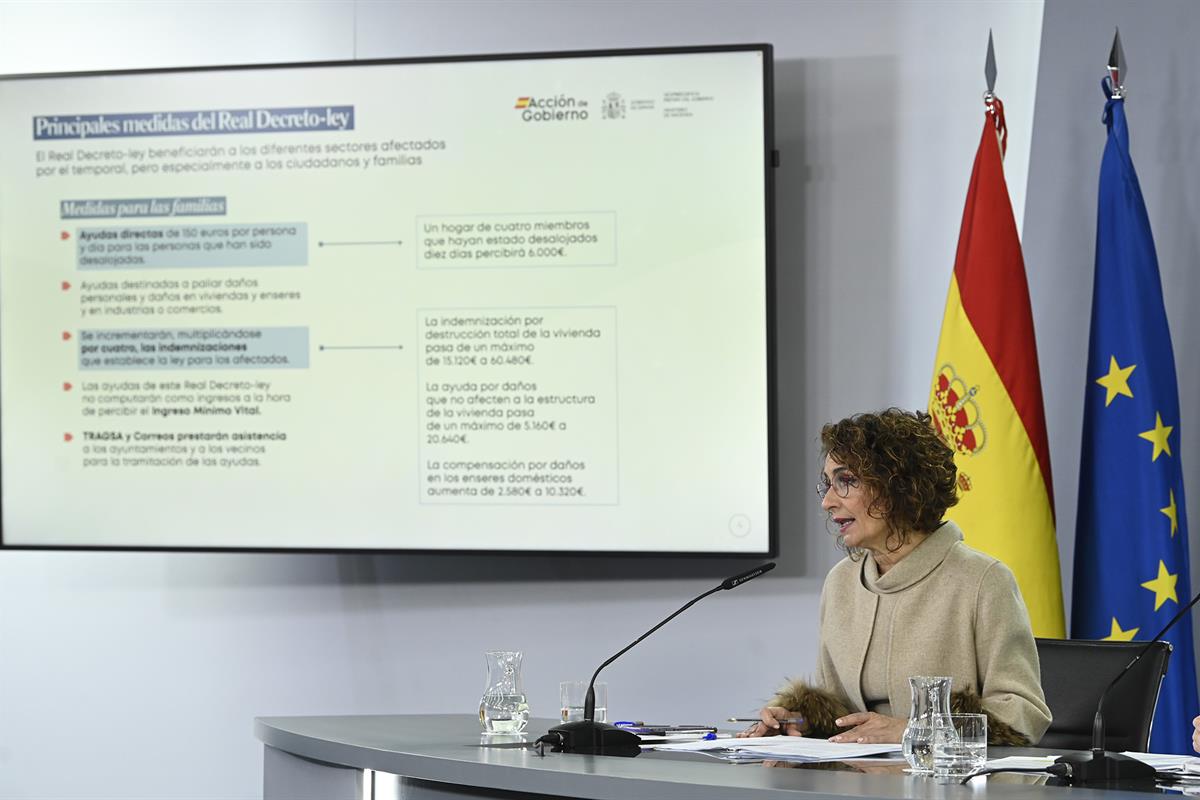 The First Vice-President and Minister for Finance, María Jesús Montero, during her speech at the press conference after the Council of Ministers | Pool Moncloa / José Manuel Álvarez
María Jesús Montero announced that a list of affected municipalities will be published within a month. This list will include those that have had residents evacuated and those that will be added following an initial assessment and evaluation of the damage.
The state will mobilise a fund of €2 billion in direct transfers to cover the repair of municipal infrastructure affected by the rains and floods. "These are transfers, not loans, and therefore, money that the municipalities will not have to repay, although they will have to provide justification," the Vice-president clarified.
As a new measure, municipalities that request it will be able to receive 100% of the aid amount. The spending rule for affected municipalities and autonomous communities will be relaxed so that funds linked to reconstruction will not count towards the established limit, and they will be allowed to use the 2025 surplus for investments related to compensating for the damage caused by the storms. Montero also announced that a €50 million employment plan will be launched to help municipalities revitalise economic and employment activity in the affected areas.
Tax and social security measures
The text approved today includes measures such as exemptions from Personal Income Tax (IRPF), Corporate Income Tax, Property Tax (IBI), and Business Activities Tax (IAE) for the affected areas. Taxpayers who have already paid these taxes will be able to request a refund. The measures also include a reduction in the personal income tax (IRPF) modules and the simplified special VAT regime for agricultural holdings and activities in the affected areas. María Jesús Montero pointed out that the total tax exemptions will represent a saving of approximately €350 million for taxpayers.
For self-employed workers, a benefit for cessation of activity is established, which may be extended until 31 May 2026. In addition, companies whose activity has been affected by the floods and are currently on furlough (ERTE) may apply for tax exemptions.
Measures for agriculture, fisheries and livestock
The legislation also includes extraordinary aid of more than €2.8 billion for farmers, livestock farmers, and fishermen.
Among this total aid, the First Vice-president highlighted that €2.1 billion will be allocated to owners of farms registered in the agricultural holdings registry of the affected areas. €10 million will be allocated to owners of fishing vessels whose home ports are in the provinces of Málaga, Cádiz, and Huelva, and who have been unable to put to sea due to the fleet being grounded. The number of days of contributions required to receive unemployment benefits or agricultural income support for seasonal agricultural workers residing in affected municipalities is also reduced from 35 to 5.
Furthermore, the repair of rural roads and irrigation infrastructure has been allocated €600 million, Montero stated, and the repair of state-owned road and rail infrastructure has been allocated €163 million.
Direct aid for the hospitality and retail sectors
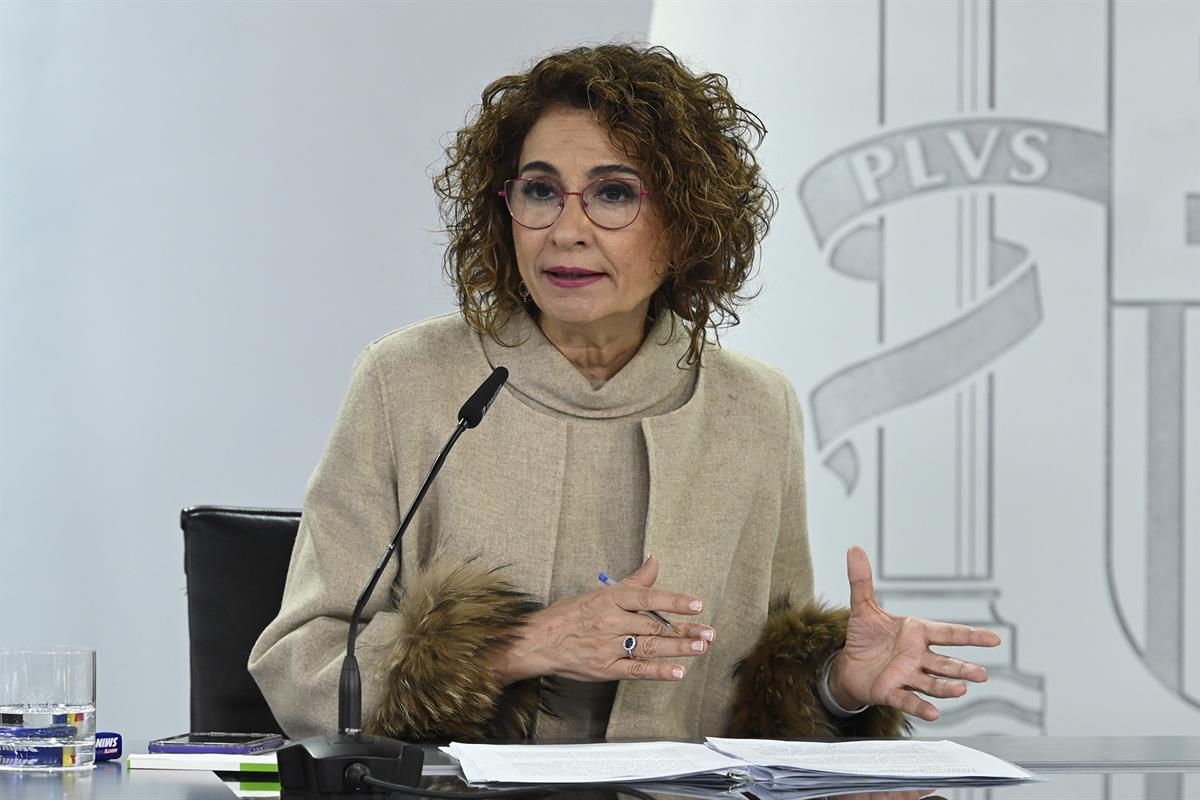 The First Vice-President and Minister for Finance, María Jesús Montero, during the press conference after the Council of Ministers | Pool Moncloa / José Manuel Álvarez
Montero added that specific aid has been approved for the hospitality and retail sectors in the affected areas, amounting to €120 million, along with a €100 million line of credit from the Official Credit Institute (ICO) for agricultural damage caused by the storm.
Climate Change Pact
In her address, the First Vice-president urged all political parties to sign a State Pact on Climate Change to address and respond to situations like those caused by the recent storms.
Furthermore, María Jesús Montero highlighted the professionalism and work of the emergency teams from all levels of government who participated in protecting those affected. She reiterated that the Government will mobilise all necessary resources to rebuild the damaged towns and infrastructure: "The Government is approving the aid today. It may be necessary to include new damages identified in the assessments in the future, and of course, we will continue to support those affected even after the cameras are gone".
Minimum Wage increased to €1,221 per month tax-free
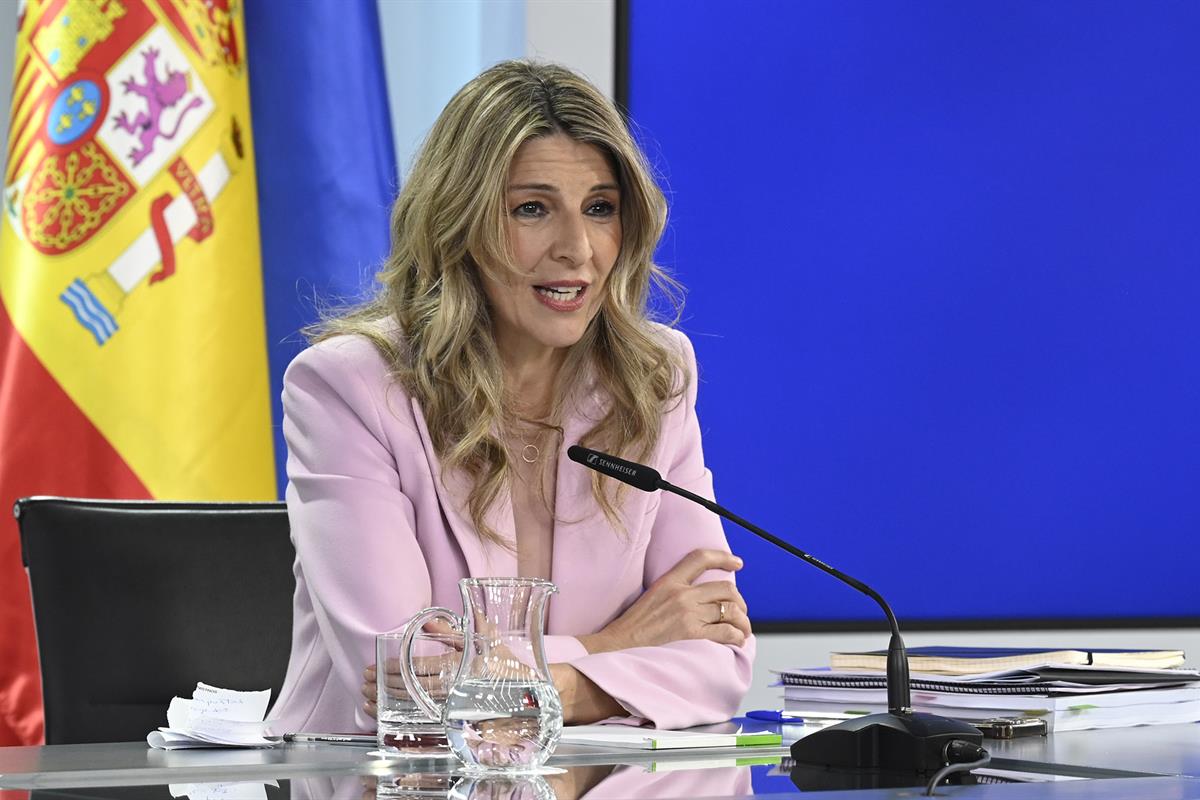 The Second Vice-President and Minister for Labour and Social Economy, Yolanda Díaz, at the press conference after the Council of Ministers | Pool Moncloa / José Manuel Álvarez
The Council of Ministers has approved a 3.1% increase in the Minimum Interprofessional Wage (SMI), to €1,221 per month, paid in 14 instalments. The increase amounts to €37 more per month, or €518 annually, bringing the minimum wage to €17,094. The measure will be applied retroactively from 1 January, 2026.
The Second Vice-President of the Government of Spain and Minister for Labour and Social Economy, Yolanda Díaz, highlighted that the minimum wage has increased by 66% over the last six years, a policy compatible with achieving record levels of employment in Spain. The Minister for Labour also emphasised the feminist nature of the increase, as demonstrated by the fact that the gender pay gap in Spain is now below the European Union average. Yolanda Díaz noted that the minimum wage increase also has a significant impact on younger workers.
By autonomous community, the greatest relative impact is in the Canary Islands and Extremadura, and the greatest impact in terms of total number of beneficiaries is in Andalusia and Madrid. The Vice-president also highlighted the benefits of the measure for agriculture, a sector where some predicted it would cause "absolute collapse".
As the President of the Government of Spain announced yesterday during the signing of the wage increase agreement with the unions, a key new feature is that the Government will monitor the increase in the minimum wage to ensure it is real and not circumvented through "accounting fraud" as a mechanism for offsetting and absorbing workers' specific supplements.
The First Vice-President of the Government of Spain and Minister for Finance, María Jesús Montero, explained that the approval of the minimum wage increase is accompanied by a tax reduction in the form of a deduction of up to €591 for individuals earning less than €20,000. In practice, this means that those receiving the minimum wage will continue to be exempt from income tax. Montero estimated that low-income taxpayers have accumulated savings of €11 billion since 2023 thanks to successive tax cuts.
Promoting democracy at work
The Second Vice-President presented the report "Democracy at Work", prepared by a commission of international experts, to the Council of Ministers. Yolanda Díaz pointed out that this is the first report to address the mandate of Article 129.2 of the Spanish Constitution regarding worker participation in company decisions. The minister noted that 18 EU member states have co-decision mechanisms, making Spain "a true exception," although a form of democratic participation does exist, namely that related to the social economy and cooperatives.
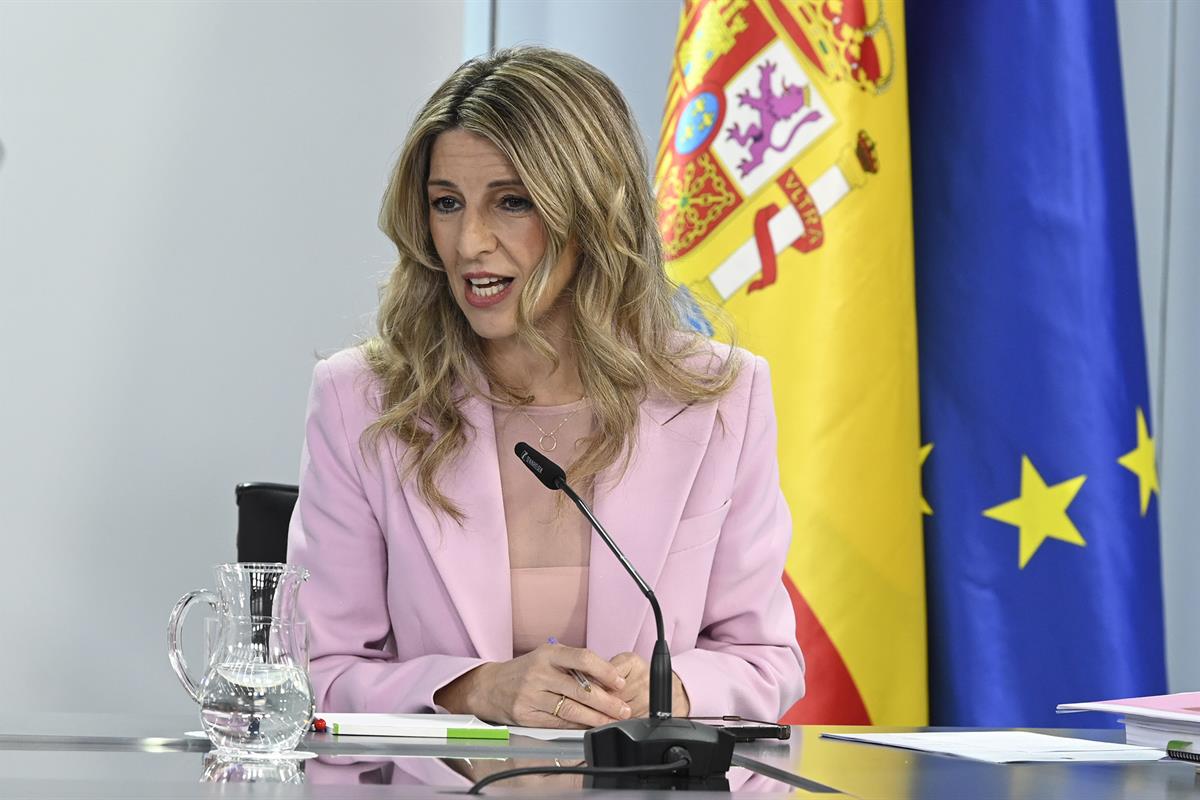 The Second Vice-President and Minister for Labour and Social Economy, Yolanda Díaz, at the press conference after the Council of Ministers | Pool Moncloa / José Manuel Álvarez
"We don't want to turn commercial enterprises into cooperatives, but rather to democratise them", said Yolanda Díaz, who announced that, in two weeks, the Social Dialogue Committee will address for the first time the reforms necessary to move in that direction. "We propose the democratisation of companies as a solution, addressing nine contemporary challenges", she added. Among these challenges, she cited generational change in SMEs, artificial intelligence, the climate emergency, and the relocation of companies.
The proposal from the Ministry of Labour and Social Economy regarding worker participation in company decision-making bodies follows European parameters: one-third of the representation in companies with between 50 and 1,000 employees, and half in companies with more than 1,000 employees. The report also incorporates the concept of citizen funds, "something that is being debated in Europe, allowing us to save companies through workers, affected residents, or communities at risk of business relocation", explained Yolanda Díaz.
Draft Organic Law on Public Integrity
The Council of Ministers addressed the Draft Organic Law on Public Integrity, a piece of legislation that forms part of the State Plan to Combat Corruption promoted by the Government. The text analysed today contains 84 measures aimed at combating political and economic corruption in the public sector.
Among these initiatives, María Jesús Montero highlighted the creation of a public and accessible registry of companies prohibited from contracting with the government. Furthermore, companies convicted of corrupt practices will be barred from contracting with the government for 15 to 20 years and will not be eligible to receive subsidies or tax benefits.
Another new measure highlighted by the Vice-president is the tightening of controls and transparency regarding donations to political parties and foundations. They will be required to publish donations exceeding €2,500, up from the current €25,000.
Likewise, the future law includes the creation of the Independent Agency for Public Integrity, which will be the body responsible for coordinating Spain's efforts to protect the European Union's financial interests against fraud.
In the criminal sphere, Montero announced that the statute of limitations for corruption offences will be extended from 5 to 7 years. Furthermore, with the aim of recovering embezzled funds, the role of the Asset Recovery and Management Office will be strengthened, as will the State's power to seize assets from the outset of an investigation.
Investigating crimes of sexual violence on social media
Government spokesperson Elma Saiz announced an agreement to ask the Crown Prosecutor of the State to investigate potential crimes of child pornography and degrading treatment of minors on social media. "We cannot allow this to be amplified or protected through algorithms; the safety of our children and the protection of their image are at stake", she stated.
The decision adopted by the Council of Ministers is the first measure in the package announced by the President of the Government of Spain in Dubai and is based on a technical report prepared by the Ministry of the Presidency, Justice and Parliamentary Relations; the Ministry of Digital Transformation and Civil Service; and the Ministry of Youth and Children. As the spokesperson explained, the Ministry of the Presidency will now ask the Crown Prosecutor of the State to investigate and, if warranted, prosecute these potential crimes of digital sexual violence on the main platforms.
The minister, who described the problem as "of enormous importance" and emphasised the government's commitment to addressing it, illustrated its scope with a statistic: "In 11 days, three million nude photos have been circulated, generated by artificial intelligence, many of them of minors".
Price caps for the hotel sector in areas affected by Storm Leonardo
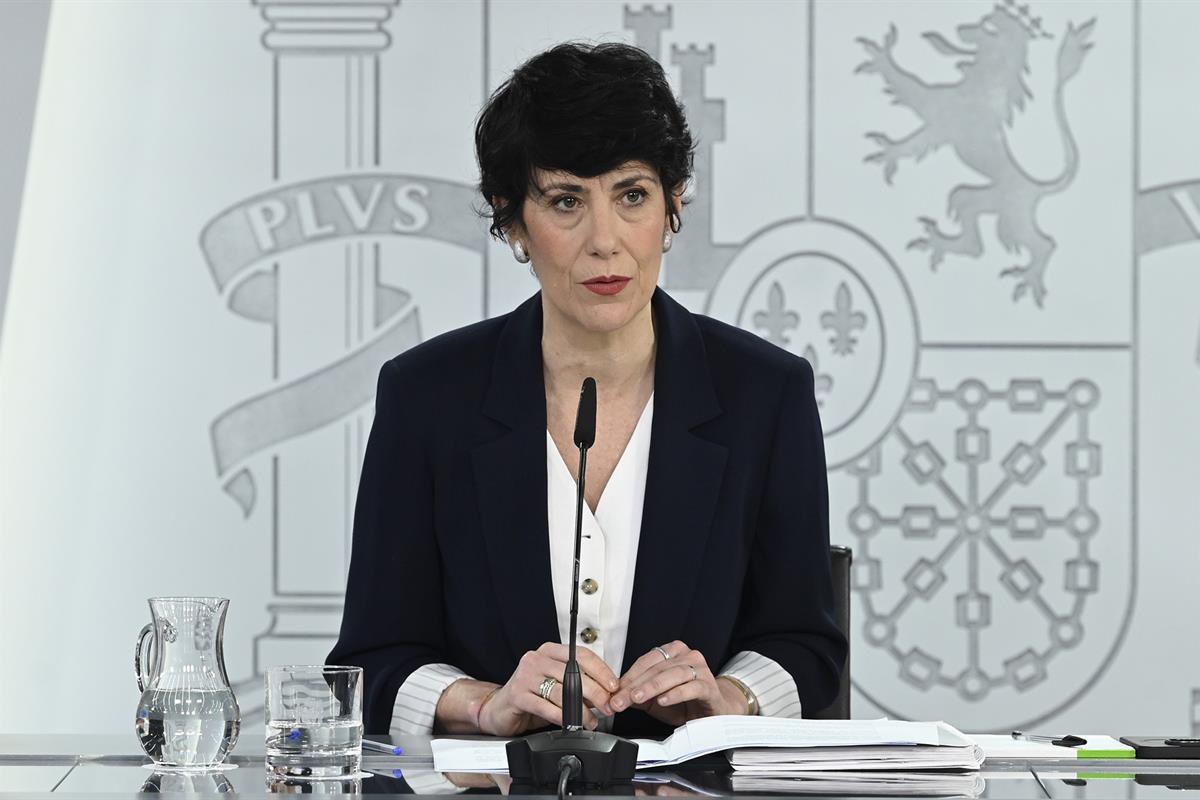 The Minister for Inclusion, Social Security and Migration and Government Spokesperson, Elma Saiz, during her speech at the press conference after the Council of Ministers | Pool Moncloa / José Manuel Álvarez
Elma Saiz has confirmed that the government has authorised the application of price caps for essential services in emergency situations, approved at the last Council of Ministers meeting, to the hotel and accommodation sector.
The minister explained that prices in this sector cannot exceed the average price recorded in the 30 days prior to Storm Leonardo in municipalities where residents have been evacuated and rehoused due to the storm, both in Andalusia and Extremadura. In this context, the Government Spokesperson lamented another death caused by the extreme weather, which now includes a total of nine storms since the beginning of the year, in just a month and a half.
She also sent another message of condolence for the five young people who died in the fire in the Barcelona town of Manlleu. "There are no words to offer sufficient comfort in these difficult times for family and friends, to whom I send, on behalf of the government, all our strength to face this", she said.
Other agreements
In the employment sector, the Government has approved the institutional declaration for Equal Pay Day, celebrated every 22 February. In this declaration, the Government of Spain reiterates its "non-negotiable" commitment to closing the gender pay gap.
Furthermore, the Council of Ministers has approved the National Strategy to combat Fuel Poverty 2026-2030, which will complement the National Strategy to combat Poverty and Social Exclusion. As Saiz explained, this document aims to guarantee universal, affordable, and sustainable access to energy as a basic right, as well as a necessary condition for a dignified life.
In the area of culture, the government has authorised the signing of an audiovisual co-production agreement with Canada, Spain's number one partner outside of Europe and Latin America. As a result of this collaboration, Saiz explained, internationally renowned works have emerged, such as the psychological thriller "Enemy," by Denis Villeneuve, distributed in more than 30 countries, and "Mamá", the horror film directed by Andrés Muschietti, which grossed over $146 million worldwide.
Current Affairs
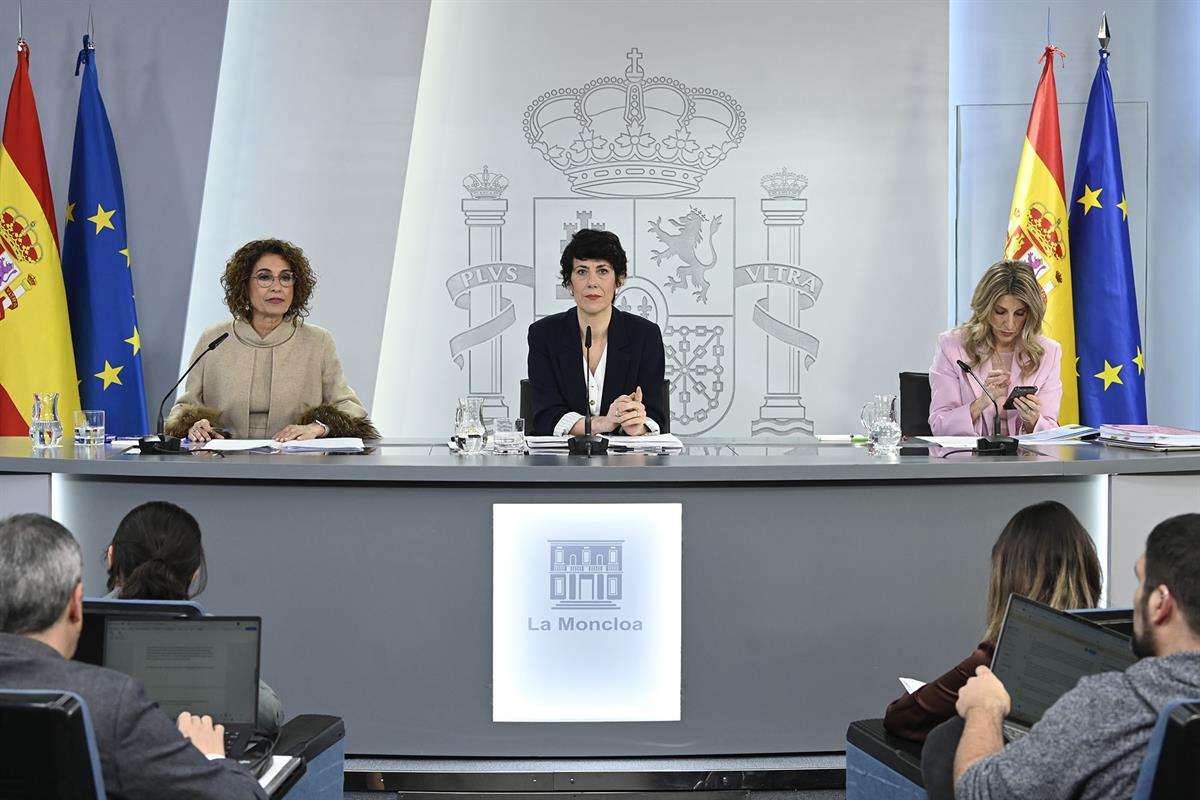 The First Vice-President and Minister for Finance, María Jesús Montero; the Government Spokesperson, Elma Saiz; and the Second Vice-President and Minister for Labour and Social Economy, Yolanda Díaz, at the press conference after the Council of Ministers | Pool Moncloa/José Manuel Álvarez
The Government Spokesperson began her remarks by highlighting the importance of the "Spain Grows" fund, presented this week by the President of the Government of Spain as a "key lever" for ensuring the continuity of the funds mobilised by the Recovery, Transformation and Resilience Plan.
Saiz noted that the new fund will mobilise €120 billion in public-private investment, with €23 billion earmarked for the construction of 15,000 homes per year, "the largest volume of financing in our history to combat this crisis".
Finally, the Minister for Inclusion, Social Security and Migration highlighted the statistics published by the Permanent Observatory on Immigration (OPI) regarding residence permits for studying in Spain. According to OPI data, the number of study permits granted has increased 93% in 10 years, a figure that "reaffirms Spain as an international educational destination and a magnet for talent".
Non official translation