Pedro Sánchez announces that the Government will extend protection for households and businesses against the impact of the war in Iran
President's News - 2026.6.17
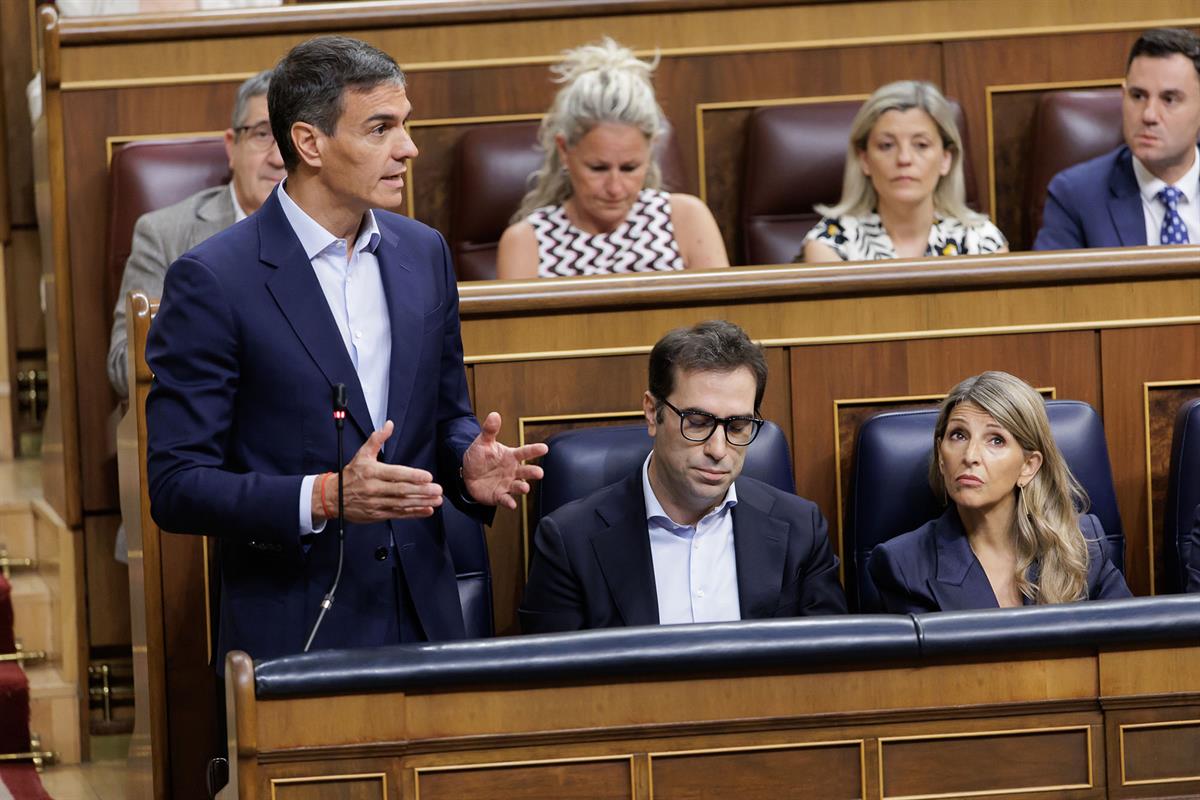
The President of the Government of Spain, Pedro Sánchez, during his speech in the Government control session | 2026.6.17
-
 The President of the Government of Spain, Pedro Sánchez, during his speech in the...
-
 The President of the Government of Spain, Pedro Sánchez, speaks during the Government...
-
 The President of the Government of Spain, Pedro Sánchez, answers questions from members...
-
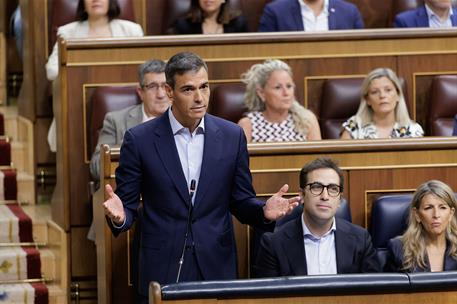 The President of the Government of Spain, Pedro Sánchez, addresses the Plenary Session of...








Lower House of Parliament, Madrid
The President of the Government of Spain, Pedro Sánchez, announced during the control session in the Lower House of Parliament that the Council of Ministers plans to approve a new royal decree-law on 29 June which will strengthen protection of the productive sector and citizens to mitigate the impact of the war in Iran.
In response to Alberto Núñez Feijóo, a Member of the Popular Parliamentary Group, the Head of the Executive stated that the Government's priority at present is to "hold talks with the various sectors and parliamentary groups" in order to push for the legislation to be ratified.
Subsequently, in his reply to Maribel Vaquero, a Member of Parliament for the Basque Parliamentary Group (EAJ-PNV), Pedro Sánchez pointed out that last March the Government had already approved a social safety net "to protect households and businesses" from the effects of the conflict. The aim now, he added, is to extend these measures "in a different scenario", characterised by the ceasefire recently announced by the United States and Iran.
"I think the results are frankly positive. Not only have we kept inflation in check, but economic growth and job creation are also gaining momentum. For example, farmers have been able to buy fertiliser, save their harvest and thereby contain the rise in food prices. This has been achieved thanks to that Royal Decree-Law. "Thanks to these measures, major industries - including those in the Basque Country - are achieving a 14 per cent saving on their electricity bills," the President of the Government of Spain emphasised.
Leadership in economic growth in Europe
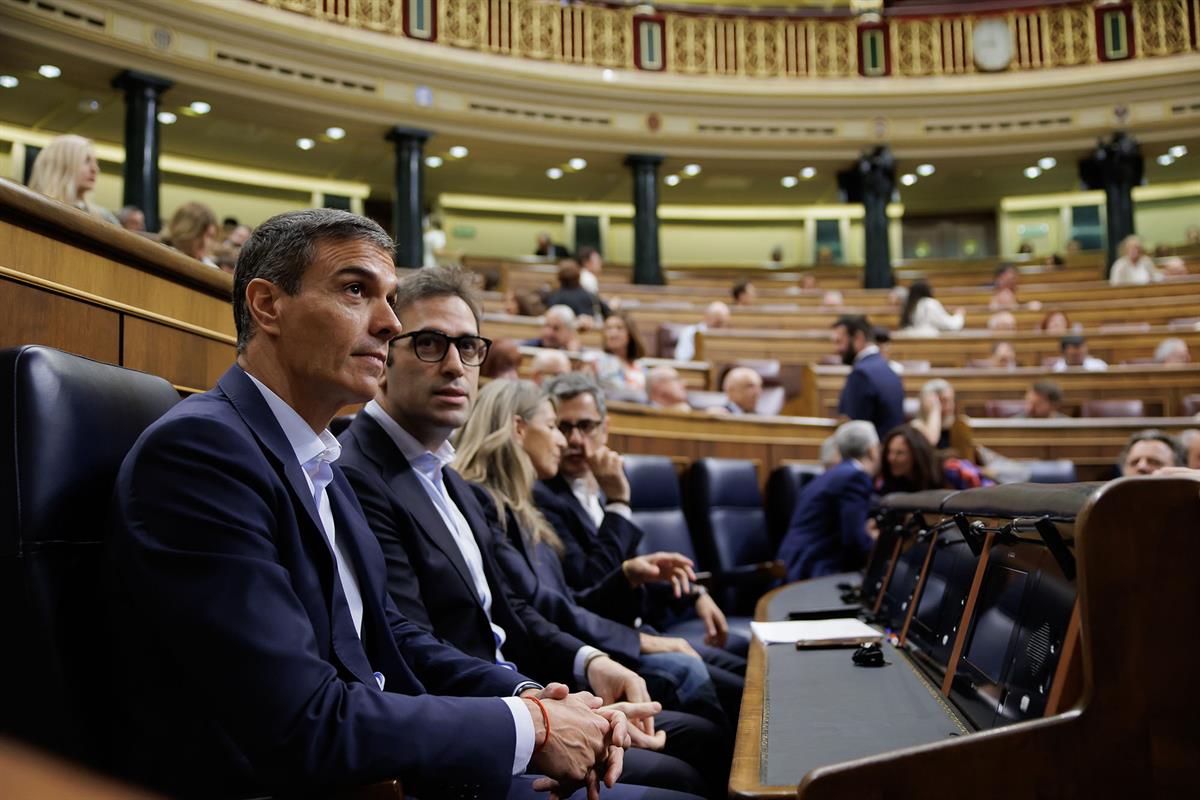 The President of the Government of Spain, Pedro Sánchez, attends the Government control session in the Lower House of Parliament | Pool Congreso
In response to MP Ione Belarra of the Mixed Parliamentary Group, the Head of the Executive pointed out that "Spain, as a major economy, has now been leading growth in Europe for 11 consecutive quarters". Specifically, Pedro Sánchez outlined some figures on current employment rates, pensions and the national minimum wage.
"We have 22.5 million national insurance contributors, compared with 18.9 million in 2018", said the President of the Government of Spain. "Eight years ago, the average wage was 24,000 euros; today it is nearly 30,000 euros. The unemployment rate was 15 per cent; today it stands at 10 per cent. We used to have a national minimum wage of just over 700 euros, and today it stands at over 1,100 euros. And the same applies to pension increases," said Pedro Sánchez.
He also cited the improvement in Spain's rating by the Organisation for Economic Co-operation and Development (OECD) as an achievement of the "progressive coalition" government. According to the president, "Spain's score has improved in its fight against corruption and in its exemplary conduct, with some indicators now surpassing those of such established democracies as Norway and Sweden".
General State Budget for 2027
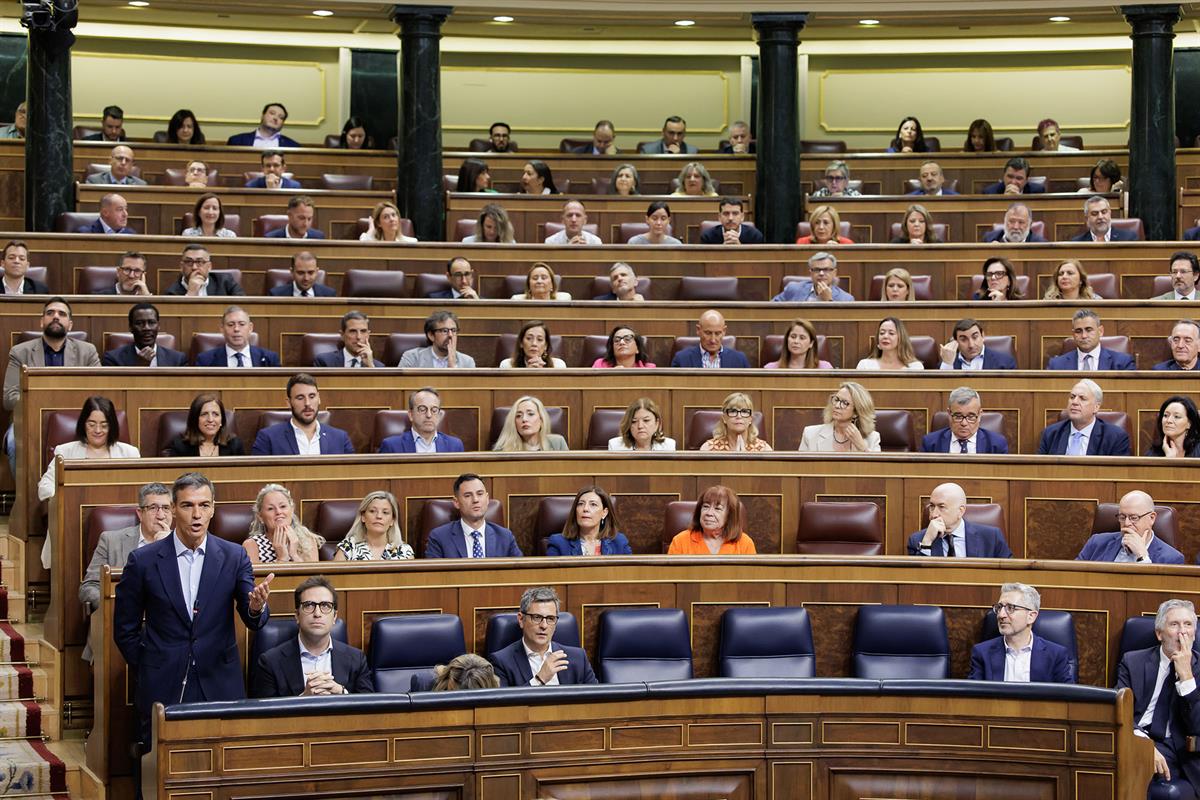 The President of the Government of Spain, Pedro Sánchez, speaks during the Government control session
During his speech, President Sánchez stated that the Government is continuing to work with the parliamentary groups to push through the General State Budget for 2027. And, in response to MP Maribel Vaquero of the Basque Parliamentary Group (EAJ-PNV), he stated that the budget "will be consistent in terms of social ambition, the energy and digital transformation, and fiscal rigour, both in terms of the public deficit and public debt".
Furthermore, the President of the Government of Spain also referred to some of the objectives previously set for this parliamentary term, such as "successfully managing and implementing the European Funds", the implementation of which ends on 31 December 2026, or to complete the full and effective implementation of the Amnesty Act "to broaden our democracy once again, bring us back together and address the territorial conflicts facing our country". Pedro Sánchez also stated that the Government will continue to respond to crises arising from armed conflicts, as has been the case with Ukraine and the Middle East.
Non official translation