The EU has taken on board Spain's requests regarding the strengthening of the Outermost Regions (ORs) as strategic areas of Europe
News - 2026.9.11
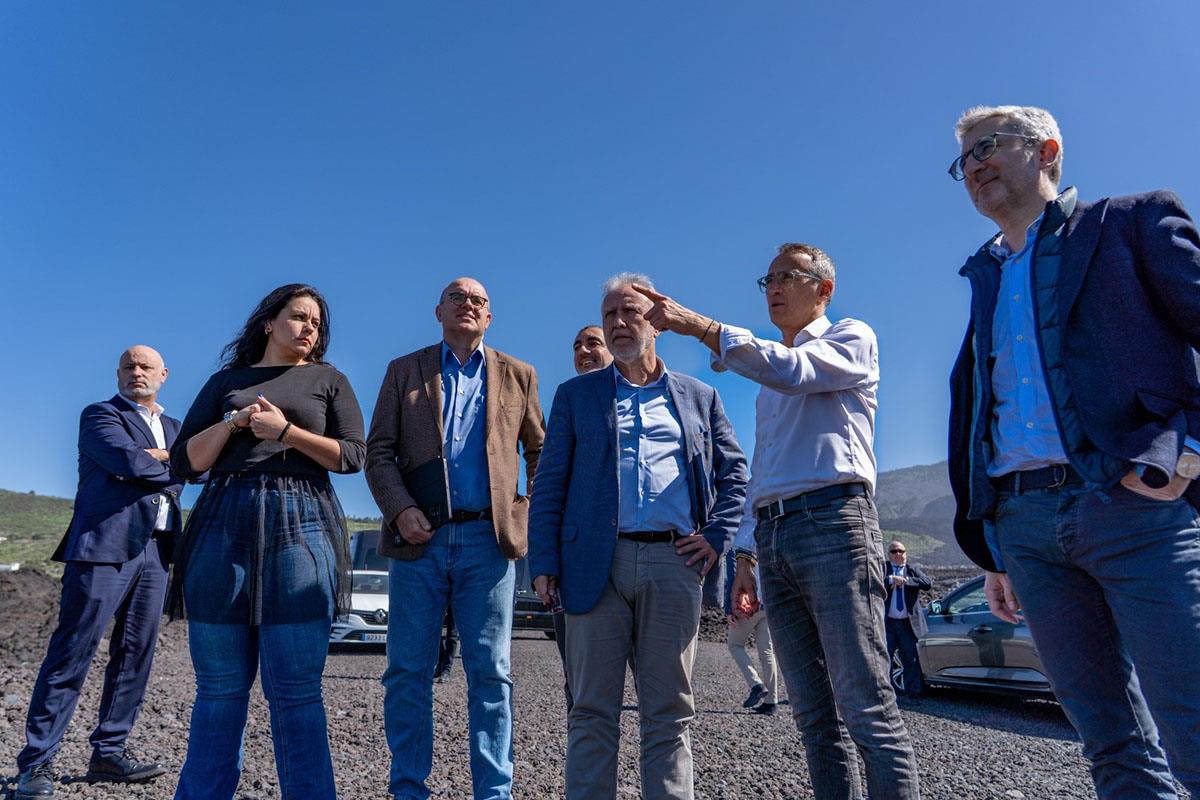 The Minister for Territorial Policy and Democratic Memory, Ángel Víctor Torres, during a visit to La Palma





The European Commission has presented a new communication setting out the Strategy for the Outermost Regions. This strategy replaces the previous one from 2022 and, like its predecessors, serves as the European Commission's roadmap for the Outermost Regions, which is particularly important at this time of serious geopolitical tensions and as negotiations on the next multiannual financial framework for 2028-2034 enter their final stages.
The significance of this new communication is that, in line with the position taken by the Government of Spain and the proposals put forward by the Ministry of Territorial Policy, the outermost regions are regarded not only as territories requiring exceptional conditions to sustain their development, but are also considered strategic in the context of European geopolitics.
Ángel Víctor Torres emphasised that "the outermost regions, such as the Canary Islands, must play a more significant role within the European Union as areas of opportunity in their relations with neighbouring regions and in areas of strength such as tourism, environmental research and the development of space research".
The European Union's communication draws heavily on the approaches on which the Government of Spain has been actively working, which translates into several key elements:
- Competitiveness and greater access to the single market: Competitiveness will be boosted through measures designed to capitalise on the assets of the outermost regions, and support will be provided for their strategic products and sectors with the greatest potential: fisheries and biodiversity, renewable energy, tourism, logistics, air and maritime transport, as well as research.
- Resilience and preparedness: Adapting to environmental challenges and climate change by strengthening preparedness and response mechanisms. Particular attention is drawn to security threats, external shocks, hybrid threats, and immigration and border management, with specific measures proposed to improve overall resilience.
- Social justice and support for people: it proposes reducing regional and territorial disparities and meeting basic needs, and promotes social equity through proposals aimed at supporting quality education, training and employment, primarily for young people, in line with the new Action Plan for the European Pillar of Social Rights.
In short, the European Commission is committed to taking account of the specific characteristics of the outermost regions in regulatory processes and to making progress towards the full implementation of Article 349 of the Treaty on the Functioning of the European Union (TFEU), whilst strengthening dialogue with the outermost regions, so that they are consulted at an early stage on any initiatives that affect them, rather than after the fact.
This is the first step in a series of measures which we trust will maintain and even improve upon the commission's proposals, and will lead to progress towards the legal framework that Spain deserves and that the Canary Islands need.
Of particular note in this regard is the Commission's proposal to amend the Review of the EU Emissions Trading Scheme (ETS), which extends the exemptions for the outermost regions in the aviation and maritime sectors until 31 December 2035, waste incineration and the Carbon Border Adjustment Mechanism (CBAM), where the Commission will work to improve the exemption conditions for these regions.
The Commission is committed to continuing to support cohesion policies and POSEI funding in the ongoing negotiations regarding the next multiannual financial framework for 2028-34, in which the National and Regional Partnership Plans will play a key role, enabling the regions to retain their role as managing authorities whilst maintaining direct and coordinated dialogue with the Commission.
Non official translation