The Government of Spain approves the draft constitutional reform to safeguard the right to voluntary termination of pregnancy
Council of Ministers - 2026.4.7
Moncloa Palace, Madrid
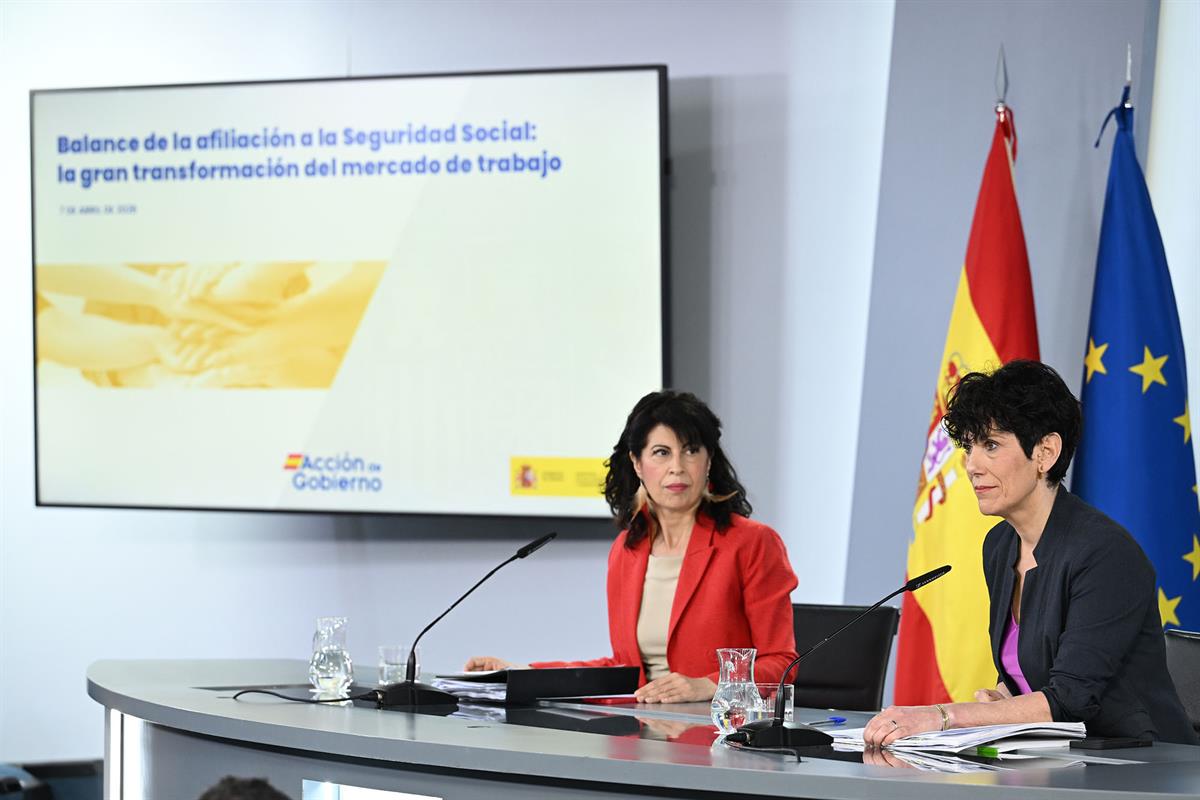 The Minister for Equality, Ana Redondo, and the Minister for Inclusion, Social Security and Migration, and Government Spokesperson, Elma Saiz, during the press conference after the Council of Ministers (Pool Moncloa/Borja Puig de la Bellacasa)





The Council of Ministers has approved sending to Parliament the draft reform of the Spanish Constitution to recognise and safeguard women's sexual and reproductive rights. The amendment adds a fourth paragraph to Article 43 with the following wording: "Public authorities shall guarantee the exercise of women's right to voluntary termination of pregnancy under conditions of real and effective equality, with all the benefits and services necessary for said exercise."
The Minister for Equality, Ana Redondo, highlighted that the new paragraph has been validated by the State Council, which considers that the proposal agreed upon by the Council of Ministers on 14 October, "with some modifications that we have accepted, is completely constitutional."
Guaranteeing the right to voluntary termination of pregnancy
Redondo explained that the right to voluntary termination of pregnancy is not at risk as a subjective right because the Constitutional Court has reiterated that it is connected to dignity, the free development of personality, and physical and moral integrity, all of which are recognised in the Constitution.
However, she added, the real and effective exercise of this right throughout the country is indeed in danger, as reflected in the data from the latest study presented by the Ministry of Health. Only 20% of voluntary terminations of pregnancy are performed in public health care facilities. Furthermore, the situation varies greatly between autonomous communities: while around 60% of terminations occur in the public healthcare system in Cantabria, Galicia, La Rioja, and Navarre, that percentage barely reaches 1% in Madrid and Andalusia. "This is creating a substantial difference between first- and second-class women regarding their sexual rights, depending on where they live," the Minister for Equality pointed out.
Social support, strengthening jurisprudence, and consistency
Ana Redondo summarised the motivation behind the constitutional reform in three reasons.
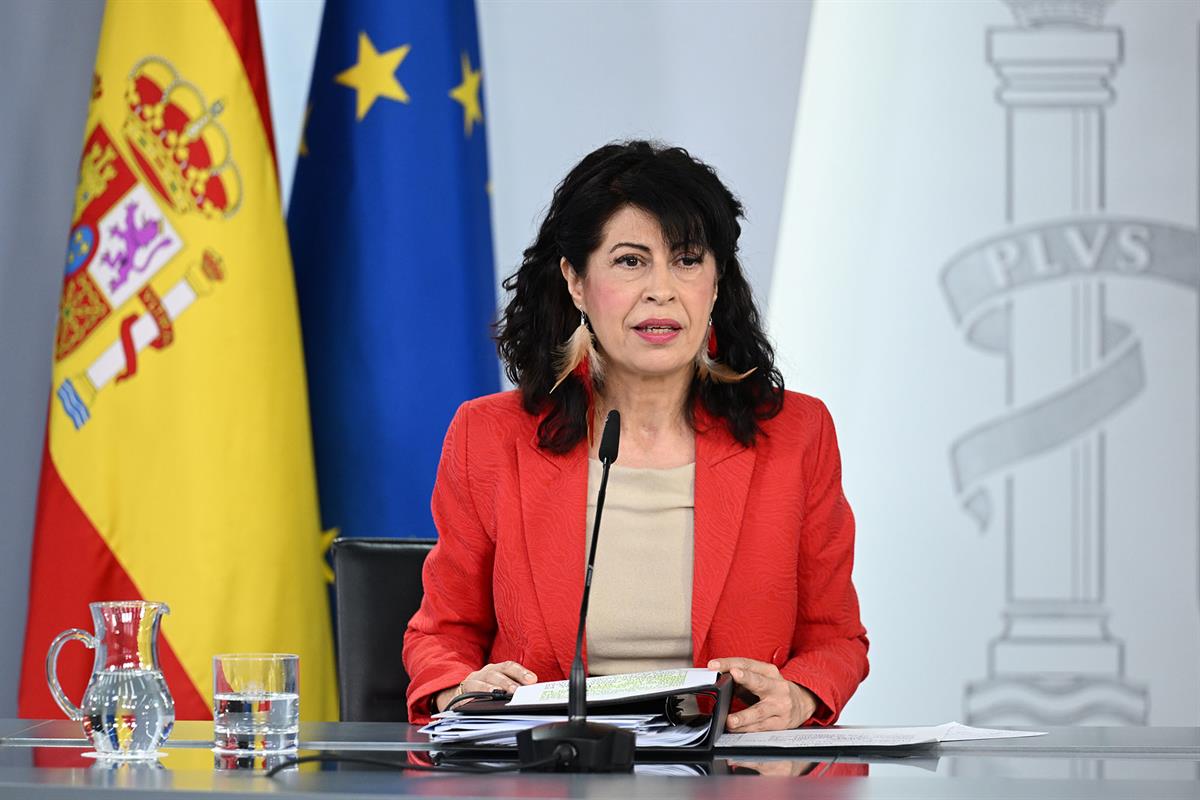 The Minister for Equality, Ana Redondo, during the press conference after the Council of Ministers | Pool Moncloa/Borja Puig de la Bellacasa
First, it is a response to the "ultra-reactionary movement that has targeted women's sexual and reproductive rights globally and also in our country," as the minister stated. Redondo stressed that, in contrast to this institutionalised movement against laws on voluntary termination of pregnancy, the vast majority of Spanish society supports this right.
Second, the bill seeks to strengthen the jurisprudence of the Constitutional Court and increase the legal grounds for upholding women's right to voluntarily terminate their pregnancies.
The third reason put forward by the Minister for Equality is consistency: "We are a citizenry that embraces democracy, women's rights, and equality, and we must also enshrine this in the Constitution." Ana Redondo pointed out that Spanish legislation has been progressing in recognising women's right to self-determination, from the 1985 law decriminalising certain abortion circumstances to the 2023 reform. Spain is a leader in equality and, with this bill, is following in the footsteps of other advanced countries like France and Luxembourg, the minister argued.
Need for a qualified majority for approval
Since Article 43 is part of the chapter on the guiding principles of social and economic policy, its amendment must be carried out through the ordinary reform procedure, the same one followed in the three constitutional reforms approved to date.
The change, as Ana Redondo acknowledged, "requires qualified majorities, broad consensus, and extensive dialogue." Specifically, it will require the support of at least three-fifths of both the Lower House of Parliament and the Upper House of Parliament; if such a broad majority is not reached, a joint Lower-Upper House committee will draft and propose a new text, which will then be voted on again. If it still fails to pass, the reform can be approved with a two-thirds vote in Lower House of Parliament and an absolute majority in the Upper House of Parliament. Furthermore, one-tenth of the members of the Lower or Upper House of Parliament may request a referendum to ratify the proposal.
Strengthening the State Pact against Gender-based Violence
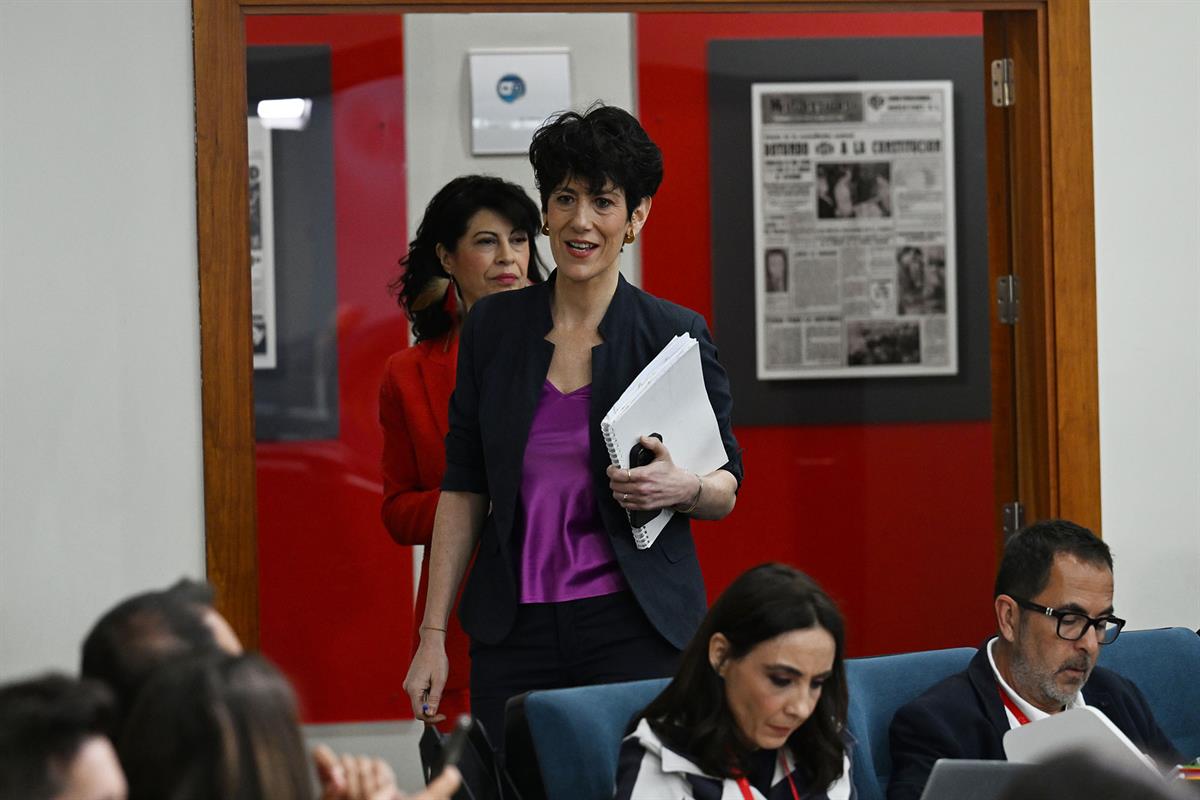 The Minister for Inclusion, Social Security and Migration, and Government Spokesperson, Elma Saiz, and the Minister for Equality, Ana Redondo, enter the press conference room after the Council of Ministers | Pool Moncloa/Borja Puig de la Bellacasa
The Government has also authorised the distribution of €180 million to the autonomous communities and the autonomous cities of Ceuta and Melilla to combat gender-based violence. Ana Redondo indicated that the proposed distribution will be finalised at the Sectoral Conference on Equality to be held on 15 April.
The Minister for Equality explained that, of the total amount, €160 million will be allocated to the autonomous communities and Ceuta and Melilla to maintain "all services and research that delve into gender-based violence." These funds will therefore be used to finance projects or programmes to combat gender-based violence promoted by these regions.
Redondo also indicated that the remaining €19.8 million will be dedicated to various regional programmes and plans "for the prevention of and support for victims of sexual violence."
During her presentation, the minister reiterated the government's "unquestionable, firm, and complete" commitment to women's rights and against all forms of violence: "Gender-based violence, sexual violence, in short, against sexist violence."
Declaration of severely affected area for territories in 13 autonomous communities
The Minister for Inclusion, Social Security and Migration and Government Spokesperson, Elma Saiz, announced that the government has approved the declaration of severely affected areas due to a civil protection emergency for the territories that suffered emergencies between 10 February and 30 March, 2026. This period, she said, was "marked by severe atmospheric instability and a succession of adverse weather events of varying nature," such as Storms Nils and Therese and the forest fire in the Sierra Espuña Natural Park (Murcia), which burned more than 400 hectares.
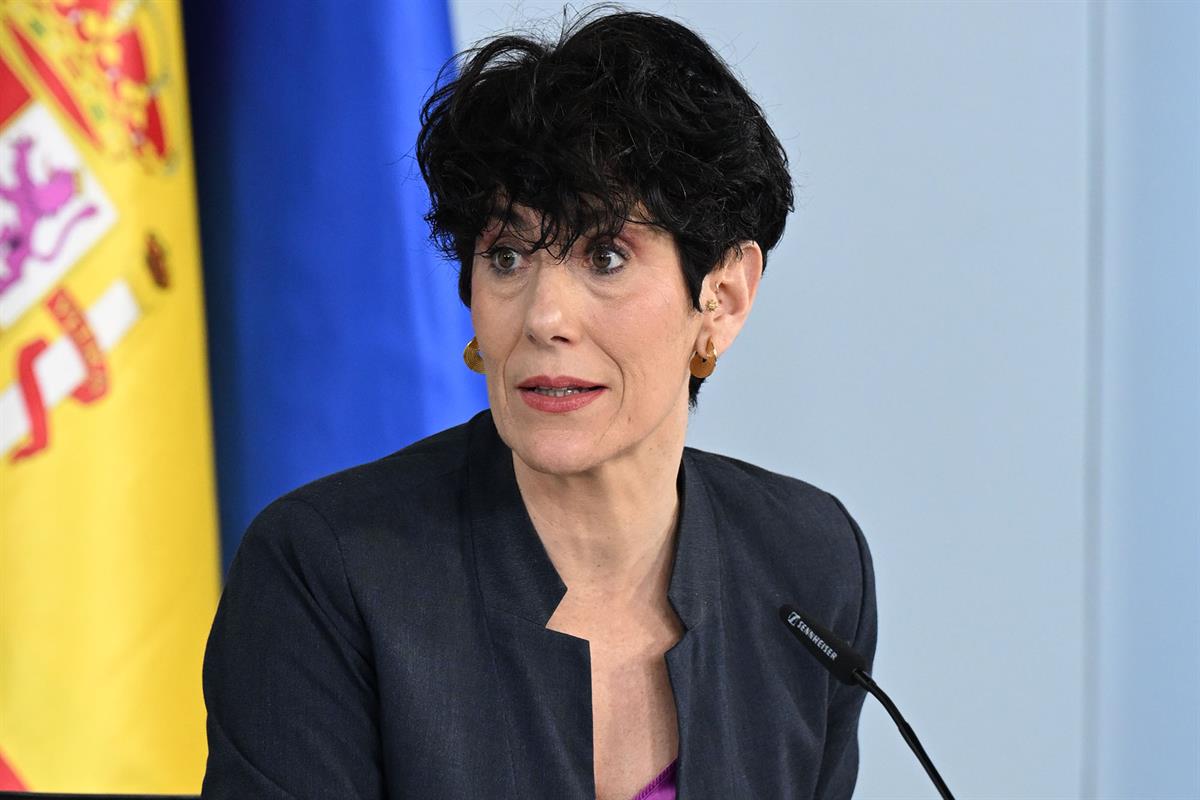 The Minister for Inclusion, Social Security and Migration and Government Spokesperson, Elma Saiz, at the press conference after the Council of Ministers | Pool Moncloa/Borja Puig de la Bellacasa
As Saiz explained, this measure activates aid intended to mitigate personal and material damage to homes and belongings. It also provides funds for local authorities and businesses, as well as funds for repairing municipal infrastructure, provincial and island road networks, and other public infrastructure.
The declaration affects 13 of the 17 autonomous communities. Specifically, this includes areas in Asturias, Cantabria, Castilla-La Mancha, Castile and Leon, Catalonia, the Community of Madrid, Extremadura, Galicia, the Balearic Islands, the Canary Islands, La Rioja, the Region of Murcia and the Basque Country. The aid will be applied based on the principle of inter-territorial solidarity and on a subsidiary basis, complementing that of other administrations.
Current Affairs
Elma Saiz celebrated the "historic figure" that Spain reached in March with more than 22 million workers registered with Social Security "in seasonally adjusted terms," a type of registration "recommended by experts and economists" because it prevents holidays or seasonality from "distorting the behaviour of the labour market."
"What this trend shows is sustained, sustainable, and unstoppable job growth. More than half a million jobs have been created in Spain in the last year. That's 2.2 million since the implementation of the labour reform, and more than 3.3 million since 2018, even absorbing the harsh impact of the pandemic," the Government Spokesperson remarked. The figures are part of a report she presented to the Council of Ministers.
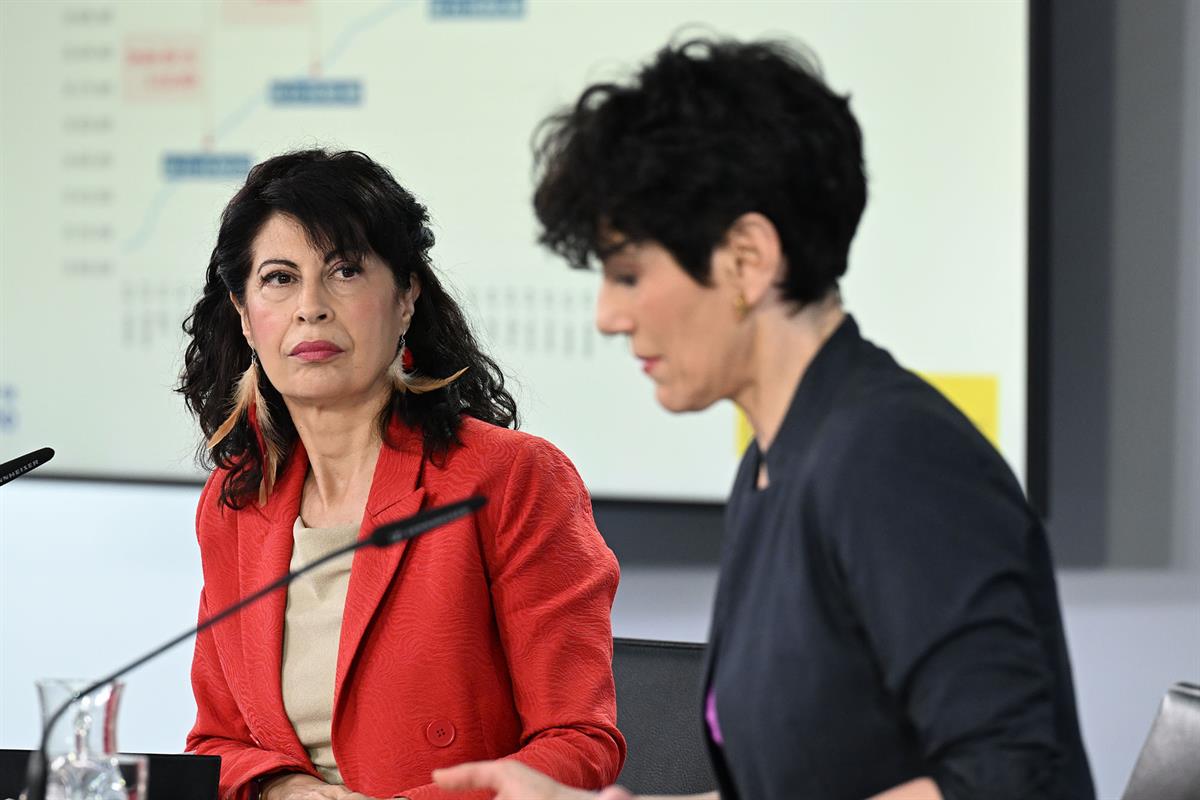 The Minister for Equality, Ana Redondo, and the Minister for Inclusion, Social Security and Migration, and Government Spokesperson, Elma Saiz, during the press conference after the Council of Ministers | Pool Moncloa/Borja Puig de la Bellacasa
"These figures take on even greater significance when we look at our surroundings. In 2025 alone, 41% of all employment in the European Union was generated in our country; that is, four out of every ten jobs in Europe originate in Spain," the Minister for Inclusion, Social Security and Migration emphasised.
The spokesperson particularly highlighted the progress in women's employment, a trend that "is allowing us to correct structural problems" and reduce gaps: "Today we have 10.4 million women in work, another absolute record. They represent 47.4% of our entire workforce."
Elma Saiz also pointed out that this progress is reflected in other indicators, such as the growth in the number of self-employed workers, which remains above 3.4 million, an increase of 40,000 in the last year, a rise that "is concentrated in high value-added sectors such as IT, consulting, and telecommunications." Foreign worker registration has also reached record levels, exceeding 3.15 million employed individuals, representing 14% of the total.
"This positive trend is helping to address issues such as the labour market integration of young people and those over 55. Both groups have shown above-average registration rates since 2021," Saiz stated. The spokesperson concluded by emphasising that the quality of employment has improved considerably, since "nearly 90% of contracts are permanent, drastically reducing temporary and precarious employment," and "half of the jobs created in the last two and a half years belong to the five highest-paying sectors."
Non official translation