Pedro Sánchez and Lula da Silva strengthen their strategic cooperation in Barcelona at the first Summit between Spain and Brazil
President's News - 2026.4.17
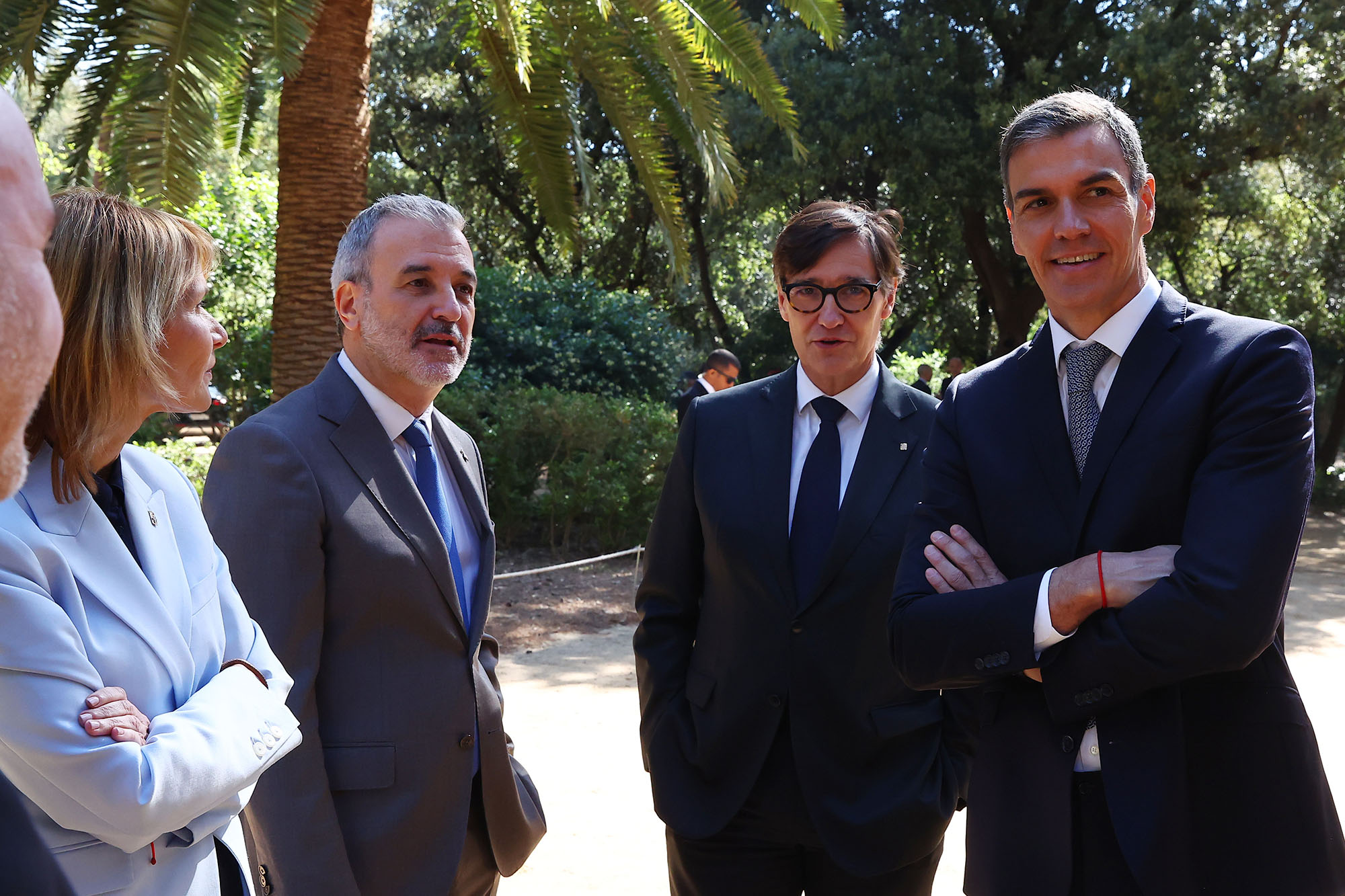
Arrival of the President of the Government of Spain at the Pedralbes Palace | Pool Moncloa/Jorge Villar y Javier Amescua - 2026.4.17
-
 01:00
Arrival of the President of the Government of Spain at the Pedralbes Palace
01:00
Arrival of the President of the Government of Spain at the Pedralbes Palace
-
 07:53
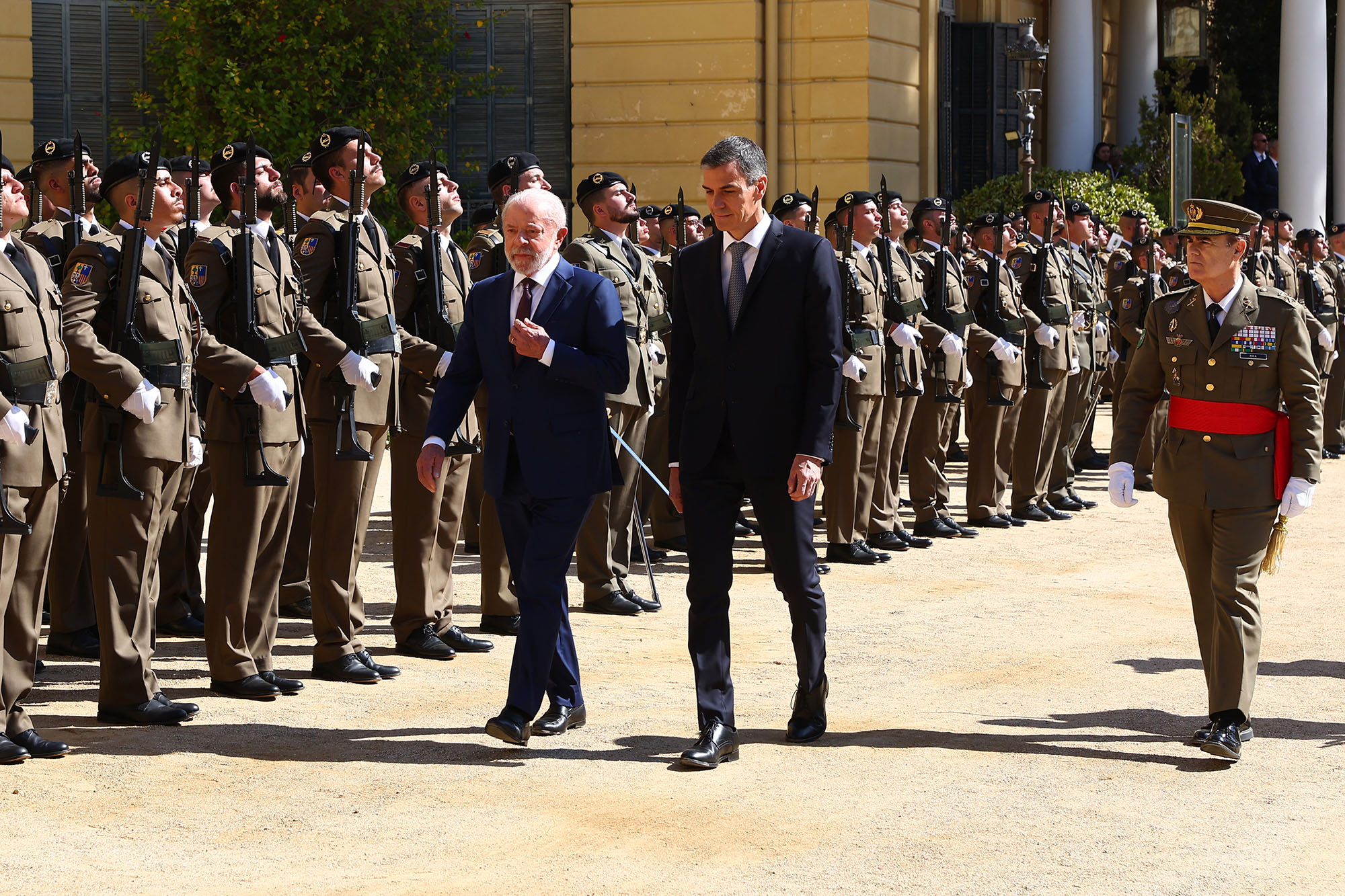
Arrival of the President of Brazil, welcoming honors and greetings from the delegations
07:53
Arrival of the President of Brazil, welcoming honors and greetings from the delegations
-
 00:25
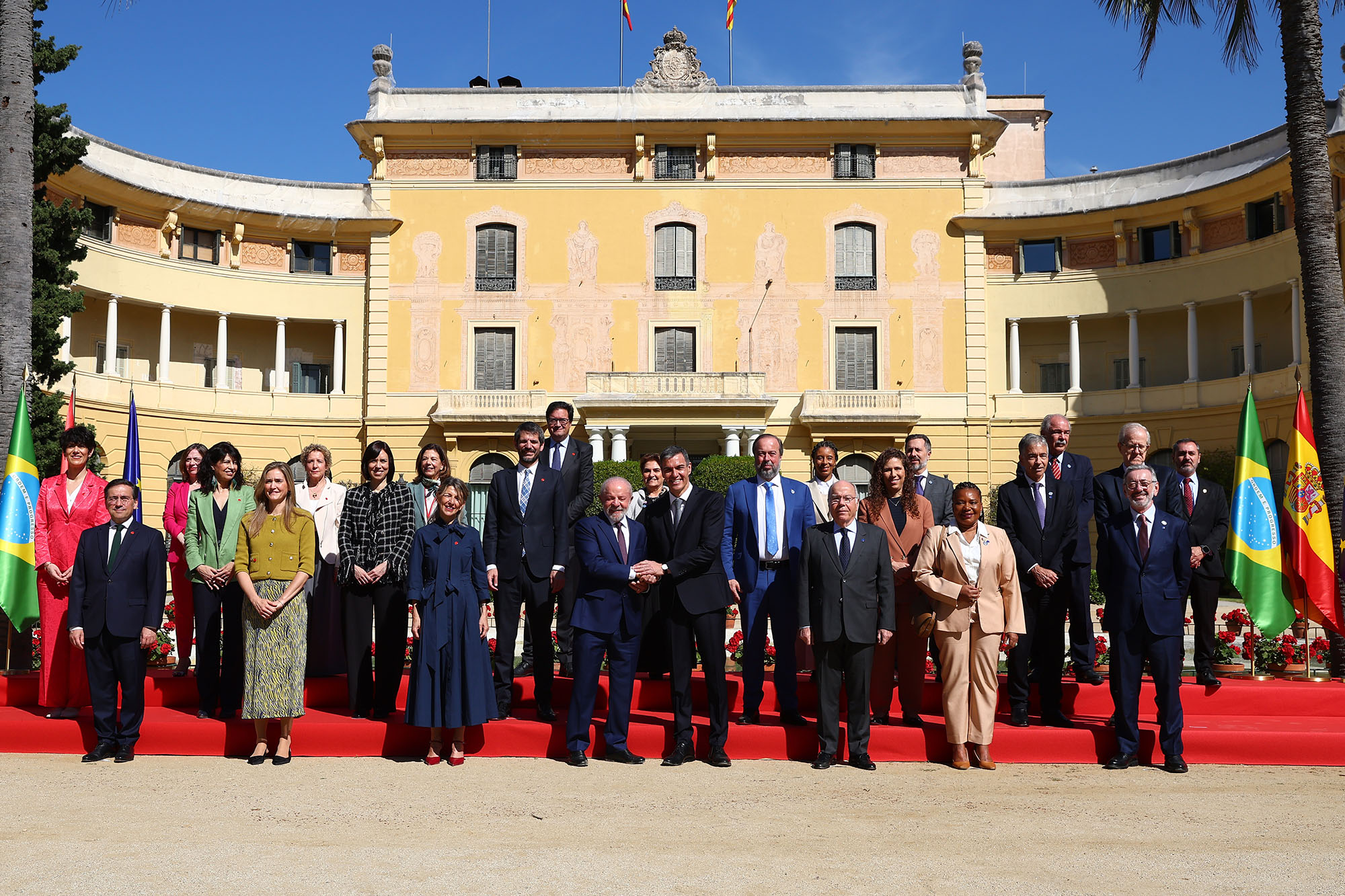
Group photograph of the Summit
00:25
Group photograph of the Summit
-
 00:34
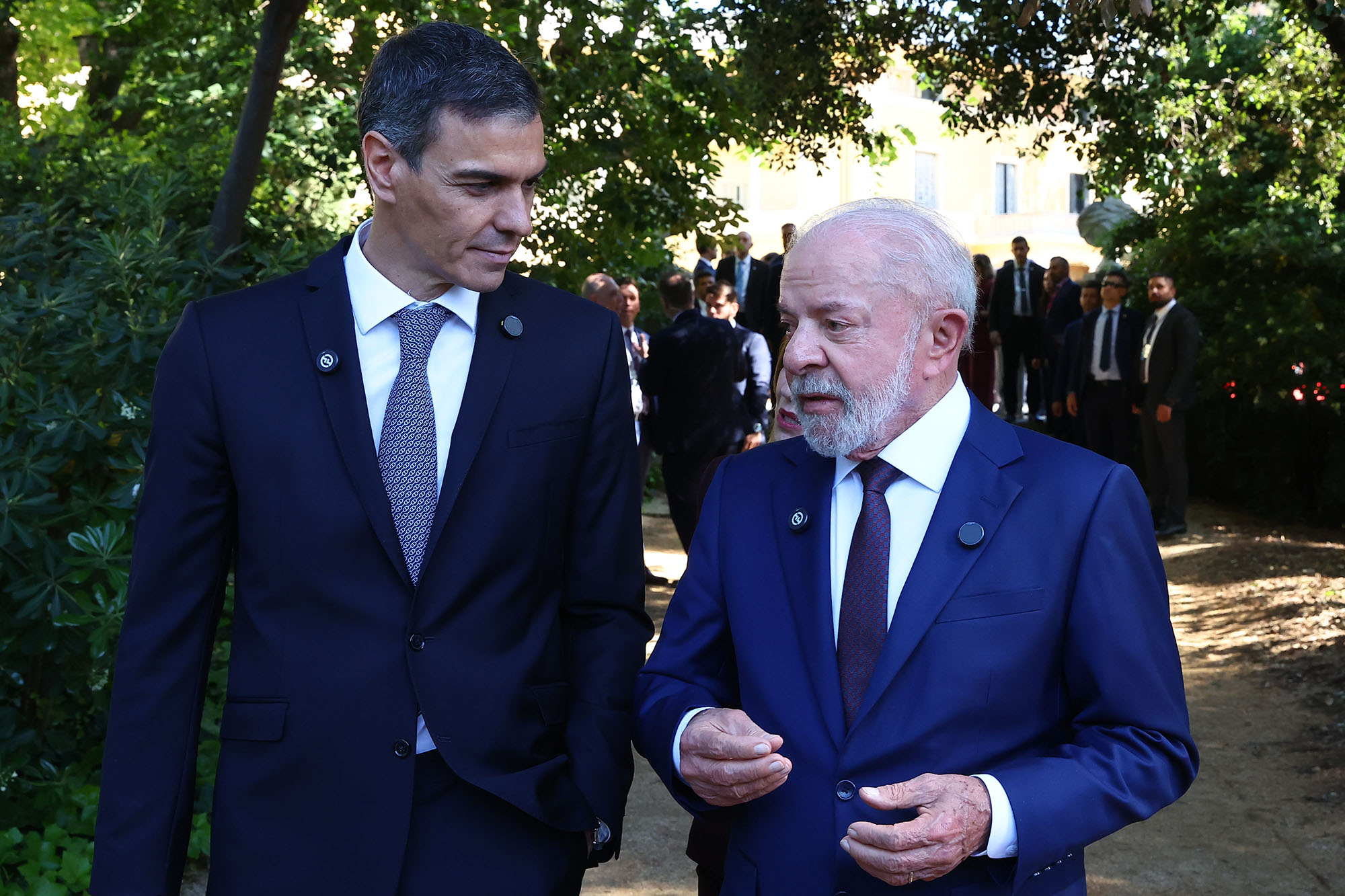
Pedro Sánchez and Luiz Inácio Lula da Silva, in the gardens of the Pedralbes Palace
00:34
Pedro Sánchez and Luiz Inácio Lula da Silva, in the gardens of the Pedralbes Palace








Pedralbes Palace, Barcelona
The President of the Government of Spain, Pedro Sánchez, and the President of the Federative Republic of Brazil, Luiz Inácio Lula da Silva, have presided over the first Summit between Spain and Brazil, which constitutes the first meeting of its kind between Spain and a Latin American country and reflects the excellent state of relations between the two nations, as well as their commitment to deepening a shared cooperation agenda.
President Sánchez highlighted the achievements of the Summit, which included the signing of a Political Declaration and agreements in strategically "key areas in the 21st century," such as critical minerals, information and communication technologies, and cooperation in science and innovation.
On the social front, "we are also making progress on fundamental social commitments to which both governments are fully dedicated," he emphasised, highlighting the cooperation agreements to join forces in promoting racial equality, combating gender violence, and boosting the social and solidarity economy. With regard to trade and investment relations, he noted that "they are extraordinarily strong."
Renewed multilateralism
The two leaders also held a bilateral meeting that underscored the special harmony between their countries, with a shared vision of values and aspirations and a commitment to a model of government for the majority of society. "The relationship between Brazil and Spain goes far beyond the strictly bilateral," President Sánchez emphasised, explaining that "our countries are destined to be driving forces that bring the European Union and Latin America and the Caribbean closer together."
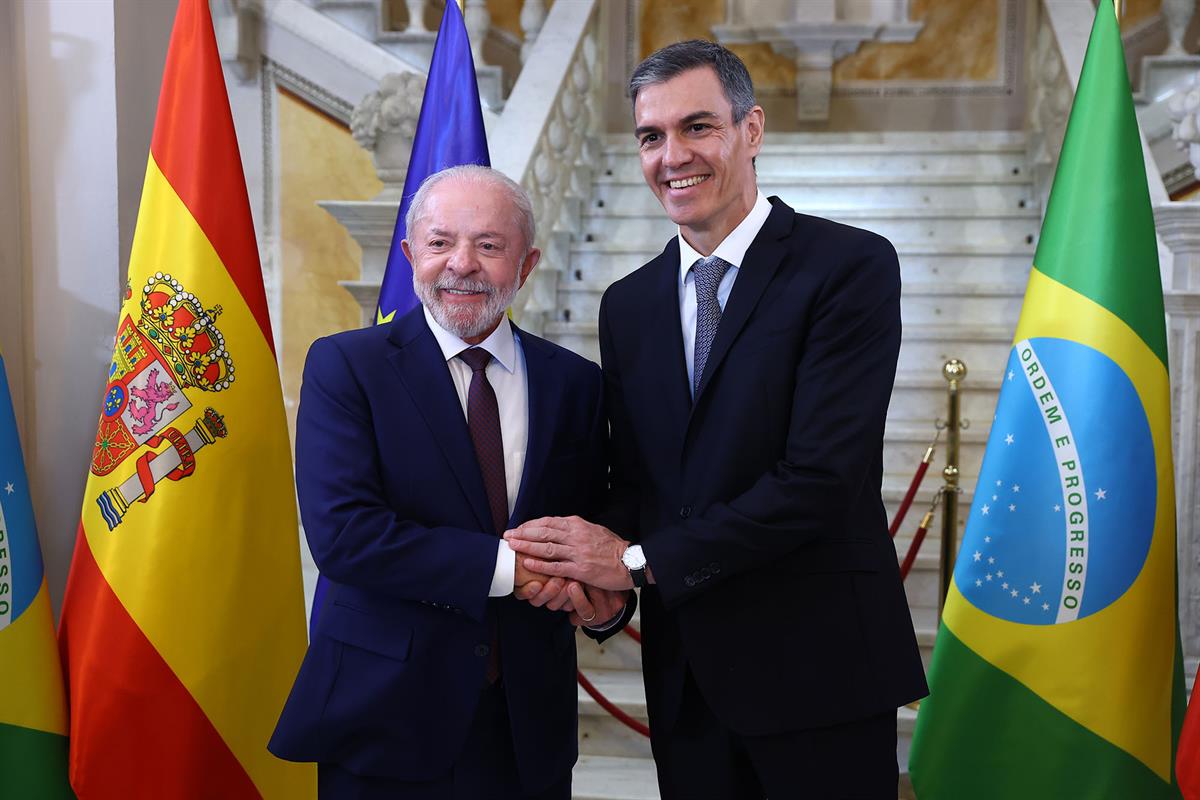 The President of the Government of Spain, Pedro Sánchez, and the President of Brazil, Luiz Inácio Lula da Silva, inside the Pedralbes Palace | Pool Moncloa/Fernando Calvo
With regard to the European Union-Mercosur Agreement, Pedro Sánchez argued that "an increasingly fragmented world demands greater unity between our continents," advocating for cooperation, openness, and mutual trust in the face of this fragmentation. "While others reopen wounds, what we want is precisely to close and heal them and dedicate ourselves to what is important. What is important is to curb and reduce inequality in our societies and between nations, and also to respond to the great challenges facing humanity," he emphasised.
In line with the strengthening of relations between both regions, the president highlighted the upcoming 30th Ibero-American Summit, to be held in Madrid in November, as an inclusive forum where consensus prevails and all countries participate on an equal footing.
Renewed multilateralism, the defence of democracy, human rights, and peace constitute the pillars of the shared worldview championed by both Spain and Brazil, which President Sánchez underscored as values that must be defended to guarantee prosperity, social justice, and freedom. "Faced with arbitrariness and contempt for international law, we reaffirm our commitment to common rules," he remarked.
Bilateral agreements
Within the framework of the First Spain-Brazil Summit, the two countries signed a series of agreements aimed at strengthening bilateral cooperation in strategic areas such as the economy, science, culture, and social policies.
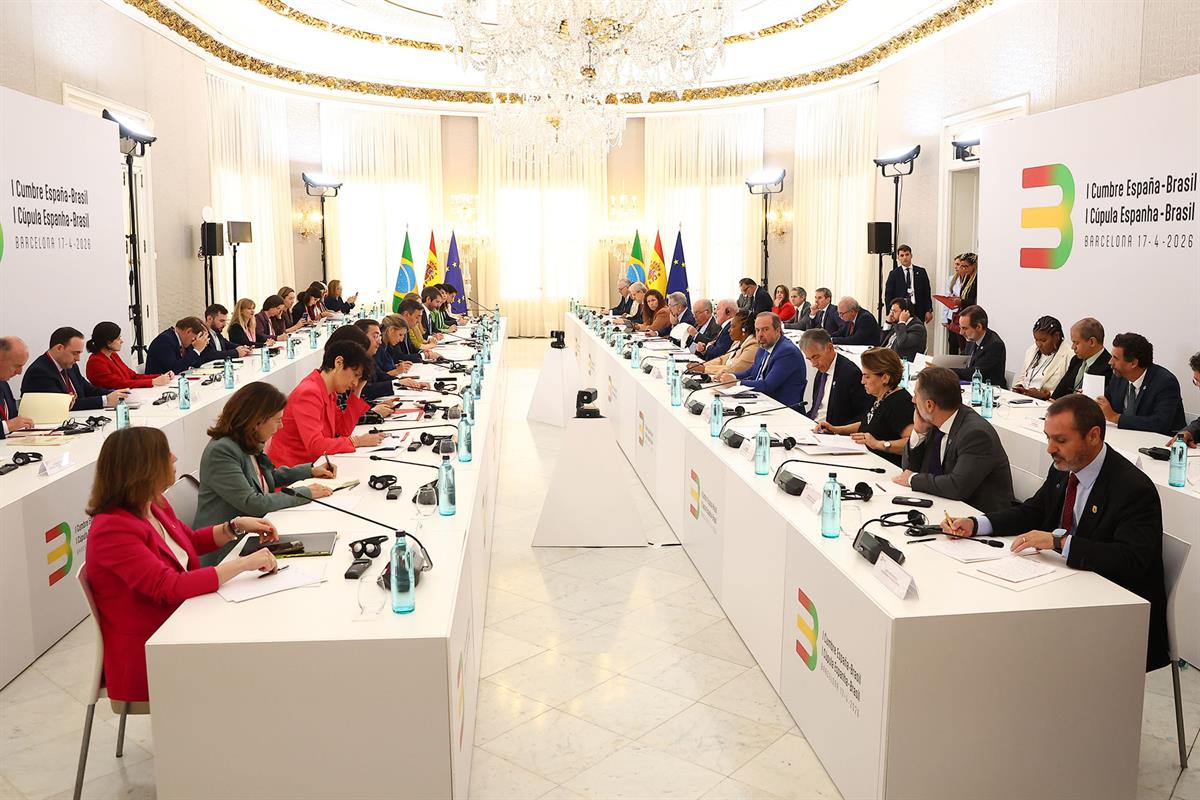 The Spanish and Brazilian delegations at the plenary session | Pool Moncloa/Fernando Calvo
In the field of economic cooperation, the Ministry of Economy, Trade and Business signed two memoranda of understanding: one concerning critical minerals and the other promoting public policies aimed at micro, small, and medium-sized enterprises (MSMEs) and entrepreneurship. Likewise, the Ministry of Transport and Sustainable Mobility signed an agreement on air services, while the Ministry of Digital Transformation and Civil Service formalised a memorandum of understanding for cooperation in information and communication technologies, and a work plan in the area of public services. For its part, the Ministry of Agriculture, Fisheries and Food has agreed to a memorandum for the adaptation of the Retinta cattle breed to Brazil's climatic and production conditions.
In the area of science and culture, the Ministry of Science, Innovation and Universities signed a memorandum of understanding for the establishment of a bilateral Work Plan on science, technology and innovation for the period 2026-2028. The Ministry of Culture formalised agreements on cultural cooperation and on culture and sustainability, while the Ministry of Foreign Affairs signed a memorandum of understanding on cooperation in consular matters.
In the area of social issues and rights, the Ministry of Labour and Social Economy signed a memorandum of understanding on the social and solidarity economy.
Likewise, the Ministry of Inclusion, Social Security and Migration has adopted a joint decision to expand the scope of the agreement on social security and welfare. Furthermore, the 2026-2027 Action Plan has been signed for the implementation of the MOU in the area of social security.
Finally, the Ministry of Equality has signed a memorandum in the field of gender equality and the eradication of violence against women, as well as an Action Plan on racial equality, following a previous agreement between the two countries.
Non official translation