The Erasmus+ programme will have a budget of around 409 million euros to promote international mobility and educational cooperation in Spain in 2026
News - 2026.7.22
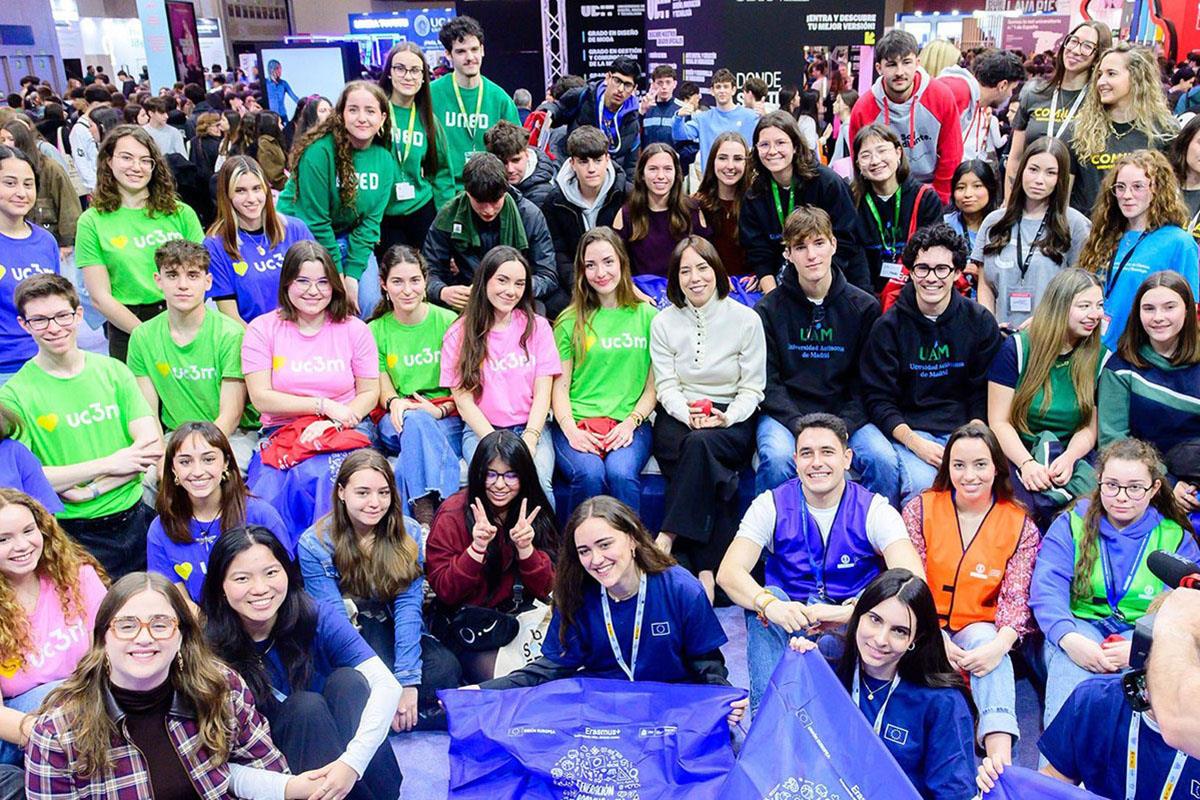 Students





The 2026 Erasmus+ call for proposals in Spain will involve an investment of 408.84 million euros to promote international mobility and educational cooperation. The Ministry of Science, Innovation and Universities (MICIU) manages these funds through the Spanish Service for the Internationalisation of Education (SEPIE).
This overall budget is allocated across two strategic areas, demonstrating that the impact of Erasmus+ extends far beyond individual grants. On one hand, 376.8 million euros will be allocated to mobility projects, which will enable a total of 163,097 students, teachers and administrative staff to undertake training abroad.
In addition, a further 32 million euros has been allocated to partnership projects for cooperation, a pillar designed to enable Spanish organisations to collaborate closely with their European counterparts in developing ideas and transferring knowledge and high-impact educational practices.
The Minister for Science, Innovation and Universities, Diana Morant, has emphasised that "the Spanish Erasmus+ model is a success story that combines the internationalisation of our classrooms with the transformation of our teaching methods".
As Minister Morant explained, "with this sum of around 409 million euros, we are not only helping thousands of people to enjoy a unique educational experience at an international level, but we are also enabling our institutions to continue co-designing, alongside their European partners, the learning environments of the future".
Spain: dynamism and leadership in participation
The keen interest shown by Spanish institutions in playing an active role in the development of the European Education Area is reflected in the figures for demand.
In this call, Spain continues to be the leading country in the European Union in terms of the number of mobility project applications received, with a total of 6,907 applications (an increase of 8.12% per cent compared to 2025). In total, 4,997 projects have been selected across all educational sectors.
Higher Education: Social-based internationalisation
In the higher education sector, which is central to the Ministry's work, plans are in place to fund a total of 1,374 projects that will facilitate 76,559 mobility placements for students and staff in this sector, with an investment of 222 million euros, drawn from European Union funds and co-financing from the Government of Spain, via the MICIU. Of this total, the MICIU will allocate 69.52 million euros to co-fund grants for higher education students and to promote mobility with Latin America.
These grants prioritise the social dimension: approximately 27% of students on intra-European mobility schemes who are from disadvantaged backgrounds will receive additional support of 250 euros per month, ensuring that the programme acts as a genuine driver of equity.
Cooperation on methodological innovation
Furthermore, the 2026 call stands out for the strategic value of its 210 partnership projects for cooperation. With a budget of 32 million euros, this initiative promotes collaboration between universities, vocational training centres, schools and adult education institutions in our country and other European organisations.
The implementation of these projects will enable the design and roll-out of innovations in areas prioritised by the European Commission, such as digitalisation, sustainability, the social inclusion of vulnerable groups and the promotion of STEAM subjects (Science, Technology, Engineering, Art and Mathematics), with a particular focus on attracting female talent.
"The value of the Erasmus+ programme lies in this two-pronged approach: the personal enrichment of those who travel to learn, and the institutional growth of our institutions through cooperation and the sharing of synergies across Europe. Spain is thus consolidating a modern, inclusive education system that is fully aligned with global challenges," concluded Minister Diana Morant.
Non official translation