Tourism employment exceeds 2.75 million workers having increased by 2.5% in February
News - 2026.3.17





The labour market continues to offer positive news for the tourism industry. In February, contributors linked to tourism activities increased in absolute terms by 65,927 people, reaching a total figure that slightly exceeds 2.75 million workers, according to data published by Turespaña. This represents an increase of 2.5% over the same month last year. In relation to the labour market of the country as a whole, which grew by 2.8% year-on-year this month, tourism employment accounts for 12.7% of the total number of registered workers.
The change in contributor numbers was positive in hotels and catering, where an increase of 36,941 contributors was recorded (15,894 in accommodation services and 21,047 in food and beverage services). However, the change in February was negative in travel agencies, where a decrease of 11,022 workers was recorded. In other tourism activities the figure increased by 40,008 workers.
Wage earners grow by 2.9%
In the first month of the year, the number of employees in the tourism sector (accounting for 81.9%) increased by 2.9% compared to the same month last year. By branch of activity, salaried employment fell in travel agencies and tour operators (-10.9%) and increased in hotels and restaurants (2.2%), and within the latter, it increased by 3.4% in accommodation services and by 1.9% in food and beverage services.
Meanwhile, self-employment in the tourism sector, which accounts for 18.1% of all registered workers, rose slightly, by 0.6%. The hotel and catering sector saw a 1.8% increase, driven by growth in accommodation services (23.6%) and food and beverage services (0.1%). Travel agencies saw a year-on-year decline of 28.7% in the number of self-employed workers.
The Valencian Community, where employment is growing the most
In February 2026, employment in hotels and catering and travel agencies and tour operators as a whole increased in all Autonomous Communities except Ceuta and Melilla and Extremadura.
In absolute figures, the largest increases were in Andalusia and in the Valencian Community, while in relative terms the largest increase was again in the Valencian Community (3.8%), followed by La Rioja and Andalusia.
Non official translation
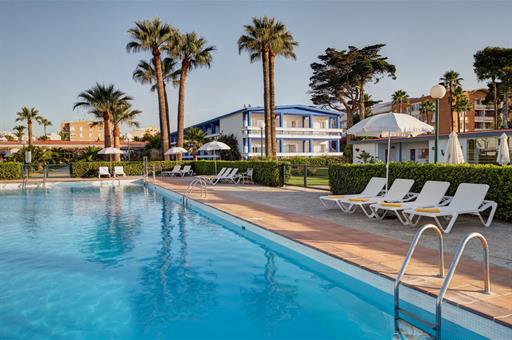
Benicarló Parador in Castellón, Valencian Community (Turespaña)