The museums managed by the Ministry of Culture register more than 7.9 million visitors in 2025
News - 2026.1.2






The museums managed by the Ministry of Culture, which include the Network of State Museums, the Museo Nacional del Prado and the Museo Nacional Centro de Arte Reina Sofía, received a total of 7,993,765 visitors in 2025, some of them beating their all-time visitor records.
The network of state museums managed directly by the Ministry of Culture through the Directorate General for Heritage and Fine Arts, was visited by 2,878,631 people in 2025. This figure is close to the three million visitors in 2024, which shows its capacity to maintain a high level of visitors even in the context of the temporary closure of the Sorolla Museum, one of the most visited museums.
The Prado Museum received 3,513,402 visitors, exceeding 3.6 million if we take into account the number of visitors to Prado exhibitions outside Madrid. In this regard, 10,148 visited the exhibition "XIX. The century of the portrait" in Palma, and 130,188 visited the exhibition "Rubens and the Flemish Baroque artists" in Barcelona. This is the first time the museum has had more than 3.5 million visitors.
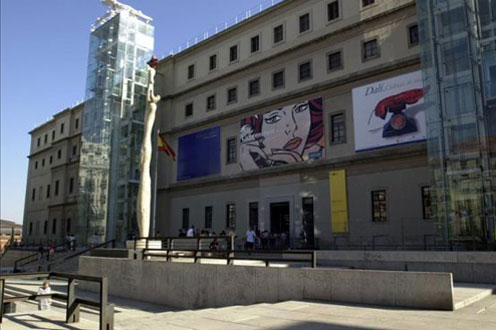
For its part, the Museo Nacional Centro de Arte Reina Sofía received 1,601,732 visitors at the Museum's main site in 2025, almost 65,000 more than the previous year, an increase of 4.2% over 2024.
Meanwhile, the National Archaeological Museum reached an all-time record of 864,201 visitors, 37.76% more than the previous year. This figure far exceeds the previous record set by the museum in 2014, when it reopened its doors after a complete renovation of the building and was visited by 768,836 people.
The second most visited museum in the Network of State Museums, and following the trend of the historical series, was the National Museum and Research Centre of Altamira, in Santillana del Mar (Cantabria), which this year recorded 293,700 visitors, a slightly higher figure than that of 2024 (+0.31%), and the highest in the last 10 years.
The third most visited museum in the Network of State Museums was the Sephardic Museum in Toledo, with 256,468 visitors. Meanwhile, the National Museum of Roman Art in Mérida received 224,890 visitors, a 21.97% increase over 2024, coinciding with the closures of the museum due to the extension and remodelling works of its emblematic headquarters, designed by Rafael Moneo, which celebrates its 40th anniversary in 2026.
For their part, the state museums located in Valladolid also experienced an increase in visitors compared to the figures recorded in 2024. In 2025, the Museo Casa de Cervantes was visited by 37,969 people, 7.26% more than the previous year, and the Museo Nacional de Escultura by 180,226 people, 5.56% more. Both museums have improved their records for five consecutive years.
The National Museum of Anthropology in Madrid, which celebrated its 150th anniversary this year, recorded 87,679 visits, a slight increase on 2024 (+0.83%), and its highest figure in the last five years.
The Museo Nacional de Cerámica y Artes Suntuarias 'González Martí' in Valencia (186,534 visitors), the Museo del Greco in Toledo (149,432), the Museo Nacional del Romanticismo (115,472), the Museo Cerralbo (109,747), and the Museo del Traje, had similar numbers of visitors to previous years, with slight variations. Likewise the Centro de Investigación del Patrimonio Etnológico (98,920), the Museo Nacional de Artes Decorativas (97,722) and the Museo de América (89,077), in Madrid, and the Museo Nacional de Arqueología Subacuática ARQVA in Cartagena (Murcia), which recorded 86,594 visitors.
Origin of visitors
The majority of visitors to state museums come from Spain (78%), compared to 22% from abroad. Of the latter, people from the US, France, Italy and the UK, in that order, were the most frequent visitors.
In the case of the Museo del Prado, 34.15% of its visitors in 2025 were residents of Spain, while 65.9% were foreign residents, mainly from the US (14%), Mexico (10%), Italy (5%) and Argentina (4%).
Exhaustive programme of exhibitions in the State Museum Network
2025 was a year with a rich programme of temporary exhibitions in the network of State Museums. A total of 72 were held, with special attention paid to the gender perspective and commitment to women's participation, the work of contemporary creators, and research into collections, their origins and historical context.
Regarding the participation of women, exhibitions such as the one organised by the National Museum of Ceramics and Sumptuary Arts 'González Martí' in Valencia, 'Dona(n)', whose objective was to show the role of women who through their donations throughout history have contributed to enriching the museum's collections, stand out. Meanwhile, the Museo Nacional del Romanticismo organised the exhibition 'Retratadas. Women's Studies', which will be open until 25 January 2026.
In the field of contemporary creation, throughout the year different museums in the network hosted the project 'Memory, fabrics and museums. The slums of attention', in which different creators reviewed the textile collections of the participating museums from a contemporary perspective. At its headquarters, the National Museum of Anthropology presented the latest work, made specifically for the museum by the American artist Ayana V. Jackson within the framework of the international festival 'PHotoEspaña'.
Exhibitions were also presented that focus on the promotion of artists, including 'Javier de Juan. In the heart of the city' at the National Museum of Decorative Arts in Madrid, and 'Chillida. Mysticism and Matter' at the National Sculpture Museum of Valladolid.
The year 2025 marked the centenary of the Regional Costume Exhibition, a milestone that marked the starting point of the collections of the Costume Museum. Regarding the Ethnological Heritage Research Centre, the museum organised the exhibition 'Roots' for the occasion, which could be seen up to November 2025, and was accompanied by various informative and scientific activities.
For its part, the Museo de América in Madrid activated a series of interventions with the collaboration of different collectives, communities and professionals, entering into dialogue with its permanent exhibition under the name 'Subverted Times: interferences in the space/time of the museum'. This museum has paid special attention to búcaros from the Indies as a global cultural and aesthetic phenomenon, housing one of the most important and oldest collections in the world.
With its 'Maniera' proposal, the El Greco Museum in Toledo created a journey through 16th century Toledan painting, which can be visited until February 2026. As part of this exhibition, The Transit of the Virgin, a work by Juan Correa de Vivar from the Museo Nacional del Prado, returns to the Synagogue of the Transit (Sephardic Museum), its original site, almost two centuries later.
And last, after the success of 'The Egypt of Eduard Toda', the National Archaeological Museum closed the year with a major exhibition that will be open to the public in the first months of 2026, bringing exceptional pieces of Mexican heritage to our country: 'Half the world. Women in indigenous Mexico. The human sphere'.
Non official translation
Reina Sofía National Art Centre Museum (EFE)