Arancha González Laya presents Joint Response Strategy of Spanish Cooperation to the COVID-19 Crisis
News - 2020.7.8





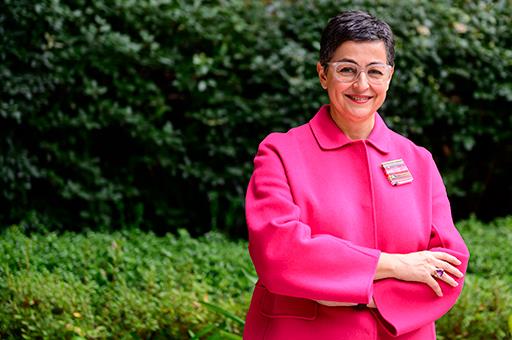
The Development Cooperation Council - a body attached to the Ministry of Foreign Affairs, European Union and Cooperation - held the first of its annual plenary sessions of Wednesday, involving the participation of the Minister for Foreign Affairs, Arancha González Laya, and chaired by the State Secretary for International Cooperation, Ángeles Moreno Bau.
During her speech, Minister González Laya presented the Joint Response Strategy of Spanish Cooperation to the COVID-19 Crisis - an extensive Action Plan that public and private parties in Spanish Cooperation have been drawing up since March. Arancha González Laya also reported on the Action Plan for this term of office.
For her part, the State Secretary for International Cooperation, Ángeles Moreno Bau outlined the lines of work for the coming months by the State secretariat, which, as a result of the emergency caused by the pandemic has restructured its goals to provide a response with short- and medium-term measures to tackle the COVID-19 crisis in the countries where Spanish Cooperation operates.
Another of the issues addressed at the plenary session of the Council was the new legal and financial architecture of the cooperation system, which includes the reform of the 1998 International Development Cooperation Act.
The new regulatory framework is aligned with Spain's commitment to achieving the Sustainable Development Goals (SDG) of the United Nations 2030 Agenda - the roadmap for international cooperation around the world - which seeks greater efficacy through a cross-cutting and multilateral approach to the SDG, as well as the involvement of partner countries in the development plans.
The Development Cooperation Council is a Central Government advisory body that participates in defining international development cooperation policy. It is made up of 35 members.
The members are grouped into four blocks: representatives of Central Government, representatives of non-governmental development organisations (NGDO), representatives of social stakeholders and private bodies that act in the field of development cooperation - trade unions, business organisations and the social economy, universities and associations that defend human rights, and experts.
At this time, the Council has five priority working groups: Capabilities, the 2030 Agenda, Rights of Children, Gender and Development, and Education for Development.
International development cooperation has formed part of the government's public policies for decades now, and plays a fundamental role in Spain's Foreign Action, with a presence in 34 countries and territories. One of the strengths is the water and sanitation programme, which enjoys global leadership and has benefitted more than 3 million people in Latin America and the Caribbean.
Archivo