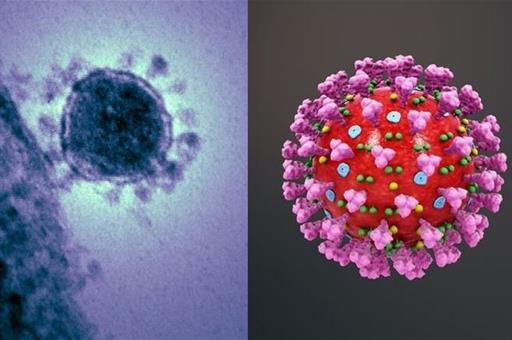
Coronavirus COVID-19
CoNVat to design new diagnosis system for COVID-19 with best existing technology
News - 2020.4.1





Via a biosensor platform based on optical nanotechnology, it seeks to provide a fast and precise diagnosis of the disease caused by the coronavirus without the need for complex instruments.
The University of Barcelona (Spanish acronym: UB), the Aix-Marseille University (AMU, in France) and the National Institute for Infectious Diseases (INMI, in Italy) are working together on this project that has been funded with over two million euros by the European Union under an express call for applications in response to COVID-19 within the framework of Horizon 2020.
The sensor technology developed by the ICN2 consists of a microchip with interferometric waveguides, which currently offer the highest sensitivity for the diagnosis of clinical biomarkers. These microchips enable the detection and quantification of molecules or viruses in a single step, without the need for prior or subsequent amplification, meaning that the complete analysis can be carried out in less than 30 minutes.
On the one hand, it will monitor the connection between the virus and the sensor in real time using specific antibodies anchored to the surface of the sensor, which will enable a rapid diagnostic response and quantification of the viral load from samples of nasopharyngeal secretions, saliva or any other relevant fluid. On the other hand, it will identify the viral RNA using complementary DNA waves. This genomic test requires no PCR amplification processes and enables various different tests to be conducted simultaneously on the same chip in order to distinguish which type of virus the sample contains.
Together with the Vall d'Hebrón Hospital in Barcelona and the Aix-Marseille University, the ICN2 has begun to study the options for adapting the sensor technology to serological analysis (the detection of antibodies in serum).
Analysis of existing detection systems
This system is aimed at surpassing a number of the features of existing tools by taking the best of each strategy. The Nanobiosensors and Bioanalytic Applications Group at ICN2, which is led by Professor Laura M. Lechuga, has drawn up a report that reviews the various diagnostic methods currently available for the COVID-19 disease.
Her extensive experience in the development of competitive biosensor devices and her role as coordinator of the European CoNVat project positions the researcher Laura M. Lechuga as an international benchmark in the search for tools to combat COVID-19.
The report drawn up at the ICN2 provides a general overview of both the conventional techniques used at clinical laboratories and the new systems at various stages of development and commercialisation that could be useful for monitoring the population and rapidly detecting the SARS-CoV-2 virus and COVID-19 disease.
Generally speaking, respiratory virus detection methods can be classified into three distinct strategies:
1) Detecting the genetic material of the virus (RNA)
This is the most complex form of detection, but also the fastest thanks to the significant investments in genomic research that were made to obtain the human genome in the past. One of its steps is called "Polymerase Chain Reaction", a diagnostic technique that is abbreviated to PCR. This technique induces gene replication as it would occur in nature, but in an accelerated manner. It requires time, a precise and controlled temperature, and "food" for the genes - the right reagents. Furthermore, only operational and commercial methods currently exist to replicate genes similar to human genes (DNA), meaning the virus genes (RNA) need to be "converted" into DNA before it can be used.
One of the advantages of the PCR technique is that it is already established and commercialised by numerous companies and that it adapts to new viruses very quickly, in a matter of days, given the existing level of technology and the large number of different reagents that already exist. Furthermore, it can detect different viruses separately in a highly precise manner and even works with very small amounts of a virus.
The disadvantages include the need for complex, precise and expensive instruments, meaning that the samples must be centralised at laboratories with specialised personnel. This is also due to the knowledge needed to handle the samples reliably and follow the very strict process given that its highly sensitive nature means that it is highly vulnerable to contamination. Furthermore, it takes hours to obtain results and this is compounded by the additional time required to transport the samples to the laboratory and return the results. All this leads to a relatively high cost.
There are various alternative techniques that enable detection of the virus genes in other ways, but none of them is sufficiently developed for deployment at hospitals right now and use in decision-making. Furthermore, many of these new techniques can only be used with instruments that are not being mass produced at the moment. As a result, the PCR technique is the only one that currently exists for reliably and operationally detecting the virus genes.
2) Detecting the virus as an individual entity
In this case, the entire virus is detected using antibodies targeted at interacting with certain molecules - the antigens (from the family of proteins) - present on the virus coat, which are quite specific and, in principle, detectable.
Finding reagents is an arduous research task. In reality, they are analogous to the "antibodies" that the patient would produce when combating the specific proteins of a virus and not others present in saliva, human cells, other normal bacteria or other viruses. Given that the current coronavirus is so similar to the virus we call SARS, some reagents have already been developed to combat SARS that could be used right now.
These methods are based on the colour changes that occur in the reagents when they come into contact with the virus as a result of the reaction caused in its coat proteins. This requires a significant amount of the virus in the sample to be effective. Because there is no amplification stage lasting several hours, these tests are "rapid" and produce results in minutes.
This is one of its undeniable advantages: it is a very rapid technique that enables large-scale low-cost production. Furthermore, it enables a result to be obtained wherever the sample is located and requires no specialised personnel, although it does indeed require care when handling the sample. In principle, it detects the disease from day one, provided that sufficient quantity of the virus is present.
However, there are significant difficulties to consider: it needs sufficient quantity of the virus in the sample, meaning there is a chance of producing a negative result even when the disease is present; and the reagents must be very specific, therefore requiring exhaustive quality controls to ensure the same quality (reliability) from batch to batch.
3) Detecting antibodies in the infected organism (serological testing)
Once infection is under way, a sufficient quantity of antibodies is produced, and this enables them to be detected. In fact, as a general rule, antibodies are maintained for a time - or throughout a lifetime - after beating an infection, thereby providing immunity. This is the effect sought by a vaccine, without needing to have the disease.
Antibodies are in the blood, in the serum specifically, and this is why these are called "serological" tests. To detect the antibodies, reagents are used that contain similar parts to the antigens; i.e. the opposite to the other tests described above.
Performing these tests is very simple. They require a small blood sample and the result is obtained very quickly, in 5-15 minutes. It is a technique that enables large-scale low-cost production. It is also portable; i.e. the result is obtained wherever the sample is located without the need for specialised personnel. It has already been established for other uses and for other viruses.
Its disadvantages are that it needs a sufficient quantity of antibodies in the sample, meaning there is a chance of producing a negative result even though the disease is present, and that it does not detect the disease if it has only just begun given that antibodies take several days to be produced depending on the individual and their health condition.
Non official translation