




"All the protocols are ready and updated", stated the acting minister. "All the public health authorities are prepared for any eventuality related to the disease", remarked María Luisa Carcedo.
"The risk of a case of Ebola in our country is extremely low, practically zero" stressed Fernando Simón, Director of the Coordination Centre for Health Alerts and Emergencies, dependent on the Ministry of Health. "The risk is limited to the epidemic zone in the north-east of the Democratic Republic of the Congo".
"We should remember that air and maritime traffic between the risk zone and Spain is very limited; there are no direct flights or regular maritime movements between Spain and the Democratic Republic of the Congo, and hence the risk of direct transmission between people is minimal", added Fernando Simón.
On Friday, 14 June, the Emergency Committee of the International Health Regulations of the World Health Organization (WHO) concluded that the outbreak of Ebola that began in August 2018 in the north-east of the Democratic Republic of the Congo does not meet the conditions to be declared a Public Health Emergency of International Importance. The same declarations were made on 17 October 2018 and 12 April 2019.
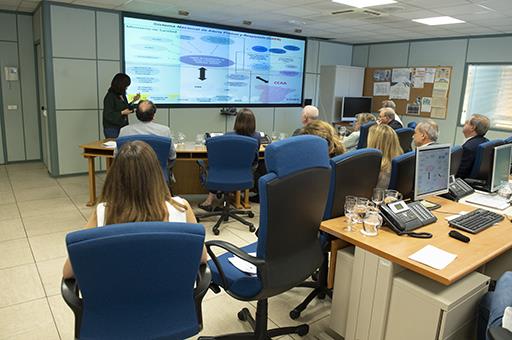
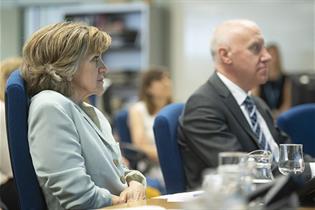 Pool Moncloa/Borja Puig de la BellacasaAt Wednesday's meeting of the CCAES, it was made clear that Spain maintains its action and response protocols up-to-date, which will be activated in the event of a suspected case of this disease caused by the Ebola virus, and that there is good coordination between all the institutions involved in the response.
This includes the systems to monitor the epidemic, evaluate the risk and provide a coordinated response to a possible alert of the disease caused by the Ebola virus through the National Early Warning and Response System (Spanish acronym: SIAPR).
Other procedures, such as the detection of cases and information are managed by the National Network of Epidemiological Surveillance and cases are handled through the Network of Hospitals for High Risk Infectious Diseases and through the application of the Action Protocol in response to suspected cases of the disease caused by the Ebola virus.
The action protocols establish the guidelines for maintaining the right information and recommendations for travellers to risk zones through the Network of International Vaccine Centres and consular services.
On top of all this is the detection and response to Ebola alerts at borders, maintaining the surveillance systems activated at entry points through the External Health Service.
In parallel, the regional governments, in coordination with the Coordination Centre for Health Alerts and Emergencies carries out simulations and ongoing training to personnel on a periodic basis at the High-Level Hospital Isolation Units (Spanish acronym: UAAN).
In 2018 and 2019, simulations were performed at the following hospitals: La Paz (Madrid), La Fe (Valencia), Clínic (Barcelona), Donostia, Virgen del Rocío (Seville) and La Candelaria-Ofra (Tenerife), as well as those performed at the Central Defence Hospital. The latter took place just a few days ago.
The UAAN were set up in 2014, following the epidemic of the disease caused by the Ebola virus, and guarantee a high degree of specialisation and training of health personnel, the best possible attention to patients with confirmed infection and the basic security conditions in controlling the infection at a high level to prevent transmission.
Wednesday's meeting held at the CCAES was also attended by the Secretary-General for Health, Faustino Blanco, the Director-General of Public Health, Pilar Aparicio, and General Miguel Ángel Ballesteros, Director of the National Security Department, among others.
Non official translation
Pool Moncloa/Borja Puig de la Bellacasa