39th meeting of the World Heritage Committee in Bonn (Germany)
Routes of Santiago de Compostela in Northern Iberian Peninsula included on UNESCO World Heritage List
News - 2015.7.5





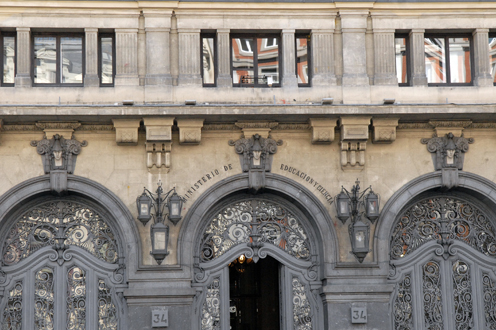
After receiving this news, the Spanish Minister for Education, Culture and Sport, Íñigo Méndez de Vigo, wished to express "great satisfaction over this recognition from UNESCO, mainly because this Spanish entry is based on joint efforts and cooperation between five autonomous regions (La Rioja, Cantabria, the Basque Country, Asturias and Galicia) and the Spanish State through this ministerial department".
Íñigo Méndez de Vigo congratulated "the technical teams from the ministerial department and the regional governments, led in this case by the Regional Government of the Principality of Asturias, on a job well done". The Spanish minister stressed that this entry is "particularly important" because it formed part of the team led by Marcelino Oreja, Secretary-General of the Council of Europe, when he promoted recognition of the Route of Santiago de Compostela as the first European Cultural Route in 1987.
"The historical origins of the pilgrim's route to Santiago de Compostela, represented by the Routes of Northern Spain, have today been recognised by UNESCO - although it is my wish for them to be recognised by all the pilgrims and tourists who enjoy the heritage of Spanish culture", explained Íñigo Méndez de Vigo. With 44, Spain is the country with the third-highest number of entries on the World Heritage List.
This entry involving the Routes of Santiago de Compostela in the Northern Iberian Peninsula is an extension of the entry corresponding to the Camino Francés, which was previously recognised by UNESCO in 1993. An additional four routes have now been added, which form part of the Route of Santiago de Compostela:
- The Camino Primitivo, which begins in Oviedo;
- The Camino Costero, measuring 936 kilometres in length;
- The Camino Vasco-Riojano, which begins in Irun; and
- The Camino de Liébana, a branch route that links the Camino with the Santo Toribio Monastery.
This extension aims to explain the origin of the pilgrim's route to Santiago de Compostela. The Routes of Northern Spain represent the early routes of the pilgrimage to Santiago de Compostela, with a direct link to the discovery of the tomb of St. James and its promotion by the Kingdom of Asturias during the 9th Century. As from the 11th Century, they were replaced by the Camino Francés as the main route.
Over its 11 centuries of history, the Route of Santiago de Compostela has been one of the most influential and recognised communication routes in Europe. This route also became an important trade route and a means of spreading knowledge, via which elements of social, economic and cultural life were introduced into northern Spain, later leading to the appearance of cities and towns, in which were built civil and religious buildings that followed artistic styles coming from other European countries.
Through a process of constant evolution and due to its spiritual value, the Route of Santiago de Compostela comprises a series of historical heritage assets of the highest order, a natural landscape of exceptional beauty and intangible heritage that includes the oral narrative that kept, and continues to keep, the route followed by pilgrims to Santiago de Compostela alive. It is a meeting place that has fostered constant cultural dialogue between the people who travel the route and the towns and villages through which it passes.
Archivo