Oscar López meets with tech companies during his visit to Mexico: "Spain offers the best conditions for investment"
News - 2026.9.3
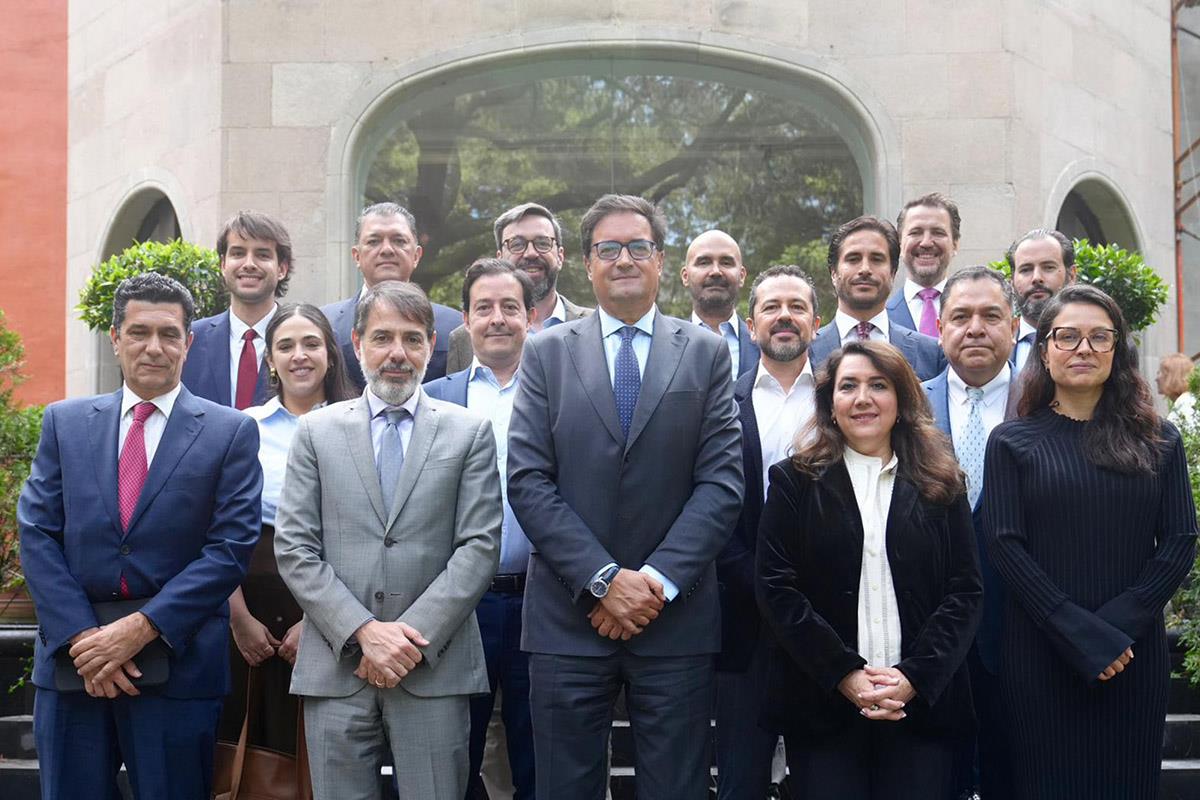 The Minister for Digital Transformation and Civil Service, Oscar López, with representatives of Spanish and Mexican technology companies during his visit to Mexico






The Minister for Digital Transformation and Civil Service, Oscar López, met with Spanish and Mexican technology companies during his visit to Mexico, championing the "great economic momentum" Spain is currently experiencing. "Spain offers the best conditions for investment," Minister López emphasised during a working breakfast held at the Mexican Embassy's residence in Mexico City, attended by fifteen companies: six Mexican firms (Alestra/Axtel, IDS Comercial, Incode, AMITI, Softtek, Itaca Films) and nine Spanish firms (Veridas, Satlantis, Ikusi, Hiberus, Indra-Minsait, CAMESCOM-Seguridata, Cámara Española, Teknei and Hispasat).
The minister linked the strong investor appetite for Spain to the country's access to clean, low-cost energy - a result of its commitment to renewables - and highlighted Spain's leadership in connectivity as another major competitive advantage, noting 5G penetration reaching 99% of the population and fixed-line coverage extending to 95% of households.
López also praised the leadership shown by Spanish companies in the technology sector. "Spain now exports technology as well", he noted, in addition to its traditional status as a global leader in the tourism and infrastructure industries. In this regard, he pointed out that the digital economy accounted for 27% of Spain's GDP, with a total economic impact exceeding 455 billion euros.
During his first few hours in Mexico, the minister held separate bilateral meetings with his counterpart in Civil Service, Secretary Raquel Buenrostro, and with Mexico's Secretary of Science, Humanities, Technology and Innovation, Rosaura Ruíz.
During his meeting with Buenrostro, López outlined the Government of Spain's recent Action Plans for Democracy and the Fight against Corruption, as well as the results of the Plan to Combat Telephone and SMS Scams, which has already succeeded in blocking more than 300 million fraudulent calls.
Furthermore, both officials expressed their willingness to strengthen cooperation on the training of civil servants through the National Institute of Public Administration.
During the meeting with Rosaura Ruíz, Mexico's Secretary of Science, Humanities, Technology and Innovation, they reviewed collaboration agreements between Spain and Mexico. These include the protocol signed by the Barcelona Supercomputing Center (BSC) with Mexican scientific institutions to boost supercomputing and Artificial Intelligence in Mexico, and the Memorandum of Understanding (MoU) signed in April between the Ministry of Science, Innovation and Universities and the Secretariat led by Ruíz. These agreements set out avenues for collaboration such as knowledge exchange, shared access to infrastructure, R&D projects, technology transfer, talent exchange and mobility and cooperation on public policy regarding AI. Policies reflecting a shared vision between Spain and Mexico to advance toward a model of trustworthy, sovereign AI applied to public services and supercomputing. Furthermore, in June this year, the BSC signed a Memorandum of Understanding (MoU) with Mexico's National Polytechnic Institute, which laid the foundations for this collaboration between the two regions to integrate Latin America's supercomputing system into the European ecosystem (EuroHPC).
During the meeting, the two leaders also discussed the Ibero-American Digital Forum, which is to be held in Madrid in early November as part of the Ibero-American Summit. This gathering will address four key topics: digital rights and child protection; connectivity, cybersecurity and critical infrastructure; the transformation of public administration in the digital age; and trustworthy, sovereign AI.
In addition to these meetings, the minister visited the National Museum of Anthropology, an institution established for educational and outreach purposes which researches, preserves and promotes the country's archaeological, historical and ethnographic heritage. In 2025, the museum was awarded the Princess of Asturias Award for Concord in recognition of its long-standing commitment to defending and preserving an essential part of humanity's anthropological heritage.
The minister also visited the 'United Arab Republic' Primary School, where the Telefónica Foundation and the LaCaixa Foundation run the ProFUturo programme, which aims to ensure that children and teachers from disadvantaged backgrounds have access to technology and training, thereby narrowing the digital divide.
Non official translation