The Ministerial Conference on Palestinian Culture calls on the international community to create a Pact for the Resilience of Palestinian Culture
News - 2026.7.16
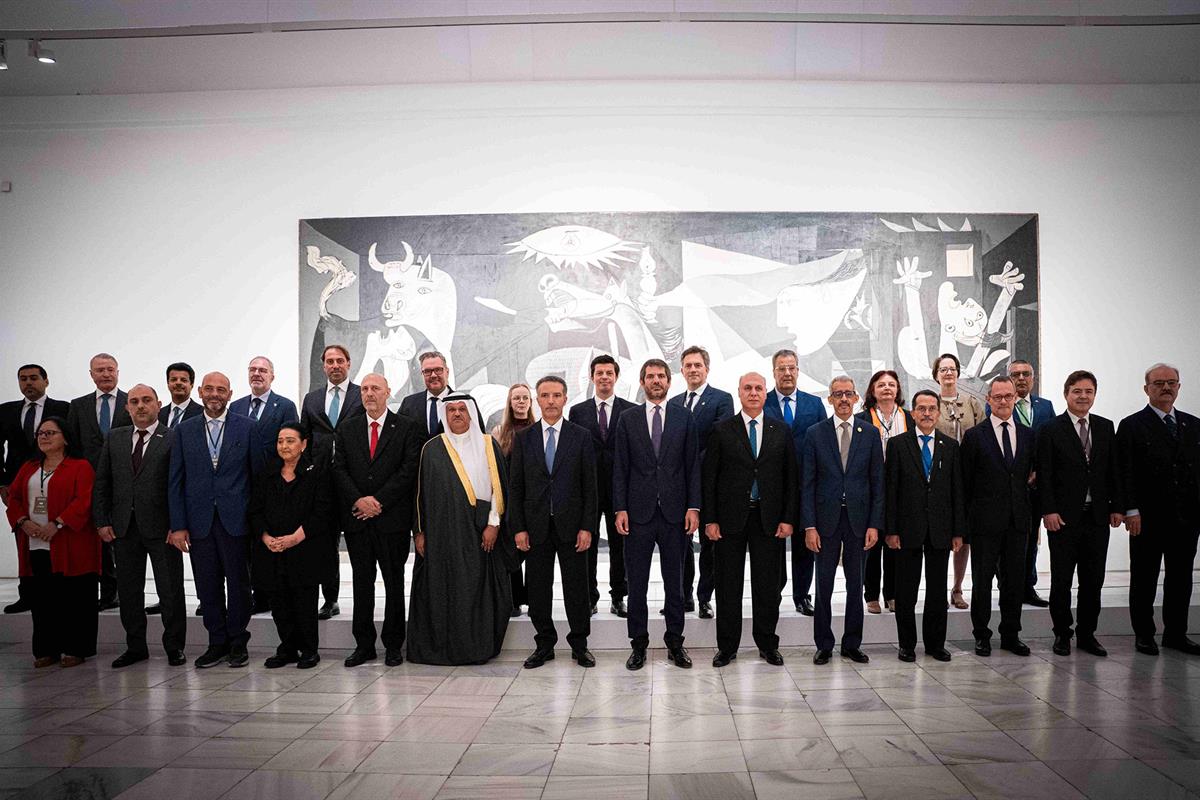 The Minister for Culture, Ernest Urtasun, along with the other participants in the Ministerial Conference for Palestinian Culture





The Ministerial Conference on Palestinian Culture, organised by the Spanish and Palestinian Ministries of Culture, has concluded in Madrid with the signing of the Declaration on the Protection of the Cultural Sector in Palestine.
This international meeting, held on 15 and 16 July at the Prado National Museum and the Reina Sofía National Art Centre, was attended by thirty delegations and concluded with a declaration highlighting the urgent need to establish a Pact for the Resilience of Palestinian Culture that "contributes to protecting, sustaining and revitalising Palestinian cultural life, strengthening the resilience of its institutions, its cultural heritage and its creators, and mobilising the political commitment and resources necessary to place culture at the heart of its reconstruction".
In this declaration, the countries express their "deep concern regarding the impact of the conflict on Palestinian cultural life, the impact of violations of international law in Gaza, and Israeli incursions into the West Bank and Jerusalem". These actions affect heritage, cultural institutions, cultural professionals and the exercise of the Palestinian people's political, social, economic, and cultural rights - including the right to self-determination.
Accordingly, and based on the recognition that "culture is a global public good and plays a fundamental role in strengthening human rights, security and social cohesion", this Declaration calls upon States, international organisations, financial, philanthropic and cultural institutions, and civil society to work towards an International Pact for the Resilience of Palestinian Culture. This Pact "will promote culture as a means of safeguarding the identity, dignity and cultural continuity of the Palestinian people".
The Minister for Culture, Ernest Urtasun, stated in one of his speeches during the Conference that "at a time of immense suffering for its people, the Palestinian Ministry of Culture has reminded us that creativity is also a form of resistance, as is continuing to safeguard memory and to believe in the power of culture, even when everything seems intent on silencing it. This lesson in dignity, courage and hope transcends the borders of Palestine and is a source of inspiration for the entire international community".
The Ministerial Conference on Palestinian Culture
The Ministerial Conference on Palestinian Culture, organised by the Spanish and Palestinian Ministries of Culture, was attended by 30 international delegations. Its objective was to provide a direct forum for dialogue among culture ministers to define specific ways to collaborate with the Palestinian cultural sector, enabling a response to the impact the genocide is having on it - in its human, tangible and intangible dimensions.
The opening of the Ministerial Conference on Palestinian Culture took place at the Prado National Museum. The event featured two artistic performances and speeches by Spain's Minister for Culture, Ernest Urtasun, and the Palestinian Minister for Culture, Emad Hamdan, as well as UNESCO's Assistant Director-General for Culture, Nayef Al-Fayez, and the Palestinian filmmaker Basel Adra.
This Ministerial Conference was announced by Minister of Culture Ernest Urtasun during the European Union Council of Ministers of Culture meeting held in Brussels in November 2025. For the first time, and at Spain's request, the EU Council of Ministers of Culture discussed the reconstruction of Palestinian cultural heritage. During that meeting, Ernest Urtasun also sought support from other EU nations to build an alliance for the reconstruction of Palestine, following the model of the alliance established for the reconstruction of Ukraine.
The event in Madrid was the first edition of the Ministerial Conference on Palestinian Culture, and it is expected to continue next year, hosted by another country.
Citizens' Forum for Palestinian Culture
Ahead of the Ministerial Conference, the Spanish Ministry of Culture organised the Citizens' Forum for Palestinian Culture, which took place on 14 and 15 July at the Thyssen-Bornemisza National Museum and the Círculo de Bellas Artes in Madrid.
This Forum, conceived as a space for civil society and open to the public, showcased cultural projects and cooperation programmes involving Palestine The programme consisted of round-table discussions and artistic performances in which artists, cultural and heritage professionals, experts, activists and international organisations reflected on and shared experiences, projects and cooperation programmes.
Participants included the director of the Palestinian Museum, Amer Shomali; the director of development at the RIWAQ Centre, Hebah Omari; a representative from Al-Haq; the director of The Palestinian Circus, Mohammed Rabah; the artist Faisal Abu Alhayjaa from The Freedom Theatre; and the writer Karim Kattam, amongst others. Representatives from the TEJA Network, Novact, UNRWA, Casa Árabe, the Centre for Contemporary Arab Studies, CIDOB and the Finestres bookshop, amongst others, also took part in the Citizens' Forum.
Defence of Palestinian culture
This initiative continues the Ministry of Culture's ongoing efforts to support Palestinian culture. In addition to a 200,000 euro contribution to the UNESCO fund for the reconstruction of Gaza, the Ministry of Culture has carried out various initiatives in collaboration with UNRWA - the United Nations Relief and Works Agency for Palestine Refugees - aimed at supporting Gaza and denouncing the Israeli genocide. Furthermore, the Ministry of Culture contributes 100,000 euros annually to the TEJA programme, an international cultural solidarity network that provides support to artists and cultural professionals in emergency situations. Through this support, Palestinian artists travel to Spain for artistic residencies.
The signatories to the Final Declaration are as follows: Austria, Algeria, Bahrain, Belgium, the United Arab Emirates, Egypt, Spain, France, Greece, Indonesia, Ireland, Iceland, Italy, Jordan, Kuwait, Libya, Luxembourg, Mauritania, Mexico, Pakistan, Palestine, Portugal, Somalia, Syria, Tunisia, Turkey, Uruguay, Vietnam and ALECSO.
Non official translation