





Early schooling has grown significantly between the 2018-2019 and 2023-2024 academic years, with the result that 73.3% of 2-year-olds are enrolled in school (compared with 61.9% in 2018), representing an increase of 11.4 percentage points. In the case of one-year-olds, the percentage has risen from 42.1% to 52.2%, an increase of 10.1 percentage points. This is evident from the report 'National System of Education Indicators 2026', published by the Ministry of Education, Vocational Training and Sports.
According to the selection of indicators provided, participation in higher education has also increased, with the net enrolment rate at this level for 20-year-olds rising from 51.7% in 2018-19 to 53.6% in 2023-24, an increase of 1.9 percentage points. The increase is particularly significant in non-university higher education, where the enrolment rate for 20-year-olds has risen from 13.8% to 16.2% - an increase of 2.4 percentage points.
The growth in vocational training is also reflected in the graduation rates. Between the 2018-19 and 2023-24 academic years, the gross graduation rate for intermediate vocational qualifications rose from 23.5% to 28.2%, an increase of 4.7 percentage points. As for the gross graduation rate for higher-level qualifications, this has risen from 29.4% to 36.8%, an increase of 7.4 percentage points.
Increase in public spending
The statistics also show that public spending on education has increased significantly over the last five years: in 2019, it stood at €53.111 billion, and by 2024, it had reached €71.349 billion. This represents an additional €18.238 billion, a growth of 34.3% over five years.
Average spending per student has also risen, going from €6,246 in 2018 to €8,293 in 2023. This amounts to an extra €2,047 per student, an increase of 32.8% over five years. In terms of investment per student relative to GDP per capita - covering levels from primary through higher education - Spain remains among the countries with the highest investment effort (26.5%), compared to 24.3% in the EU-25 and 25.2% in the OECD.
More teaching staff
Over five academic years, the system has added 84,281 teachers, representing an increase of approximately 9.4%. Consequently, the total number of teachers in the education system rose from 894,867 in the 2018-19 academic year to 979,148 in 2023-24.
Furthermore, the student-to-teacher ratio (based on full-time equivalents) continues to fall. In the 2023-24 academic year, the ratio stood at 11.1 pupils per teacher, compared with 12.2 in 2018-19.
The primary aim of the '2026 National Education Indicators System' is not to present previously unpublished data, but to provide a comprehensive overview of the Spanish education system. This report provides relevant, summarised information drawn from various national and international statistical sources, with a view to contributing to the understanding and assessment of the efficiency and effectiveness of the education system, as well as to guiding decision-making by the institutions and sectors involved in education.
Non official translation
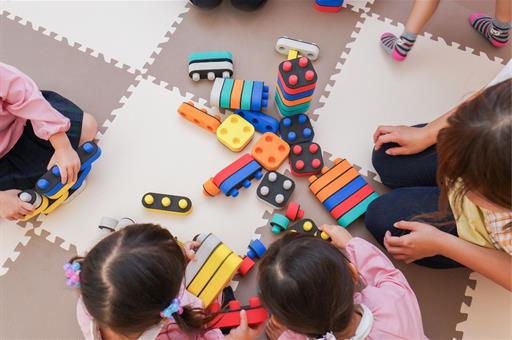
Students enrolled in Early Childhood Education