Spain ranks second in the EU for the number of projects awarded in the 2025 Advanced Grant call
News - 2026.6.24
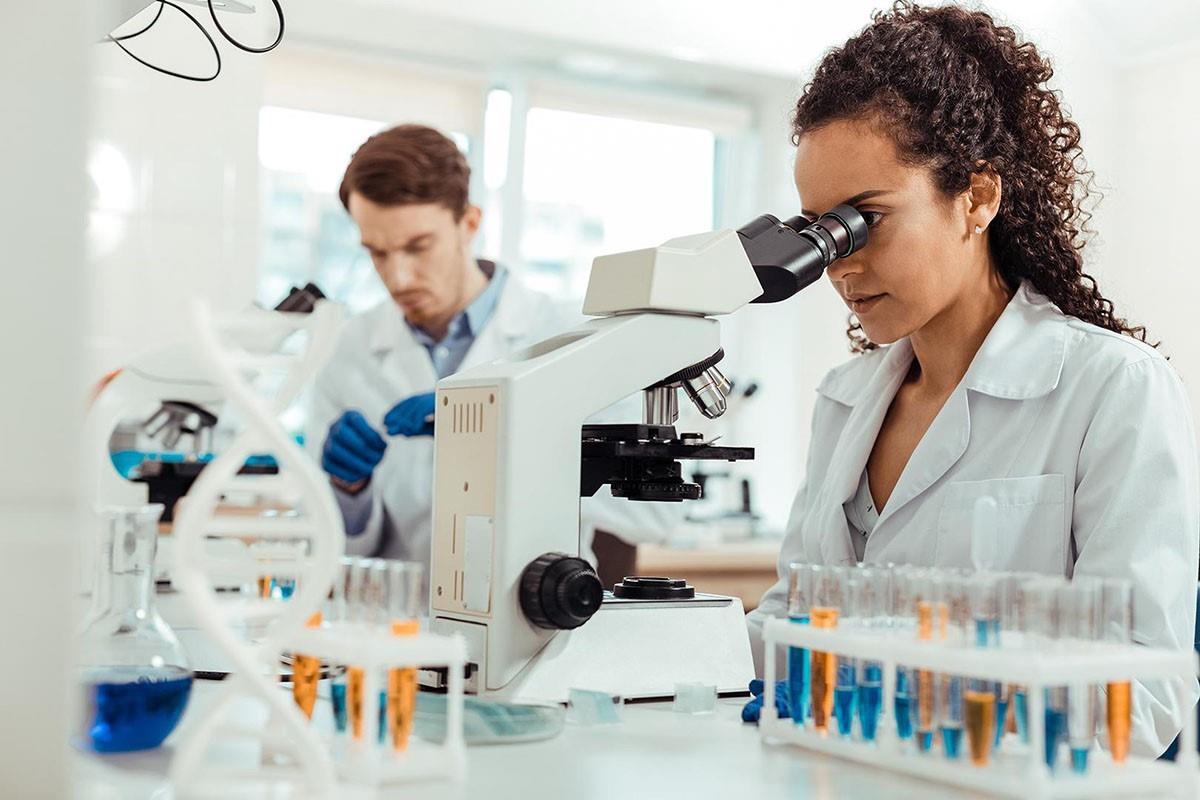 A researcher in the laboratory





Spain ranks second in the EU, behind Germany, in terms of the number of projects awarded under the 2025 Advanced Grant call. With this result, Spain solidifies its position among the European nations with the greatest capacity to attract competitive funding for excellence and reinforces its leadership in European scientific research.
The ERC Advanced Grant call is aimed at established researchers with exceptional scientific track records and funds cutting-edge research projects with the potential to generate transformative advances in their respective fields. In this round, the ERC will fund 319 projects across Europe with a total budget of €838 million.
The call has seen unprecedented participation, with 3,329 proposals submitted-a 31% increase compared to the previous edition. The final success rate was 9.6%, confirming the high level of competition for these grants, which are considered among the most prestigious in the international scientific arena.
Of the 29 projects funded by a Spanish host institution, 41% are led by researchers of foreign nationality, from at least eight different countries. This figure positions Spain as one of Europe's most attractive scientific environments for pursuing a career in research excellence.
The funded projects cover a wide range of scientific disciplines, from biomedicine, quantum physics and artificial intelligence to astrophysics, archaeology, linguistics and the social sciences. This diversity highlights the strength and competitiveness of the Spanish research system across all fields of knowledge.
The breakdown by major scientific fields is as follows:
- Life Sciences: 11 projects
- Physical Sciences and Engineering: 10 projects
- Social Sciences and Humanities: 8 projects
The host institutions for the funded projects include the Spanish National Research Council (CSIC), the National Centre for Cardiovascular Research (CNIC), the Centre for Genomic Regulation (CRG), Pompeu Fabra University (UPF), the Institute of Photonic Sciences (ICFO), the University of Zaragoza, the Canary Islands Institute of Astrophysics (IAC), the Autonomous University of Barcelona (UAB), the Barcelona Institute for Biomedical Research (IRB Barcelona), the University of the Basque Country (UPV/EHU) and the Prince Felipe Research Centre (CIPF), amongst others.
The international dimension of Spain's achievements ties in with the objectives of the European 'Choose Europe' initiative, which was launched to strengthen Europe's capacity to attract top-tier scientific talent from around the world. In this context, Spain, as part of the Choose Spain initiative, is establishing itself as one of the countries best placed to contribute to this shared objective, thanks to the quality of its research centres, universities and scientific infrastructure.
The Ministry of Science, Innovation and Universities, through the Spanish Foundation for Science and Technology (FECYT), has provided technical and strategic support to the Spanish research community throughout the process of preparing ERC applications.
Key initiatives include organising information sessions, providing personalised advice to applicants, and conducting mock interviews for candidates who reach the final stages of evaluation.
The impact of these initiatives is reflected in the results achieved: approximately 50% of the Spanish projects funded under the ERC Advanced Grant 2025 call had previously taken part in the mock interviews organised by FECYT, which highlights the value of this support in strengthening the competitiveness of Spanish applications.
List of funded Spanish projects:
- Cedric NOTREDAME - Embedomics -An AI-driven Evolutionary Engine to Translate the Sequence Universe into Function (LS2) Fundació Centre de Regulació Genòmica
- Ari MELNICK - X-SeLECT - X-chromosome in lymphoma evolution (LS2) Josep Carreras Institute
- David ALBESA-JOVÉ - T6S-PoreMech - Type VI secretion toxins (LS2) Biofisika Bizkaia
- Florian WEINBERGER -CARDIOSWITCH- Switching cardiomyocyte activity to uncover biology and treat disease (LS4) CNIC
- Liset MENÉNDEZ DE LA PRIDA -DYNAMEM- The Hippocampus as Arbiter of Memory and Action (LS5) CSIC
- Christian LÜSCHER - VARIANT - Vulnerability and Resilience in Addiction (LS5) CSIC
- Elisa MARTÍ - SpinaLogic- Human spinal cord development (LS5) CSIC
- Eduard BATLLE -plastic_CRC - Targeting Tumour Cell Plasticity in Colorectal Cancer (LS7) IRB Barcelona
- Antoni CELIÀ-TERRASSA - PLASTWIRE - Re-wiring tumor immune-evasive plasticity with mRNA therapy (LS7) Hospital del Mar Research Institute
- Juli PAUSAS -FireShifts- Evolutionary Fire Regime Shifts (LS8) CSIC
- Luis SERRANO -SafeDelivery- Specific delivery of active biomolecules to treat lung cancer (LS9) CRG
- Javier PARCET -SMARP- Schur multipliers and rigidity phenomena (PE1) CSIC
- Ali YAZDANI - FRAQTION- Probing fractionalized quantum phases (PE3) ICFO
- Félix RITORT -HEAT -Heatomics for life (PE3) Universitat de Barcelona
- Chun Ning LAU -TNT- Tunable non-honeycomb twistronics (PE3) DIPC
- Ángel LOZANO -ARTBAND- Artificial spatial bandwidth (PE7) UPF
- Elías CUETO -PHYSIA- Physics-informed spatial artificial intelligence (PE8) Universidad de Zaragoza
- Savita MATHUR - MELODY -Magnetic activity and rotation evolution of solar-like stars (PE9) IAC
- Javier RODRÍGUEZ-VIEJO -GLASSPIKE- Ultrastable organic glasses for computing (PE11) ICN2
- María Jesús VICENT -MORPHEUS- Mechano-metabolic responsive nanoplatforms (PE11) CIPF
- Maria FORSYTH - POLARIS - Solid-state batteries (PE11) Universidad del País Vasco
- Gaël LE MENS - ABDICATE- AI and belief formation (SH3) UPF
- Pilar PRIETO - PROSODY-SENSES- Prosody across senses (SH4) UPF
- María Ximena SENATORE -AWAY- Antarctica reframed (SH6) CSIC
- Ignacio DE LA TORRE -ERCEHA- Early humans in Africa (SH6) CSIC
- Juan IBÁÑEZ - HIDTECH- Hidden innovations in prehistory (SH6) CSIC
- Julio ESCALONA - LivCad - Living cadastres of medieval Iberia (SH6) CSIC
- Jordi HONEY-ROSÉS - BEAM - Bicycle theft and mobility (SH7) UAB
- Jacob COPEMAN - GuruAI- Anthropology of AI and guruship (SH8) Universidad de Santiago de Compostela
Non official translation