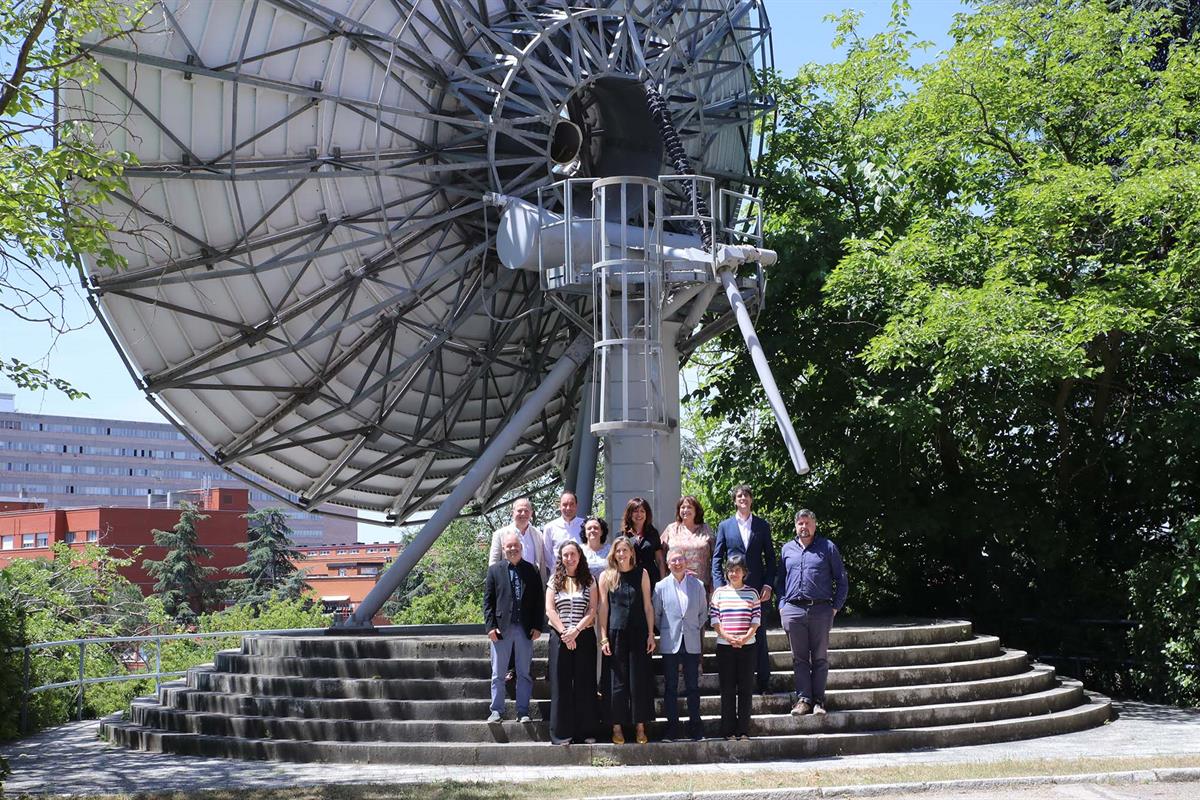
 The third Vice-President and Minister for Ecological Transition and the Demographic Challenge, Sara Aagesen, during the visit to the headquarters of the State Meteorological Agency (AEMET)





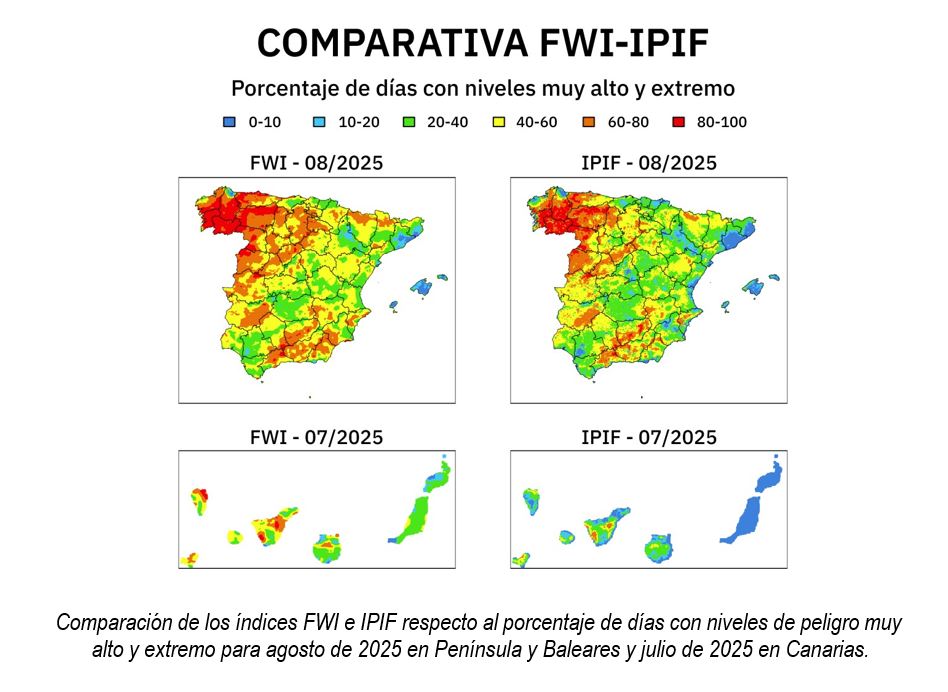
The State Meteorological Agency (AEMET), under the Ministry of Ecological Transition and Demographic Challenge (MITECO), and coinciding with the start of the 2026 forest fire campaign, has launched the new IPIF index (Forest Fire Danger Index), an evolution of the system used until now.
The new index incorporates the fundamental meteorological variables for forecasting fire danger, such as temperature, humidity, wind or rainfall accumulated in previous days, and also adds new parameters that allow a more complete characterisation of the conditions of the territory.
The Vice-President of the Government and Minister for Ecological Transition and the Demographic Challenge, Sara Aagesen, visited the agency's headquarters this Thursday, where she was able to learn about the main new features of this index. These include the incorporation of information on vegetation status, obtained through satellite observation, as well as soil moisture. The IPIF also integrates data on land use and surface type, adapting its calculations to the specific characteristics of each environment, as fire behaviour and fuel availability vary between urban areas, forests and agricultural areas.
The new index also improves the spatial resolution of the information from 5 kilometres to 1 kilometre, allowing for a more detailed representation of the conditions of the territory.
Another new development is the expansion of the hazard categories from five to six with the addition of the "very low" level, alongside the existing categories of low, moderate, high, very high and extreme.
The definition of these categories has been made taking using 2015-2024 as a benchmark, which includes some of the warmest years recorded in Spain. In this way, the new index allows for a more refined and precise identification of very high or extreme hazard situations.
With this new tool, the services responsible for forest fire prevention and suppression will have more detailed information to support decision-making and strengthen forest fire prevention and response capabilities.
Non official translation