Luis Planas: "It is necessary to maintain CAP subsidies because they are fundamental for farmers and livestock breeders"
News - 2026.4.27





The Minister for Agriculture, Fisheries and Food, Luis Planas, emphasised that the Common Agricultural Policy (CAP) subsidies are fundamental for maintaining the income of Spanish farmers and livestock breeders and for the competitiveness of agricultural holdings. He reiterated the need for an adequate budget, without cuts, for the 2028-2034 period.
At the Council of Agriculture Ministers of the European Union held in Luxembourg, Planas noted that CAP subsidies represent 17% of agricultural income. This support, therefore, guarantees productive capacity and competitiveness in the markets. For this reason, the minister once again rejected the budget cuts included in the European Commission's initial proposal for the future CAP and insisted on the importance of maintaining it as a distinct policy.
Planas recalled that income support for farmers and livestock breeders constitutes a fundamental safety net against fluctuations in income resulting from the various factors that affect their activity. In this regard, he pointed out that Spain decided in the CAP Strategic Plan to allocate 61% of the direct payments budget to this support, which is 5% more than in the previous period.
The minister noted that Spanish farmers and livestock breeders have received €4.808 billion in direct aid for the 2025 CAP campaign - payments began last October and will conclude on 30 June of this year. "The CAP is well-designed, well-implemented, and it works," he reiterated.
He highlighted the positive results of this third year of application of the new model, within the 2023-2027 period, in which 582,085 farmers and livestock breeders submitted applications. Although this is 3% lower than the previous year, the number of hectares declared for cultivation has remained stable - for the past six years - at over 22 million hectares.
This figure indicates the increase in the average farm size, which has risen from 28 hectares in 2014 to 38 in 2025. According to the minister, this translates into greater profitability and viability for these farms, as well as a more professionalised sector. Planas pointed out that CAP direct payments help bring average agricultural income closer to that of other economic activities.
With regard to the allocation of aid under the new CAP for the 2028-2034 period, Luis Planas did acknowledge that, despite the insufficient budget, the proposal directs aid toward producers with the greatest needs and takes a more detailed approach to the individual income of each farm, since overall well-being does not always reflect the reality of each farmer.
Planas emphasised that the new strategy presented by the Commission is based on the redistribution of aid to benefit groups with below-average incomes, including young people, women, family farms, and those located in areas with natural challenges. "Spain agrees that aid should be directed to those who truly depend on agriculture and keep food production active," he stated. The redistributive payment in 2025 amounted to €481 million and benefits half of the agricultural land receiving CAP support.
The minister also emphasised the importance of maintaining effective redistribution mechanisms and allowing each Member State to implement them in their national plans, such as the thresholds for degressivity-reduction coefficients for aid exceeding certain amounts.
Furthermore, Luis Planas highlighted the fundamental role the CAP plays in environmental conservation. In this regard, he emphasised the positive performance of eco-schemes, a mechanism that was highly controversial when introduced into the current CAP but has achieved very high adoption rates after three years of implementation. 78.6% of aid applicants in 2025 implemented some environmentally friendly practice, covering 88.1% of the declared area. Practices adopted under eco-schemes improve soil structure, fertility, and carbon sequestration capacity, among other benefits.
Market situation
The European Council of Ministers also addressed the market situation, focusing primarily on the consequences of the war in the Middle East on the sector. Planas emphasised the importance of adapting European funds to exceptional situations. He noted that the European Commission has not yet disbursed the funds to Spain for the crisis relief requested due to the damage caused by the fires in the summer of 2025.
Spain also requested that the Commission present the fertiliser action plan, expected this spring, as soon as possible. Luis Planas pointed out that, in addition to monitoring price trends in the different Member States, the plan should promote more efficient fertiliser use to reduce costs without affecting productivity, and the use of alternative sources such as livestock by-products to reduce dependence on fertilisers manufactured using gas. In addition, he also advocated for analysing which trade policy instruments can help stabilise the market.
Non official translation
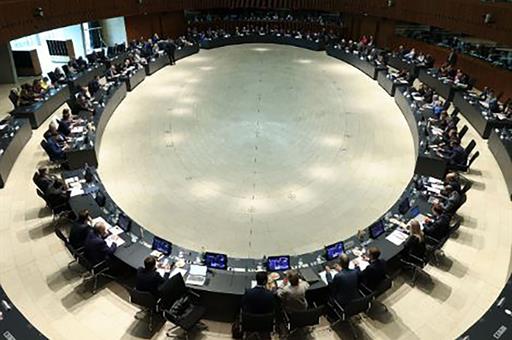
The Council of Agriculture Ministers of the European Union is debating the Common Agricultural Policy (CAP) in Luxembourg