Urtasun meets with UN agencies to address the protection of artists in conflict zones
News - 2026.3.17
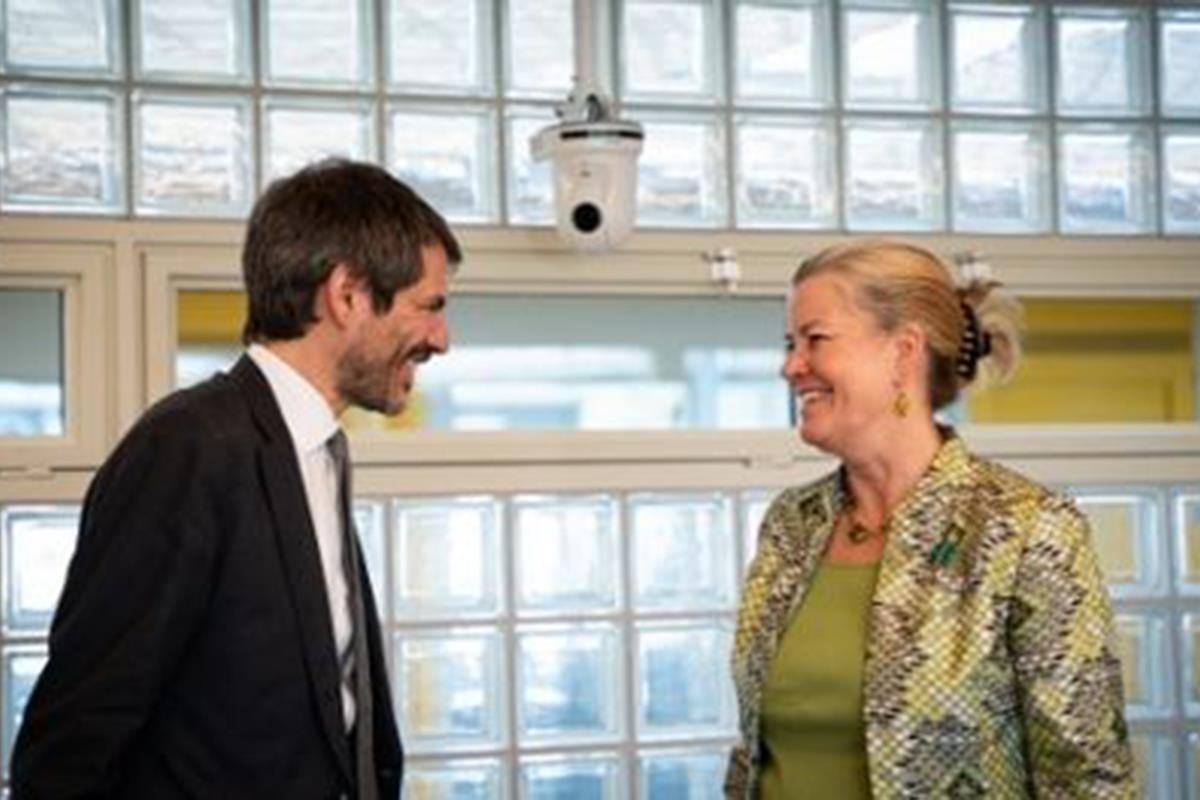 The Minister for Culture, Ernest Urtasun, together with the Deputy High Commissioner of the United Nations High Commissioner for Refugees (UNHCR), Kelly T. Clements





These meetings took place during the Minister for Culture's trip to Geneva to participate in the launch of the 'Artificial Intelligence Infrastructure Interchange' platform, organised by the World Intellectual Property Organization (WIPO).
During his time in Geneva, Ernest Urtasun met with Ugochi Daniels, Deputy Director General of Operations at the International Organization for Migration (IOM), Kelly T. Clements, Deputy High Commissioner in the Office of the United Nations High Commissioner for Refugees (UNHCR), and Nada Al-Nashif, United Nations Deputy High Commissioner for Human Rights (OHCHR).
The aim of these three meetings was to address the special protection of cultural and artistic workers in contexts of conflict or war. Specifically, the focus was on situations in which artists and cultural workers are subjected to persecution, censorship, or violence because of their work and social role. In addition, the defence of the cultural rights of migrants and refugees, both internationally and in Spain, was discussed.
In response, the Spanish Minister for Culture proposed a series of measures, which were addressed in the meetings held at the respective headquarters of these international organisations.
Among these measures is the creation of an institutional network for hosting and providing residencies for foreign artists, operating throughout the country, which would make Spain a place of welcome, protection, and promotion of artistic freedom. This measure would go hand in hand with specialised and expedited procedures for the reception of cultural and artistic workers in situations of particular vulnerability. In parallel, a system for monitoring and evaluating international cultural mobility is proposed. This would improve the design of cultural policies and quickly identify the administrative and bureaucratic obstacles faced by the sector.
A protocol for artists at risk or forced displacement has also been proposed. This protocol would foster greater and better coordination between institutions, particularly ministries, and facilitate the temporary accommodation of artists and cultural professionals, in collaboration with international artist protection networks. This protocol would include an institutional accreditation mechanism for cultural projects, certifying the suitability of specific international projects or artistic residencies for cultural and artistic professionals in vulnerable situations.
Beyond their regulatory and labour impact, these measures, among others presented at these meetings by the Minister for Culture, Ernest Urtasun, reflect a commitment to protecting those who preserve cultural diversity in contexts of extreme violence and vulnerability, defending freedom of expression, and promoting cultural rights.
The protection of artists under debate in the European Union
Furthermore, and continuing the Spanish government's work in the field of cultural rights at the international level, the Minister for Culture, Ernest Urtasun, will bring a proposal for the protection of artists in situations of conflict or risk to the next meeting of the European Union's Education, Youth, Culture and Sport Council (EYCS).
This was agreed upon with his Slovenian counterpart, Asta Vrečko, during a meeting last February, during which they decided to include on the agenda the protection of both artistic freedom and the right to culture, as well as the protection of its expressions, as an inherent part of identity, within the context of situations of conflict or risk.
Support for culture in Ukraine and Palestine
All the proposals addressed today in Geneva continue the work of the Ministry of Culture in protecting cultural workers in situations of conflict.
In the case of Ukraine, the Ministry of Culture has shown its unconditional support for the Ukrainian people since the beginning of the war, as well as its willingness to cooperate in their reconstruction and the building of a lasting peace, with culture as an essential tool for achieving it. To this end, the Minister for Culture took part in the Ukrainian Cultural Conference: Cooperation for Resilience, which brought together some twenty ministers of culture in the city of Uzhgorod a year ago. This meeting aimed to address the reconstruction and cultural safeguarding of Ukraine.
In the case of Palestine, the Ministry of Culture has also actively supported the defence of Palestinian culture. Among other actions, the Ministry of Culture is working with the Palestinian National Authority to organise an International Congress for the Protection and Recovery of the Cultural Sector and Heritage in Palestine, to be held in Spain in 2026.
This initiative continues the Ministry of Culture's ongoing support for Palestine. In addition to contributing €200,000 to the UNESCO Fund for the Reconstruction of Gaza, the Ministry of Culture has undertaken various initiatives in collaboration with UNRWA, the United Nations Relief and Works Agency for Palestine Refugees in the Near East, to support Gaza and denounce the Israeli genocide. Furthermore, the Ministry of Culture contributes €100,000 annually to the TEJA program, an international cultural solidarity network that provides support to artists and cultural professionals in emergency situations. Through this support, Palestinian artists travel to Spain for artistic residencies.
Non official translation