Study permit numbers increase 93% in ten years, reaffirming Spain's position as an international education destination
News - 2026.2.17





The Permanent Observatory on Immigration (OPI) has published new statistics showing the number of permits granted to international students and their families for stays related to studying in Spain.
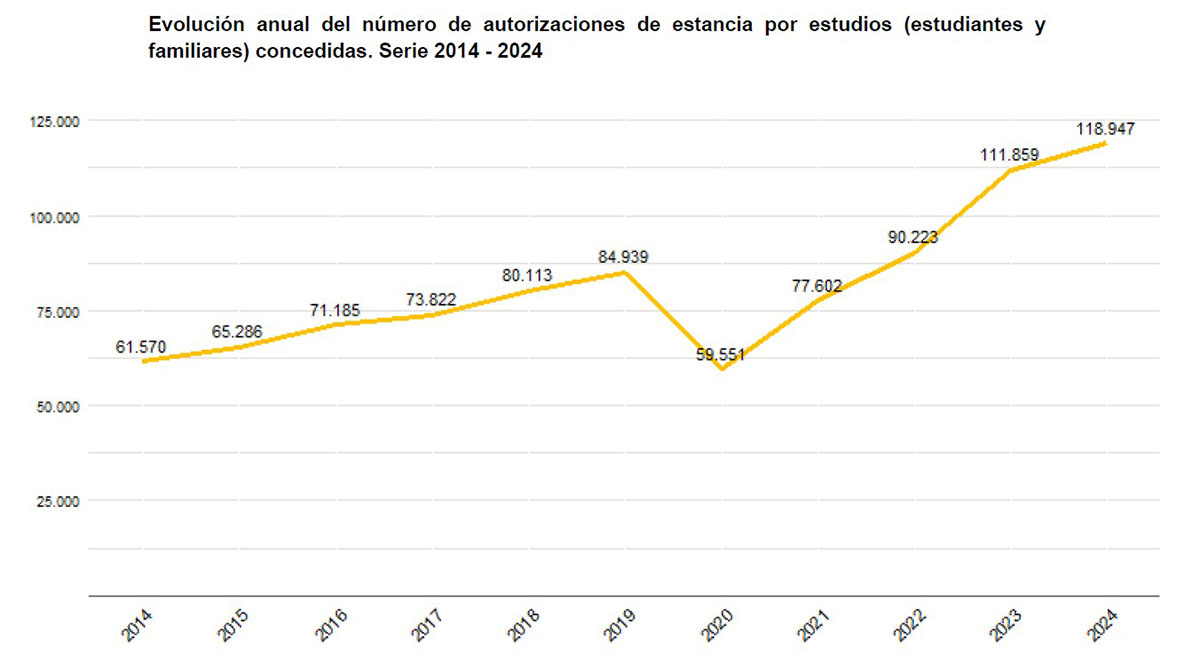
The data shows a general upward trend with a 93% increase over the decade from 2014 to 2024. While 61,570 study permits were granted in 2014, 118,947 were granted in 2024; nearly 120,000 permits, marking a record high that reflects the growing attractiveness of the Spanish education system for international students.
The trend shows a sustained increase between 2014 and 2019, with a cumulative growth of 38% in the number of study permits granted. The recovery has been particularly strong since 2020, the year in which permit numbers fell due to the health crisis. In 2021, growth reached 30%, followed by increases of 16% in 2022, 24% in 2023, and 6.3% in 2024. That year saw a record high in the number of study permits granted.
"The constant growth in the number of permits granted for studying in our country reaffirms Spain's consolidation as an international destination for academic training", explains the Minister for Inclusion, Social Security and Migration, Elma Saiz. "Attracting foreign talent contributes to the internationalisation of our education system and has a positive impact on the country's economic, cultural, and social development".
Women between 20 and 30 years old pursuing higher education
If we look at the type of studies for which this residence permit is requested, 68% are granted for higher education.
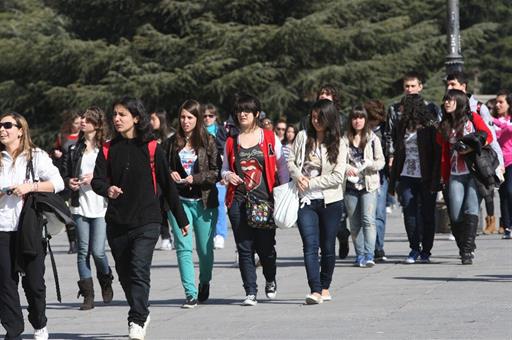
The profile of students who come to Spain to study points to a woman between 20 and 30 years old, since more than half of those holding a study permit, 57%, are in the 20-30 age group, and 54% of the permits are granted to women. In this respect, there are significant differences depending on nationality: among students from the United States or Brazil, women represent around 60%, while in Algeria and India, they account for less than 40% of the permits granted.
Statistics from the Observatory show that in 2024, 97% (114,903) of the permits were granted directly to students, while the remaining 3% were granted to family members.
Colombia as the most frequent nationality
According to the OPI, Colombian students and their family members are the largest group, accounting for 12% (14,124) of all study permits granted in 2024. They are followed by US citizens (9%), Chinese (8%), Peruvians (8%), and Moroccans (7%).
Students from Colombia have maintained steady growth, increasing from 8% of the total in 2014 to 12% in 2024. Conversely, China's share has decreased: after leading in permits until 2020, when it represented between 14% and 16%, it currently occupies third place with 8%.
Also noteworthy are the recent increases in permits granted to students from Ecuador and Venezuela, with increases of 21.5% and 21.2% respectively, and the decrease in permits granted to Russian nationals, with an annual change of 41.6% in 2024.
Madrid and Barcelona account for more than half of permits
Madrid and Barcelona were the preferred destinations for international students granted a student residence permit in 2024.
31% chose Madrid, 22% Barcelona, and Valencia consolidated its position as the third most popular choice with 10% of the permits granted, increasing its share by four percentage points compared to 2014.
Non official translation
University students