Spain receives more than 23 billion euros from the fifth disbursement of the Recovery Plan
News - 2025.8.8






The European Commission has made the payment of more than 23 billion euros to Spain, following the adoption by the College of Commissioners of the payment decisions authorising the fifth disbursement of the Recovery, Transformation and Resilience Plan. This is the largest payment made by the Commission to a Member State under the Recovery and Resilience Mechanism, representing a key milestone in the implementation of the Plan and a direct boost to the Spanish economy.
The payment follows Spain's submission of its fifth payment claim on 19 December 2024, which included 69 milestones and targets associated with key reforms and investments in areas such as education, justice, green transition, renewable energy, infrastructure and support for SMEs.
Among the advances validated by the Commission are the approval of the new Law on Universities, the provision of 50,000 vocational training places, the entry into force of key laws to modernise justice, the restoration of ecosystems, the approval of a new Water Law, the promotion of green hydrogen and investments in social housing, the railway network and sustainable irrigation. In addition, the fulfilment of the outstanding milestone for the fourth payment linked to the 'Kit Consulting' programme allows 139 million euros to be released.
Following the Commission's positive assessment, issued on 7 July 2025, and with the favourable opinion of the Council's Economic and Financial Committee, the disbursement of more than 23 billion euros net (24.137 billion euros gross) has been approved. Specifically, this fifth disbursement consists of:
- More than 7.1 billion euros in net transfers (8.137 billion euros gross), which support flagship investments of the Recovery Plan, such as the modernisation of the railway system, the digitalisation of SMEs, the reinforcement of employment policies, the energy transition, or the construction of public housing.
- This is around 16 billion in loans, which will allow the funds to continue to be deployed in strategic areas such as housing policy, green industry, sustainable mobility and the promotion of science and innovation.
This payment places Spain as one of the most advanced countries in the implementation of the Recovery and Resilience Mechanism and reinforces its leadership in attracting and making use of European funds, with a direct impact on growth, employment and the structural transformation of the economy. The disbursement is equivalent to around 1.5% of Spanish GDP, consolidating the Plan's role as a key lever for the recovery and modernisation of the Spanish economy.
With this new disbursement, Spain has received more than 55 billion euros in transfers, which represents 70% of the total planned and places the country at the top of the EU in terms of the volume of non-refundable funds received, ahead of Italy and France.
In total, Spain has already met 264 milestones and targets under the Recovery and Resilience Mechanism, reflecting the commitment to structural reforms and the effective implementation of the plan's investments.
Two of the milestones presented for the fifth disbursement remain to be approved: the amendment of diesel taxation and the digitalisation of regional and local authorities. The latter has been fully implemented, although further work needs to be coordinated with the European institutions to complete the assessment process in the coming months.
Spain is also adopting the necessary measures to correct the situation arising from the reversal of one of the milestones linked to the reform of the temporary nature of public employment, with a six-month deadline for its resolution.
Looking to the future
However, the work does not end here. Spain has already started preparations for the sixth payment request, which will require an in-depth revision of the Recovery Plan to adapt its design to the final tranche of the Facility and ensure its implementation until closure, scheduled for 31 December 2026.
This process will involve a coordinated effort by all implementing agencies, which will continue throughout August and the coming months, with the aim of successfully completing the implementation of one of the largest public investment plans in recent history.
Non official translation
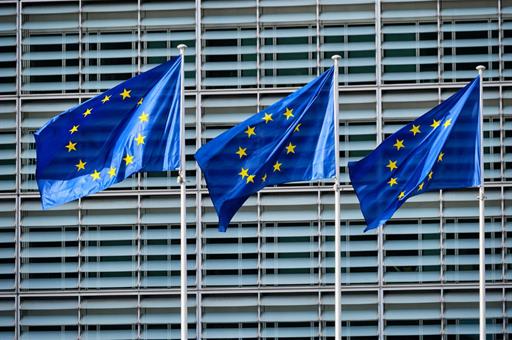
Flags waving at the headquarters of the European Commission in Brussels