Yolanda Díaz pushes for a second UN resolution on the Economy to further expand this economic model
News - 2024.11.26
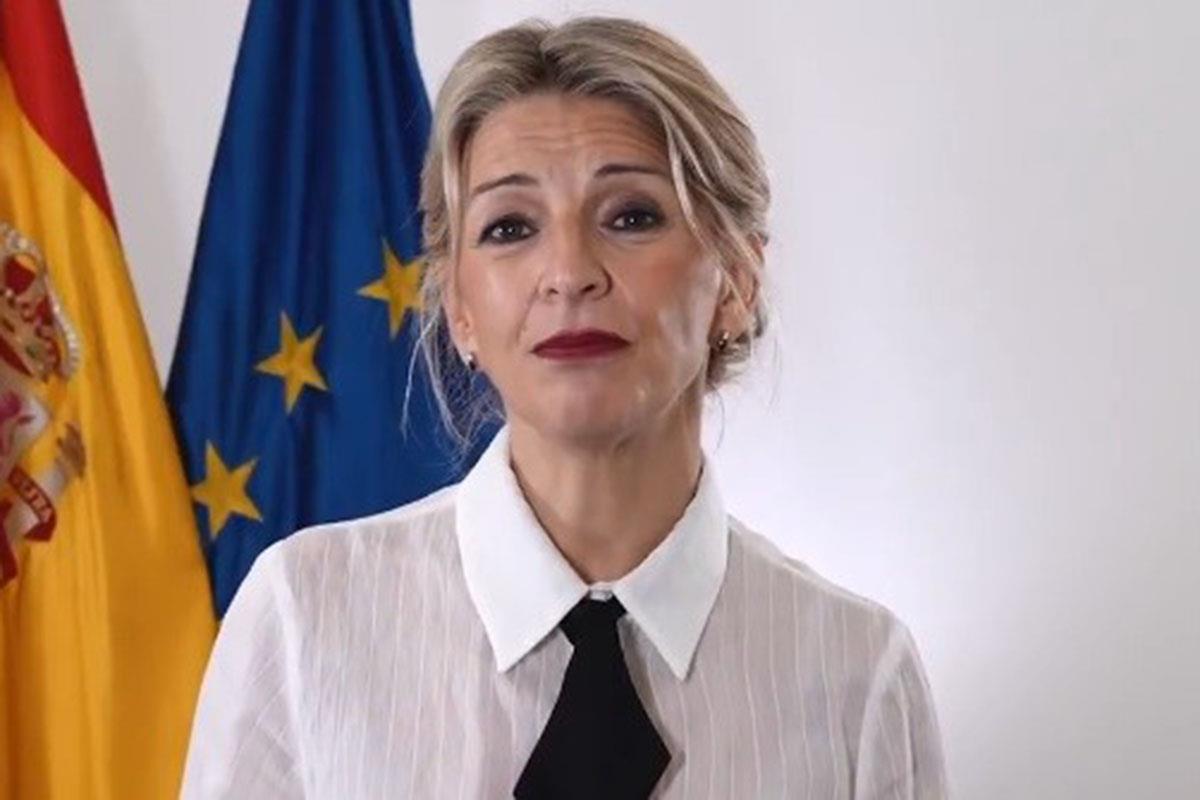





The United Nations (UN) General Assembly in New York has given the green light to the second resolution on the Social Economy, which has been promoted by the Second Vice-President of the Government of Spain and Minister for Work and Social Economy, Yolanda Díaz.
"The Social Economy is an effective tool for tackling structural problems such as inequality, climate change and social exclusion," said the minister after learning of the approval of the resolution, which was once again supported in the process by Chile and Senegal, nations that promoted the first UN resolution on the Social Economy in 2022.
Díaz has also expressed her commitment to the international expansion of this way of understanding the economy, which promotes a productive fabric that is more resilient to crises and which redistributes wealth more equitably.
In this second resolution, it reinforces the connection between the Social and Solidarity Economy and the Sustainable Development Goals of the 2030 Agenda and reiterates the request to take into consideration Social Economy entities in the formulation and implementation of public policies.
Decent work is also included as a strong idea to be promoted from the Social Economy, an economic model that fosters social inclusion, democratic decision-making, stimulates social cohesion, combats rural depopulation, promotes social innovation and sustainable economic development. In Europe alone, the Social Economy has 4.3 million companies and organisations, 11.5 million paid employees and a turnover of more than 912 billion euros, according to a study recently published by the European Union (EU).
"The resolution also calls for greater consultation with social and solidarity economy actors in drafting public policies, as the Government of Spain is already doing, and encourages States to cooperate regionally and bilaterally, as we have done with the new Ibero-American Social Economy Network and the various memorandums of bilateral collaboration," explained the vice-president.
The Ministry of Work and Social Economy has led the internationalisation of this economic ecosystem with the creation of the Ibero-American Social Economy Network, a project to promote its development that has been devised together with Brazil, Colombia, Chile and Mexico and which has been joined by Costa Rica, Paraguay, Honduras and the Dominican Republic.
Likewise, during the Spanish presidency of the Council of the European Union, priority was given to the Social Economy and the first EU Recommendation on the Social Economy was adopted.
"The commitment to making the Social Economy thrive continues to move forwards with strong partnerships. We will continue to lead this effort to achieve a fairer society with fewer inequalities," the vice-president assured. The UN will revisit the issue in two years and adopt a new resolution.
Non official translation