World Wetlands Day
Government of Spain commits to wetlands recovery with sights on reaching almost 40,000 hectares restored by 2030
News - 2021.2.2





This announcement was made by the Vice-President of the Government as part of the celebrations for World Wetlands Day at an event that was also attended by the Director of the MITECO Biodiversity Foundation, Elena Pita; the President of the European Federation of Freshwater Sciences (EFFS) and Professor of Ecology at Valencia University, Antonio Camacho; and the CEO of the Global Nature Foundation, Eduardo de Miguel.
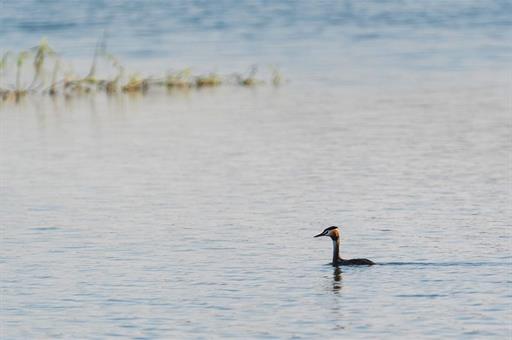
Under the slogan of "Wetlands and Water", this year seeks to highlight the essential role played by wetland ecosystems for human survival in terms of the water crisis.
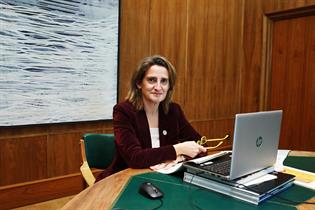
In her speech, Teresa Ribera highlighted the importance of Spain joining the Ramsar Convention in 1982, which "marked a turning point in the protection of wetlands in our country". With 75 spaces occupying more than 30,000 hectares, Spain stands behind the United Kingdom and Mexico as the country with the third-largest wetland area covered by the Ramsar Convention, which is celebrating its 50th anniversary this year. This clearly demonstrates the strong commitment from Spain to the task of conserving these ecosystems and their restoration.
At least 18,000 hectares of wetlands have been recovered over the last 25 years and important achievements have been made in their conservation. Nonetheless, major challenges remain and new obstacles exist to reverting their loss and degradation.
Restoration effort
In response to this situation, Teresa Ribera highlighted the Government of Spain's strong wish to engage in decisive actions in the field of wetland restoration. "It is not just about properly conserving out wetlands but about continuing to undertake the progressive restoration of all those that can recover the structure and functions that have been lost through human activity", she explained.
The goal of recovering another 20,000 hectares of wetlands is being sought with precisely that in mind, as well as the partial restoration of three of the largest Spanish wetlands lost in the past: Laguna de la Janda, Laguna de Antela and Mar de Campos.
Strategic Framework for the Recovery of Wetlands
This goal is aligned with European biodiversity policies. The EU 2030 Strategy on Biodiversity specifies an obligation for European countries to improve at least 30% of the habitats and species with the worst conservation status, which include wetland zones.
In turn, the Strategic Plan on the Conservation of Natural Heritage and Biodiversity and the updates made to the Strategic Plan for the conservation and sustainable use of wetlands, both currently being drawn up, provide for the inclusion of objectives related to the management, conservation and restoration of wetlands.
Hydrological planning
 In this regard, river basin management plans will include the measures necessary to effectively contribute to progress towards a favourable conservation status for the types of habitat and species associated with water. Ecological restoration measures will be applied to rivers, which act as important ecosystem connectors. Hydrological reserves will receive special protection, meaning that a network of natural river reserves spanning over 3,500 km should be achieved. The National Strategy on the Restoration of Rivers will be revised and updated as a fundamental tool.
In turn, the National Strategy on Green Infrastructure and Ecological Connectivity and Restoration will also serve as an essential tool for identifying, conserving and recovering damaged ecosystems throughout Spain and connecting them to one another.
In terms of the wetlands with the worst conservation status, the goal for 2025 consists of removing Doñana and Tablas de Daimiel from the Montreux Record of the Ramsar Convention, which lists those wetlands facing significant threats to their survival, and seeks to ensure that no other wetland joins this list.
Regarding the protection of endangered species within these ecosystems, conservation actions will be applied so that the ones in a critical situation, such as the European mink, the marbled duck and the fan mussel, improve their status by 2030.
Funds from the Recovery Plan
In order to achieve these goals, funds will be channelled through the Recovery, Transformation and Resilience Plan through the Directorate-General of Biodiversity, Forests and Desertification, which will be aimed at the implementation of projects submitted by the regional authorities, as well as through the calls for funding applications announced by the MITECO Biodiversity Foundation.
Elena Pita, its director, highlighted the importance of working together and promoting partnerships aimed at involving stakeholders in these tasks and achieving success for the wetlands recovery process. In this regard, she underlined "three key factors for tackling this challenge and fostering action: management, financing and knowledge for the introduction of innovative solutions. The calls for funding applications from the foundation in 2021 will target this goal and will support the recovery of wetlands as one of its priority lines of action".
In turn, the researcher Antonio Camacho stressed that "the conservation of wetlands is not an option; it is the only option". He also said that "the ecosystem services provided by wetland zones double the monetary value of the global economy. They are also the most biologically active ecosystems and great allies in the fight against climate change, provided they are well conserved and restored".
Finally, the CEO of the Global Nature Foundation, Eduardo de Miguel, explained how work is being done in these ecosystems through technological innovation applied to conservation by involving various stakeholders so they identify restoration as "a driving force behind economic development". He also underlined the importance of public sector funding in the recovery of wetlands and highlighted the value of private financing.
Non official translation