Presented by the Minister for Industry, Trade and Tourism
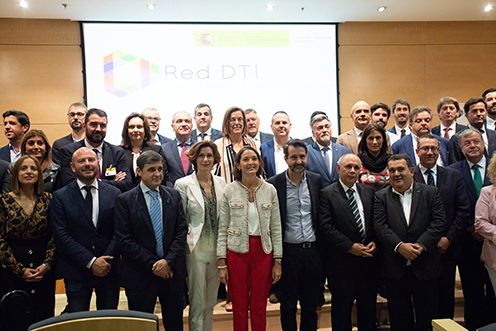
Launch of the Smart Tourist Destinations network
News - 2018.10.11





Among those present at the event were Isabel Oliver, the State Secretary for Tourism; Francisco Polo, the State Secretary for Digital Progress at the Ministry of the Economy and Business; Enrique Martínez, Chairman of SEGITTUR; and Carlos Daniel Casares, General Secretary of the Spanish Federation of Municipalities and Provinces (Spanish acronym: FEMP).
Reyes Maroto noted that the network represents "a commitment to what is a key element in the national strategy of Smart Tourist Destinations, supporting the conversion of destinations and fostering cohesion, the exchange of good practices and the use of synergies between destinations and within the sector. All this will be carried out within a framework of close collaboration between the autonomous regions".
The network is made up of nearly 70 local, regional and provincial councils and institutions. They have all been the object of a study and action plans have been drawn up to convert them into smart tourist destinations. The institutions have implemented initiatives linked to smart tourism thanks to assistance from Red.es and the Integrated Sustainable Urban Development Strategy.
Objectives of the Network
- To improve coordination and integration between the plans of public managers of each destination, the tourist industry, retail trade, the technology industry, operators, service suppliers, residents and tourists. To this end, the network will include a Technical Office working through SEGITTUR to provide a service for the destinations by offering close-up support during the process in order to identify solutions for making progress in the digital transformation.
- To promote collaboration, advice, and the search for funding and technology and strategy solutions; research and dissemination of knowledge that answers the needs of the destinations; and the development of a common methodology of analysis and planning of smart destinations.
List of the destinations comprising the network
ANDALUSIA
Local councils of Almeria, Almuñécar, Andújar, Ayamonte, Conil de la Frontera, El Ejido, Malaga, Marbella, Níjar, Roquetas de Mar and Torrox.
Provincial councils of Cadiz and Granada.
ARAGON
Local council of Jaca.
Provincial council of Huesca.
ASTURIAS
Local council of Avilés.
CANARY ISLANDS
Local councils of Adeje, Arona, Las Palmas de Gran Canaria, Puerto de la Cruz and San Bartolomé de Tirajana.
Island Councils of El Hierro, Lanzarote and Tenerife.
CANTABRIA
Local councils of Noja and Santander.
CASTILE-LA MANCHA
Local council of Cuenca.
CASTILE AND LEON
Local councils of León and Soria.
Provincial council of Palencia.
CATALONIA
Local councils of Castelldefells, Lloret de Mar and Salou.
Val d'Arán.
REGION OF MADRID
Local councils of Alcalá de Henares, Aranjuez and San Fernando de Henares.
REGION OF VALENCIA
Local councils of Benidorm, Orihuela, Peñíscola, Valencia and La Vila Joiosa.
Provincial councils of Alicante, Castellón and Valencia.
EXTREMADURA
Local councils of Badajoz, Cáceres, Mérida and Plasencia.
Provincial council of Badajoz.
Confederation of councils of the Valle del Jerte.
GALICIA
Local councils of Lugo, Orense, Sanxenxo and Vilagarcía de Arousa.
Provincial councils of Orense and Pontevedra.
Confederation of councils of O Salnés.
BALEARIC ISLANDS
Local councils of Calvià and Palma de Mallorca.
Island council of Ibiza.
LA RIOJA
Local councils of Calahorra and Haro.
NAVARRE
Local council of Tudela.
BASQUE COUNTRY
Local councils of Bilbao and San Sebastian.
Non official translation
Ministerio de Industria, Comercio y Turismo