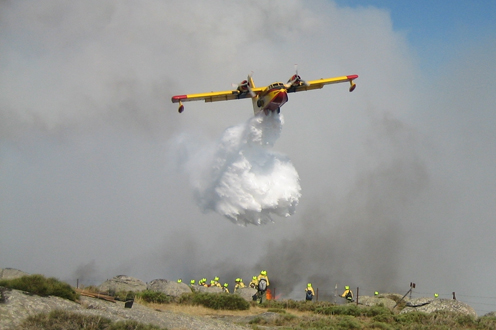
Provision of resources from Ministry of Agriculture, Food and Environmental Affairs for fire-fighting activity
News - 2012.8.20





Saturday, 18 August
In Aragon, the resources used to extinguish the fire in Carenas consisted of two amphibious aeroplanes with a capacity of 5,500 litres and a heliborne fire-fighting brigade comprising two helicopters with a capacity of 1,500 litres each from the base in Zaragoza and the base in Daroca, respectively. As of Saturday, 18 August, the fire was brought under control.
A total of five towns were reported to be affected by fire in Asturias. A heliborne fire-fighting brigade comprising two helicopters with a capacity of 1,500 litres each was assigned to extinguish the fire in Aller. Another heliborne fire-fighting brigade comprising two helicopters with a capacity of 1,500 litres each was dispatched to the municipality of Candamo. Both these fires were brought under control on Saturday. The resources used to put out the fires came from the base in Tineo.
The third fire in Asturias affected the municipality of Ibias, for which a fire-fighting helicopter with a capacity of 4,500 litres was used. The fire is now under control.
The fire-fighting crews in Valdés and Sobrescobio received support from a heliborne fire-fighting brigade comprising two helicopters with a capacity of 1,500 litres per municipality. These fires were also brought under control on Saturday.
The fire in Alajeró on the island of La Gomera remains active. A heliborne fire-fighting brigade comprising two helicopters with a capacity of 1,500 litres each from the base in Punta Gorda, on La Palma, has been dispatched to provide assistance.
There are three towns affected by different fires in Castile and Leon. In Avila, the fire that began in the town of Solana de Avila has already burned one thousand hectares of pasture land and scrubland. The Ministry of Agriculture, Food and Environmental Affairs has dispatched three amphibious aeroplanes, one observation plane, two heliborne fire-fighting brigades with two helicopters each, another heliborne fire-fighting brigade with one helicopter and another fire-fighting helicopter with a capacity of 4,500 litres. The resources being used come from several different bases, including those in Iglesuela, Matacán, Muchamiel, Pinofranqueado and Puerto del Pico.
A heliborne fire-fighting brigade comprising two helicopters with a capacity of 1,500 litres each from the base in Tabuyo del Monte continues to tackle the fire raging in the town of Carmenes (in Leon), which is currently still active.
Another fire is currently active in the town of Cubo de Benavente, in Zamora. The resources dispatched to tackle this fire comprise two amphibious aeroplanes with a capacity of 3,100 litres, one heliborne fire-fighting brigade with two helicopters with a capacity of 1,500 litres and one mobile communications unit. All these resources have been dispatched from the bases in Rosinos, Laza and Zamora.
Finally, the only fire on the Balearic Islands still active on Friday, 17 August, was the blaze that began in the municipality of Calvià. One amphibious aeroplane with a capacity of 5,500 litres from the base in Pollensa and another fire-fighting aeroplane with a capacity of 3,100 litres were sent to help with this fire from the base in Son Bonet.
Sunday, 19 August
On Sunday, 19 August, a new fire was reported in the municipality of Cangas del Narcea in Asturias. Fire-fighting efforts received support from a heliborne fire-fighting brigade comprising two helicopters with a capacity of 1,500 litres each from the base in Tineo and one fire-fighting helicopter with a capacity of 4,500 litres from the base in Ibias. The fire is now under control.
The fire in Alajeró in the Canary Islands remains active. For that reason, a heliborne fire-fighting brigade comprising two helicopters with a capacity of 1,500 litres each was dispatched to help. These resources were sent from the base in Punta Gorde on the island of La Palma.
As regards the fires burning in Castile and Leon, the largest continues to be the fire in Solana de Avila. Four amphibious aeroplanes with a capacity of 5,500 litres, one observation plane, two heliborne fire-fighting brigades comprising two helicopters with a capacity of 1,500 litres each and another heliborne fire-fighting brigade with one helicopter with a capacity of 1,500 litres were sent to provide assistance.
Support was also provided by one helicopter with a capacity of 4,500 litres and one mobile communications unit. On Sunday, and given the seriousness of the disaster, additional resources were dispatched from bases beyond the regional borders of Castile and Leon, such as those in Torrejon and Madrid. The fire remains active.
Another of the fires that began on Sunday was in Castrocontrigo, in the province of Leon. Six amphibious aeroplanes (two with a capacity of 3,100 litres and four with a capacity of 5,500 litres) were dispatched to help put out the flames. Also providing assistance was an observation plane and two heliborne fire-fighting brigades comprising two helicopters with a capacity of 1,500 litres each. The resources were sent from various bases in Madrid and in Castile and Leon.
The other activity carried out in Castile and Leon by the resources provided by the Ministry of Agriculture, Food and Environmental Affairs took place in the towns of Obispo de Otero, Villamanín and Peque in the province of Zamora. The fire in Villamanín was tackled by a heliborne fire-fighting brigade comprising two helicopters with a capacity of 1,500 litres each from the base in Laza.
A total of two amphibious aeroplanes with a capacity of 3,100 litres from the base in Rosinos were dispatched to help tackle the blaze in Peque. One heliborne fire-fighting brigade comprising two helicopters with a capacity of 1,500 litres each from the base in Tabuyo del Monte was needed in Obispo de Otero. Both the fires in Solano de Avila and those in Villaobispo de Otero, Villamanín and Peque remain active.
The fire in Cubo de Benavente, which was still active on Saturday (18 August), is now under control.
A new fire was reported on Sunday in Beteta, in the province of Cuenca in Castile-La Mancha. One heliborne fire-fighting brigade comprising two helicopters with a capacity of 1,500 litres each from the base in Prado de Esquiladores was sent to help tackle this blaze, which was extinguished.
The only fire tackled in Extremadura on Sunday, 20 August , occurred in the town of Acebo, in the province of Caceres. One fire-fighting helicopter with a capacity of 4,500 litres and a mobile communications unit were sent from the bases in Plasencia de Caceres and Caceres. The fire is now under control.
The Balearic Islands is the region where the most fires were reported in Sunday, 20 August . Three fire-fighting aeroplanes with a capacity of 3,100 litres were sent to Artà Calvià, Capdepera and Palma from the base in Son Bonet.
The fire in Son Servera required the largest number of fire-fighting resources, consisting of two amphibious aeroplanes with a capacity of 5,500 litres (one from Zaragoza and the other from Pollensa) and one fire-fighting aeroplane with a capacity of 3,100 litres from the base in Son Bonet. The fire in Capdepera is the only one that still remains active.
Monday, 20 August
A fire is still burning in the town of Alajeró, on the island of La Gomera in the Canary Islands. One heliborne fire-fighting brigade comprising two helicopters with a capacity of 1,500 litres each was dispatched to the affected area on Monday from the base in Punta Gorda on La Palma.
The fire in Castrocontrigo remains active in Castile and Leon. The resources sent to tackle the blaze consist of four amphibious aeroplanes with a capacity of 5,500 litres, three heliborne fire-fighting brigades each with two helicopters with a capacity of 1,500 litres, one fire-fighting helicopter with a capacity of 4,500 litres, one mobile communications unit and one observation plane.
Action was taken to tackle a fire in Tarragona, in Catalonia, with two amphibious aeroplanes with a capacity of 3,100 litres from the base in Tarragona. The fire is now under control.
A fire continues to threaten the town of Pinofranqueado in Extremadura, where a heliborne fire-fighting brigade comprising two helicopters with a capacity of 1,500 litres each has been dispatched from the base in Caceres. The fire is now under control.
Two new fires were reported in the Balearic Islands, one in Bunyola and the other in Palma. Among the resources tackling the fire in Bunyola is one amphibious aeroplane with a capacity of 5,500 litres. This fire remains active while the fire in Palma is now under control and only required one fire-fighting aeroplane with a capacity of 3,100 litres. All the resources dispatched on Monday to fires burning on the Balearic Islands were sent from the base in the Balearic Islands.