The Government of Spain is making it easier for regional governments with a budget surplus to allocate it to investment
Council of Ministers - 2026.9.8
Moncloa Palace, Madrid
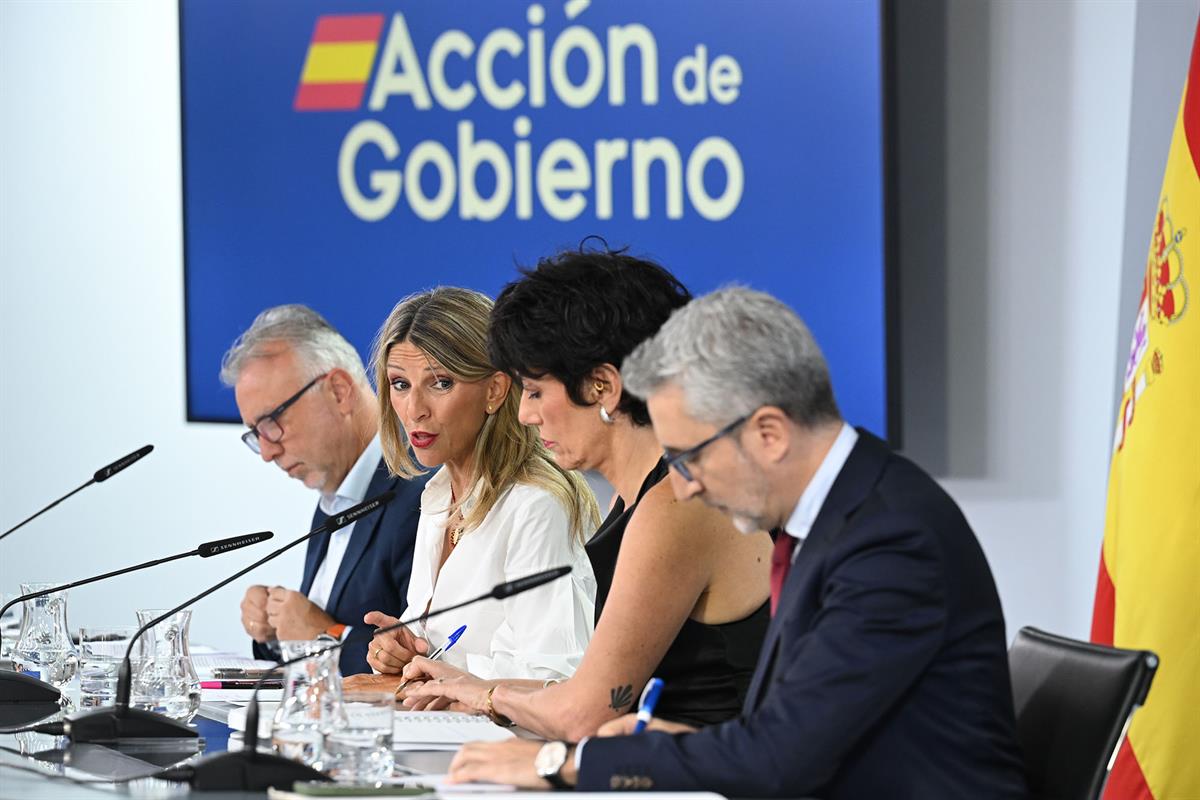 The Minister for Territorial Policy and Democratic Memory, Ángel Víctor Torres, the Second Vice-President and Minister for Labour and Social Economy, Yolanda Díaz, the Minister Spokesperson, Elma Saiz, and the Minister for Finance, Arcadi España (Pool Moncloa/ Borja Puig de la Bellacasa)






The Council of Ministers has approved, by means of a Royal Decree-law, fiscal and financial measures in support of the regional governments.
Firstly, the legislation enables regional governments to use their 2025 budget surplus to fund sustainable investments in policies such as housing in 2026 and 2027. Secondly, regions with a debt-to-gross domestic product (GDP) ratio of less than 12.4% at the end of 2025 will be able to allocate surpluses from previous financial years to investment, which will not be taken into account for the purposes of compliance with the spending rule. At present, these funds must be used to reduce the debt, in accordance with the Organic Law on Budgetary Stability.
Strengthening the investment capacity of the regional governments
These measures involve mobilising 4 billion euros and could benefit eight regional governments: Asturias, the Canary Islands, Navarre, the Basque Country, Andalusia, the Balearic Islands, Cantabria and Galicia. The Minister for Finance, Arcadi España, highlighted that this serves as further proof that the Government "engages in dialogue with all the regional governments and establishes measures that are highly beneficial to citizens in each territory - similar to those previously approved for local authorities".
España framed these actions within the Executive's broader policy of strengthening regional financing and thereby supporting the welfare state. The Finance Minister noted that the regional governments received €30 billion in COVID funds that did not have to be repaid and that, between 2019 and 2025, their funding was bolstered by €40.175 billion distributed through sectoral conferences for policies managed by those regional governments, such as housing and healthcare. Furthermore, España pointed out that the Lower House of Parliament is currently processing a bill that would entail the central government assuming over €83 billion of the debt accumulated by the regional governments.
The largest allocation of funds in history for regional governments
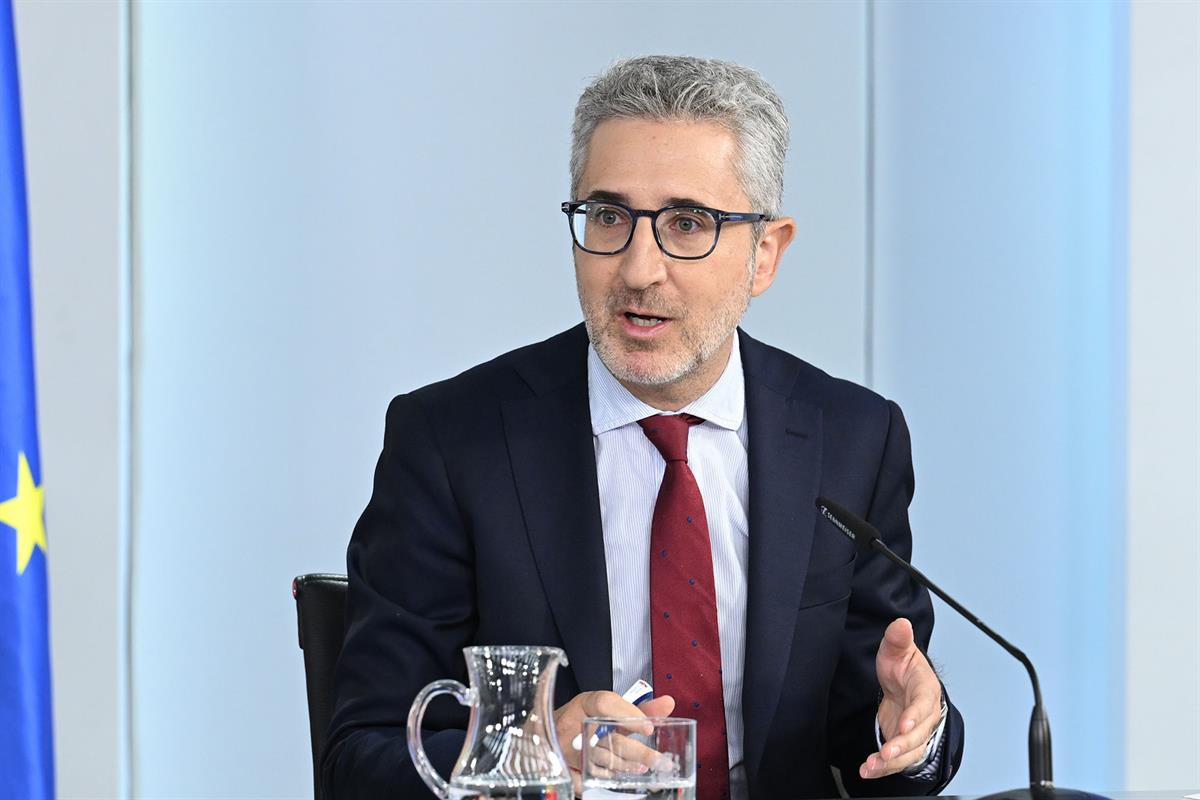 The Minister for Finance, Arcadi España, during his speech at the press conference | Pool Moncloa/ Borja Puig de la Bellacasa
In 2027, according to the minister, the regional governments will receive €185.593 billion through the financing system - an increase of 78.6% compared to 2018. "The Government of Spain is delivering - like no other government in the history of our democracy - on the financing, solvency and fiscal sustainability of the autonomous communities", said España, who argued that these increased resources should be used to improve public services rather than to cut taxes for the highest earners.
The Finance Minister has stated that these "exceptional" funds will increase even further if Parliament approves the reform of the financing system that was launched last week by the Fiscal and Financial Policy Council. Regarding this new model - which would replace the current one that has been "outdated" for twelve years - España maintained that it benefits all autonomous communities, reduces per-capita financing disparities (adjusted for population), increases fiscal co-responsibility, and is based on transparency regarding the information provided to regional governments.
Support for those affected by the volcanic eruption on La Palma
The decree-law also includes specific measures for the economic and social reconstruction of the island of La Palma, which was affected by the 2021 volcanic eruption. The Minister for Territorial Policy and Democratic Memory, Ángel Víctor Torres, highlighted a 60% reduction in Personal Income Tax (IRPF) for all island residents in 2026, as well as authorisation for the Canary Islands Autonomous Community to allocate €100 million from its 2025 surplus to the primary sector.
The text also includes a loan repayment moratorium for farmers in the three affected municipalities - El Paso, Los Llanos de Aridane, and Tazacorte - and an extraordinary benefit for self-employed workers who ceased operations.
Labour transparency and algorithmic governance
The Second Vice-President of the Government of Spain and Minister for Labour and Social Economy, Yolanda Díaz, reported on the Royal Decree transposing the European directive on transparent and predictable working conditions. She highlighted that the regulation represents "another step in the fight against precarious employment".
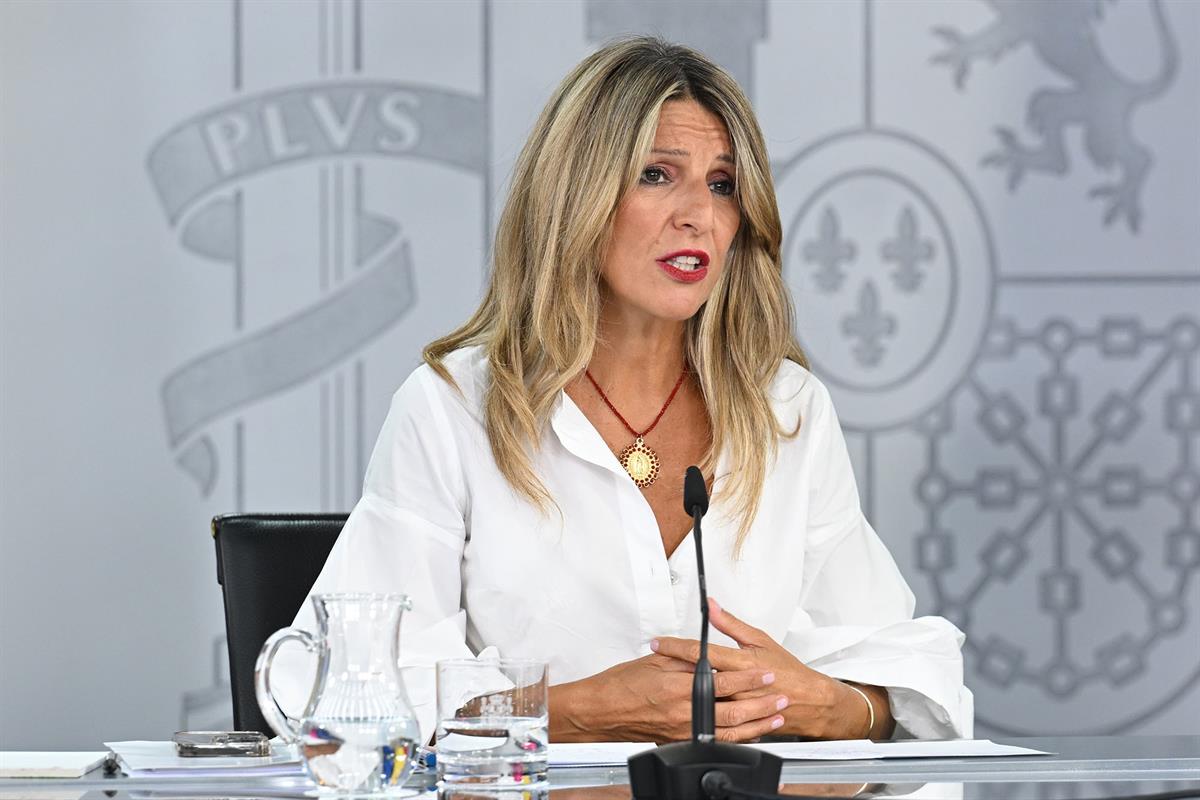 The Second Vice-President of the Government of Spain and Minister for Labour and Social Economy, Yolanda Díaz, during her speech at the press conference after the Council of Ministers | Pool Moncloa/ Borja Puig de la Bellacasa
The new regulation ensures that workers are informed of their essential employment conditions - including the criteria and algorithmic rules determining them - from the very start of the employment relationship. "It is a regulation that applies to all workers in Spain, to standard employment relationships, to special employment relationships and, of course, also to public-sector organisations and all civil servants across the country," emphasised Díaz. Employees with existing contracts that do not include this information may request it, and the company will have a maximum of 30 days to provide it.
Information and predictability regarding working conditions
The Second Vice President explained that the regulation strengthens the information workers must receive regarding essential aspects of their employment relationship, such as salary and supplements, variable pay components, working hours and their scheduling, overtime, rest periods, annual leave and minimum notice periods, among others.
"At its core, this regulation is about predictability", Díaz summarised. The information must also cover the company's equality plan and its LGBTI-related measures and resources, the applicable collective bargaining agreement, Social Security arrangements, and the contract termination procedure; it must also be provided in a format accessible to people with disabilities.
The regulation also addresses the probationary period, which must be expressly included in the terms and conditions of employment. "The trial period must be clearly set out and, furthermore, justified," the minister emphasised.
Protection of workers at sea
Yolanda Díaz also highlighted the specific regulations governing working conditions for maritime and fishing workers - a sector that, as she noted, "presents enormous complexities regarding risk prevention". The regulation will apply to fishermen on board vessels flying the Spanish flag or registered under full Spanish jurisdiction, regardless of the duration of the contract, and recognises their right to seek legal advice at the time of signing.
"All such contracts must be set out in writing, including all the terms and conditions," said the Vice-president. They must specify, amongst other things, the identity of the parties and the vessel, the planned routes, wages, working hours and breaks, annual leave, health and social security cover, and the conditions for repatriation.
The Minister for Labour and Social Economy added that, in the case of migrants, the regulation stipulates that contract information must be provided with translations "that are accurate".
Declassification of reports on the mass influx of foreign nationals into Ceuta
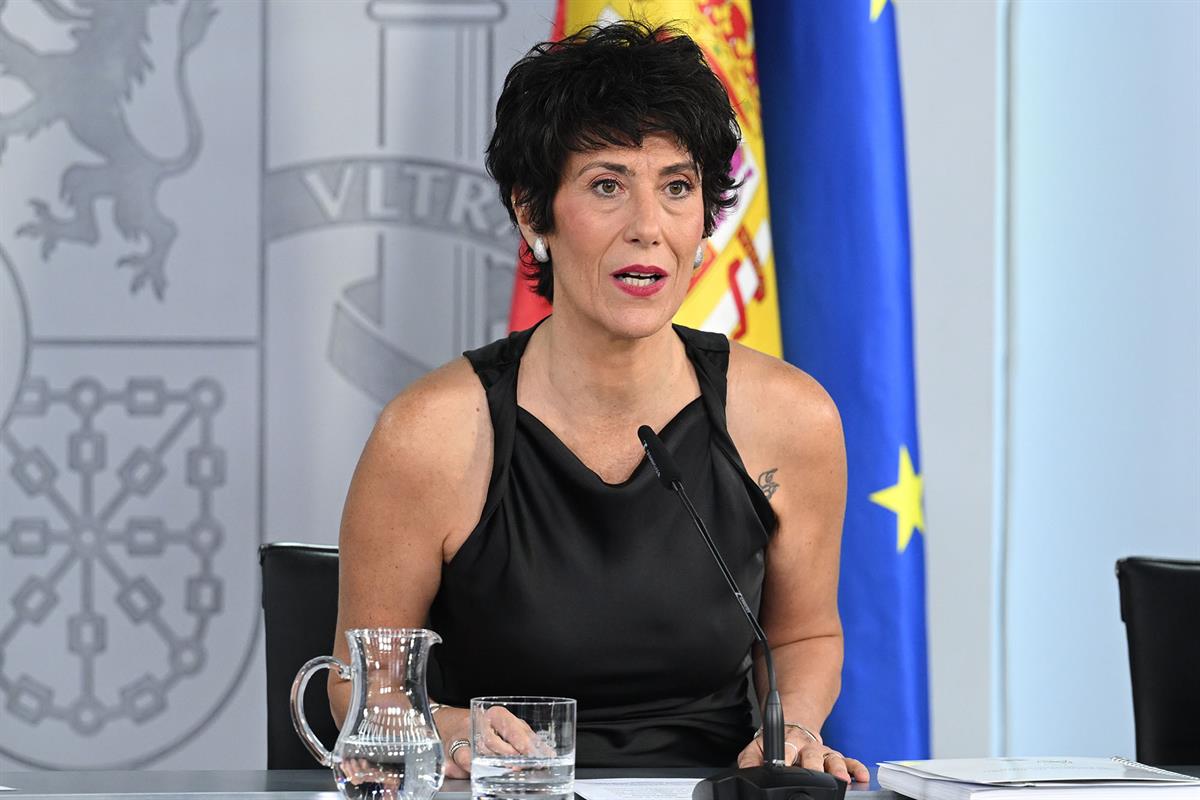 The Minister for Inclusion, Social Security and Migration and Government Spokesperson, Elma Saiz, during her speech at the press conference after the Council of Ministers | Pool Moncloa/ Borja Puig de la Bellacasa
The Minister for Inclusion, Social Security and Migration and Government Spokesperson, Elma Saiz, announced that the Council of Ministers has agreed to declassify information from the National Intelligence Centre (CNI) and the Armed Forces Intelligence Centre regarding the mass influx of foreign nationals into the city of Ceuta on 30 and 31 July 2026.
Saiz emphasised that the decision stems from a "commitment to transparency and to the public's right to be fully informed about an extraordinary situation that has required - and continues to require - an extraordinary response".
Priorities in Ceuta: preparing facilities and the start of the school year
The Minister for Territorial Policy and Democratic Memory, Ángel Víctor Torres, presented an updated report on the situation in Ceuta. Torres explained that the two priorities over the past week have been setting up facilities for the migrants who entered the autonomous city en masse - as their identification is mandatory for processing their return in accordance with the law - and the start of the school year.
With regard to accommodation, the minister explained that some 3,400 places have already been made available, a figure that will rise to 6,000 in the coming days. The necessary equipment has been transferred to the locations agreed upon with the Government of Ceuta within the National Security Council and the Situation Committee. Since 10 August, a total of 4,516 people have returned voluntarily to Morocco, and a further 278 have been deported.
With regard to the school year, Torres noted the presence in Ceuta of Milagros Tolón, the Minister for Education, Vocational Training and Sports, and reported full attendance by teaching and non-teaching staff. As for the students, attendance is hovering around 70%, a figure the Government expects to increase in the coming days.
Registration of minors and European Union support
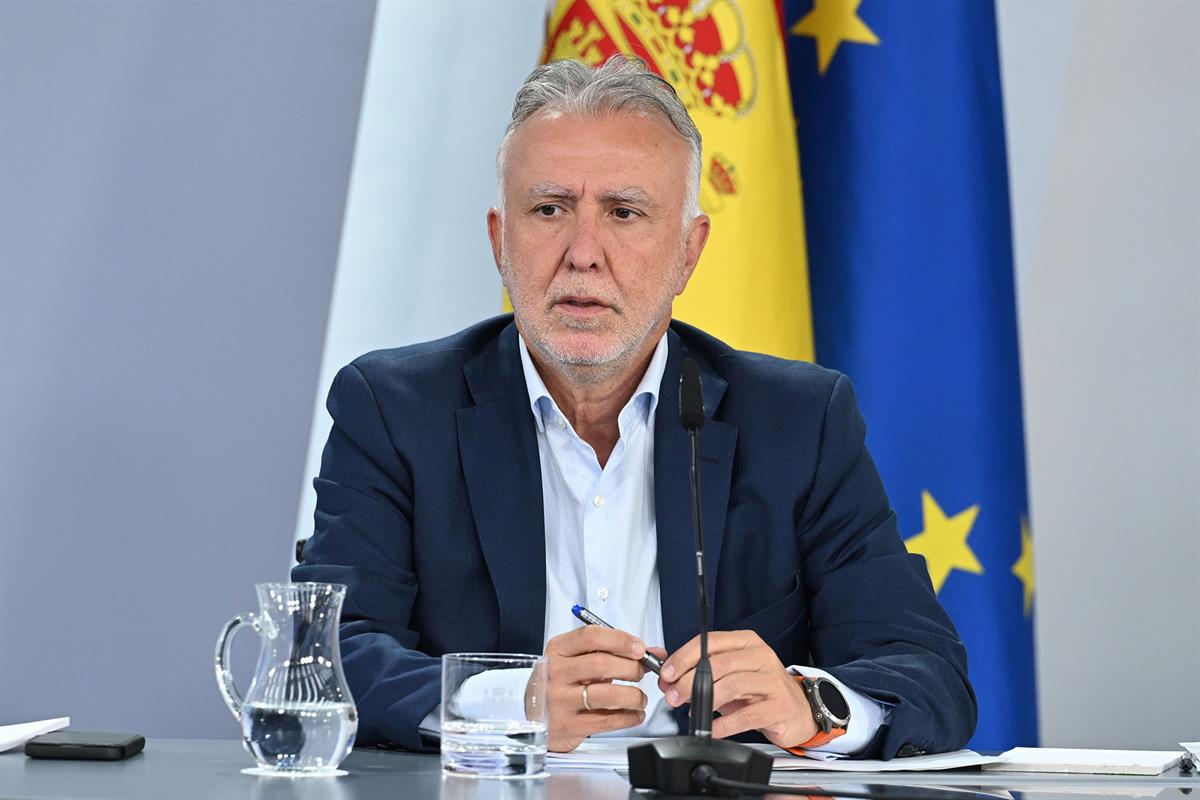 The Minister for Territorial Policy and Democratic Memory, Ángel Víctor Torres, at the press conference after the Council of Ministers | Pool Moncloa/ Borja Puig de la Bellacasa
The Minister for Territorial Policy stated that there are currently 2,004 unaccompanied minors registered in Ceuta. The aim is to register the remaining minors and proceed "as soon as possible" with the individual case files that will lead to family reunification or other legal options. Ángel Víctor Torres noted that this matter falls under the jurisdiction of the autonomous city, while the Government of Spain collaborates, coordinates and provides support for these tasks - having allocated 25 million euros during an initial Council of Ministers meeting and an additional 65 million last week. He also clarified that the central government will cover the cost of the minors' representative service, although the representative must be appointed by the autonomous city.
Torres reviewed the actions taken by the other ministries, mentioning, amongst other things, the start of the mass vaccination programme, the equipment provided by the Ministry of Defence, the judicial support to speed up case processing, the humanitarian aid provided by the Ministry of Inclusion, Social Security and Migration, the creation of a single register of women and children accompanied by guardians, and the forthcoming opening of the application period for direct financial aid from the Ministry of Economy, Trade and Business.
The minister also noted that the Minister for Foreign Affairs, European Union and Cooperation, José Manuel Albares, who is currently in Brussels, is set to discuss the situation in Ceuta with European Union commissioners. Torres himself spoke by phone yesterday with the Commissioner for Home Affairs and Migration, Magnus Brunner, who conveyed "support for the Government of Spain and the relevant authorities in whatever capacity might be needed".
Finally, the Minister for Territorial Policy noted that, this morning, the General State Administration formally entered the proceedings in the case opened at the National Court regarding the mass entry into Ceuta. "The Government of Spain considers itself an aggrieved party in light of the circumstances revealed by the ongoing investigation", Torres stated.
Non official translation