Council of Ministers
The Government of Spain updates anti-smoking law and regulations on medicines and medical devices
Council of Ministers - 2026.7.21
Moncloa Palace, Madrid
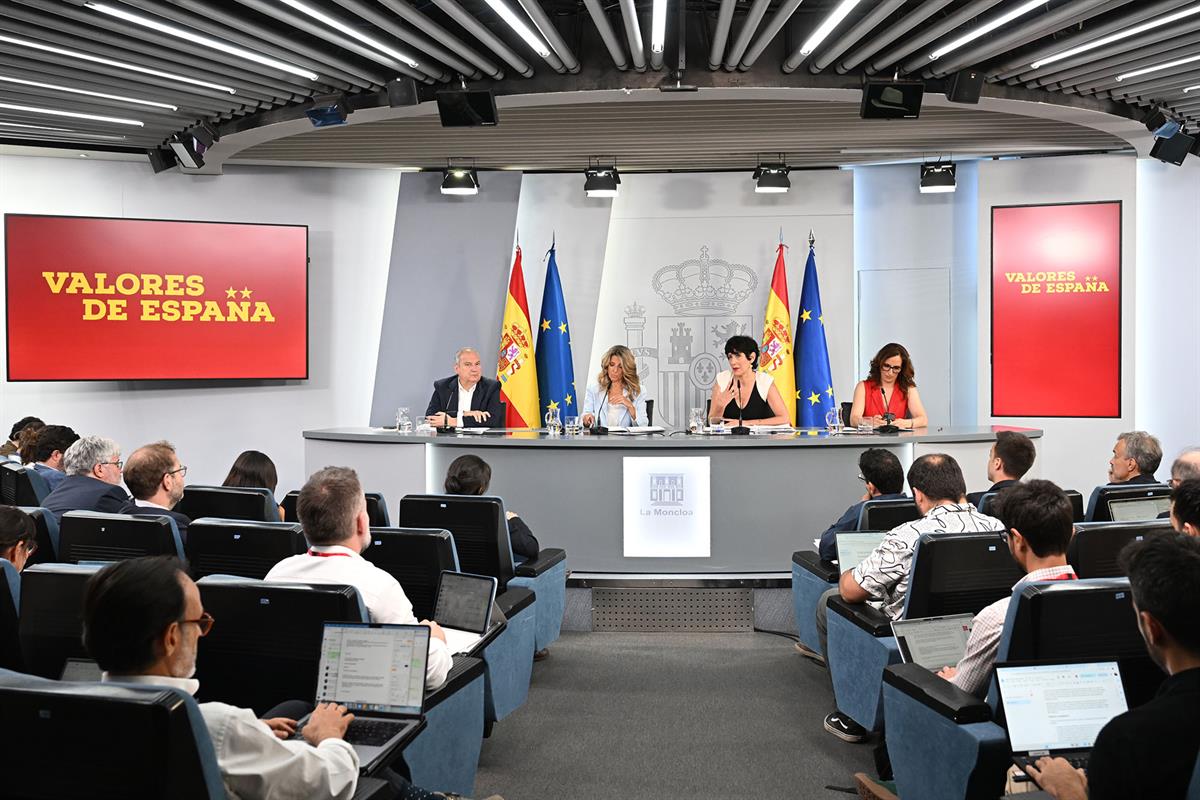 Ministers Jordi Hereu, Yolanda Díaz, Elma Saiz and Mónica García, during the press conference after the Council of Ministers (Pool Moncloa/Borja Puig de la Bellacasa)





The Council of Ministers has approved the referral to the Spanish Parliament for parliamentary consideration of the draft bill updating the current legislation on smoking, which was passed in 2005. The new regulations aim to expand smoke-free areas, strengthen protections for children and adolescents, and adapt the law to address new tobacco-related products.
The Minister for Health, Mónica García, highlighted that Spain has always been at the forefront of the fight against tobacco and, in this regard, the new legislation responds to changes in consumption patterns and the rise of new products. "Today we see vapes, heated tobacco products, nicotine pouches, herbal products and disposable devices, which are particularly appealing to young people", she said.
The bill forms part of the Comprehensive Plan for the Prevention and Control of Tobacco Use 2024-2027, which the Government approved in 2024, and advances some of its key priorities: protecting public health, preventing people from taking up smoking, and moving towards tobacco-free generations. The minister explained that the law is being updated "to reduce consumption, protect those who are involuntarily exposed to smoke and emissions, make it easier for anyone who wants to give up smoking to do so, and close certain legal loopholes that have been exploited by new products".
Key changes under the anti-smoking law
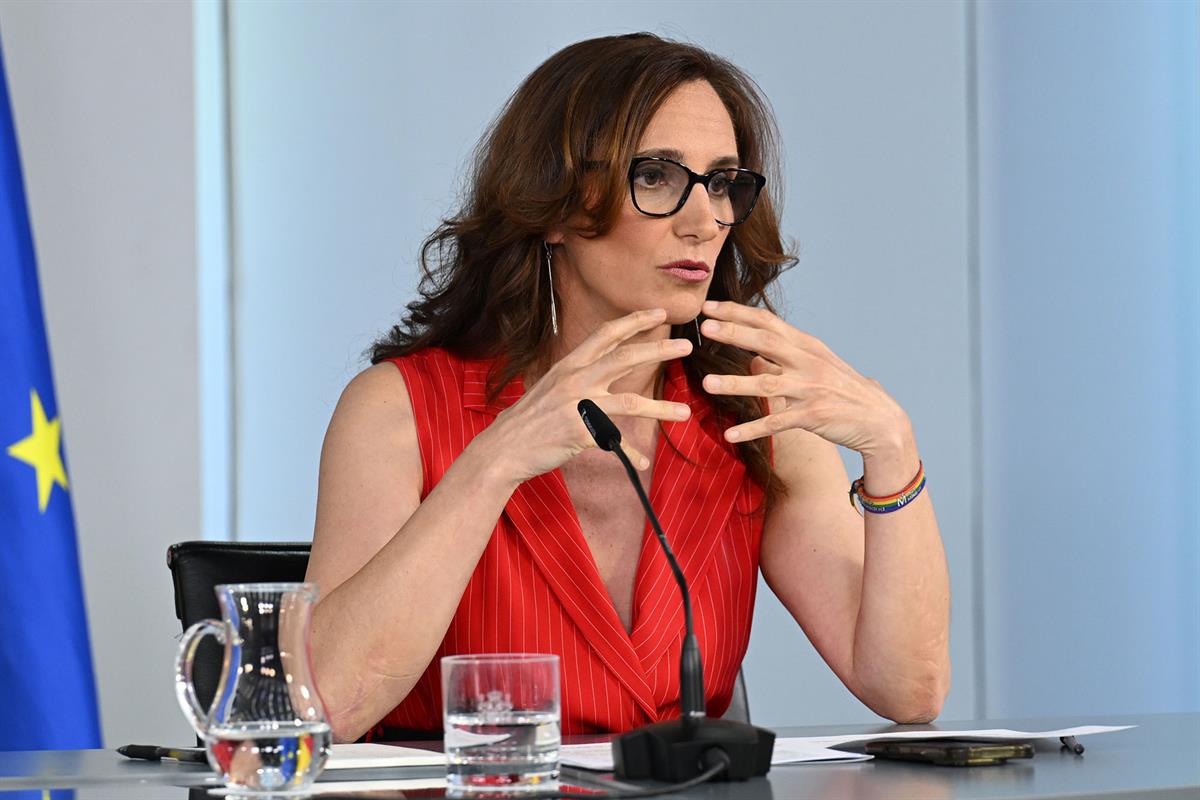 The Minister for Health, Mónica García, during the press conference after the Council of Ministers | Pool Moncloa/Borja Puig de la Bellacasa
Mónica García explained that the regulation of all tobacco-related products is being harmonised: "It doesn't matter whether the nicotine comes from a conventional cigarette, a vape or a sachet of flavourings. Where there is a health risk and the potential for addiction, we must take action and apply the same measures and requirements".
Another new development is the expansion of smoke- and emission-free areas, which now include restaurant and bar terraces. Furthermore, protection is extended to bus shelters, platforms, university campuses, sports facilities, public swimming pools, beaches, national parks, outdoor leisure areas, workplaces and transport vehicles, such as taxis and ride-hailing services. The minister pointed out that many of these venues were already subject to regional restrictions and that the Government is now regulating them uniformly.
The regulation also stipulates that smoking is prohibited within a radius of less than 15 metres of the entrances to public buildings, public and private healthcare facilities, educational, cultural and sports centres, as well as in parks and children's play areas. "The aim is very simple: to ensure that breathing clean air is the norm in shared spaces and that the right to health does not depend on where one happens to be", the minister emphasised.
The amendment to the law expressly prohibits the consumption of tobacco products by under-18s. Until now, the regulations prohibited the sale and supply of the substance, but did not specifically prohibit its consumption. The Health Minister emphasised that this change will make it possible to "take a more preventative approach, facilitate support for children and families, and strengthen the educational focus".
The future law tightens restrictions on the advertising, promotion and sponsorship of tobacco, tobacco-consumption devices and related products. The minister argued that advertising is no longer carried out solely through billboards or conventional adverts, but is now being channelled through social media or 'influencers' who showcase new tobacco products that appeal to young people. Consequently, the legislation treats these products in the same way as traditional tobacco, bans their advertising on the internet and social media, and restricts indirect promotion and commercial offers aimed at attracting new consumers. The reform restricts the outlets selling tobacco-related products, which will have to be duly authorised and meet certain requirements.
Health benefits and financial savings
The Health Minister estimated that implementing this policy would yield not only health benefits but also significant economic savings of between €100 million and €200 million annually: "We are talking about resources that could be channelled towards other needs within the system, rather than being spent on treating preventable diseases, such as respiratory and cardiovascular conditions or certain types of cancer".
Draft Bill on Medicines and Medical Devices
In the field of health, the Council of Ministers has also approved the referral to Parliament of the Draft Bill on Medicines and Medical Devices, which replaces the regulatory framework in force since 2015.
The Minister for Health announced that the objectives of the forthcoming law are: to ensure that innovative medicines needed by patients are made available sooner, to increase the availability of generic and biosimilar medicines, and to provide the National Health Service with more tools to prevent and tackle shortages.
Early access to new medicines
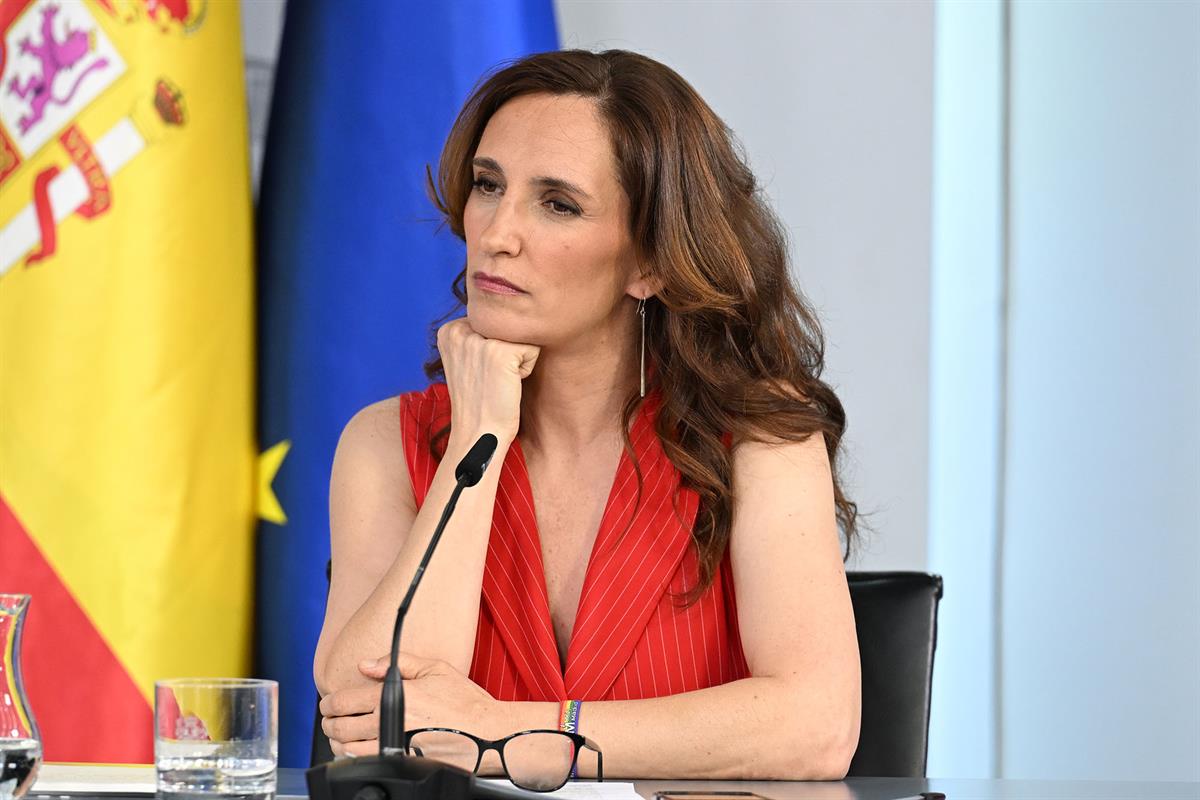 The Minister for Health, Mónica García, during the press conference after the Council of Ministers | Pool Moncloa/Borja Puig de la Bellacasa
The first step is the creation of an early-access scheme through conditional funding. The minister explained that, at present, currently, adding a medication to the National Health System requires evaluating its therapeutic value, negotiating its price, and analysing its budgetary impact. These guarantees are essential and remain in place. However, she added, there are situations in which patients have serious illnesses, have no available treatment options, or cannot afford to wait.
Mónica García announced that the new law will allow certain innovative medicines to be included in public coverage sooner when they address unmet medical needs or in cases of clinical urgency. In such cases, a decision may be reached under an expedited procedure in fewer than 65 working days. If the treatment proves to deliver the expected benefits, its funding will be confirmed under the final terms. If the results are unsatisfactory or the final price is lower than the provisional price, the pharmaceutical company will have to compensate the National Health System or refund the corresponding amounts.
The minister emphasised that, in this way, "patients gain time to access innovative treatments at crucial moments, whilst the system maintains all its clinical, financial and efficiency safeguards".
Promoting generic, hybrid or biosimilar medicines
The Health Minister pointed out that these medicines meet the same standards of quality, safety and efficacy, and allow competition to emerge once the protection period for an original medicine has expired. This competition drives down prices, broadens the range of options available and frees up resources that can be channelled into new innovations.
To facilitate its implementation, the forthcoming regulation establishes a dynamic pricing system to complement the current reference pricing system. As the use of generic and biosimilar medicines increases, prices will gradually adjust. According to the minister, this will make it possible to introduce more treatment options, increase the number of providers and generate significant savings for the system.
Security of supply
Mónica García pointed out that there are older, inexpensive medicines with little commercial appeal which are, nevertheless, essential for thousands of patients. They may disappear from the market, face supply issues, or cease to be profitable for manufacturers.
To ensure their continued availability on the market, the bill introduces the concept of a 'strategic medicine', defined as a medicine that is essential to the healthcare system but whose supply chain is vulnerable.
The minister announced that the Spanish Agency of Medicines and Medical Devices (AEMPS) will be empowered to implement regulatory measures regarding their manufacture, import, distribution and dispensing, as well as economic measures to ensure their continued availability.
For their part, pharmaceutical companies will be required to report on prevention plans and communicate stock levels and supply forecasts; in the event of a shortage, the AEMPS may mandate controlled and equitable distribution, prioritising healthcare needs. The pharmacist will also be authorised, in exceptional circumstances, to substitute the medicine with a suitable alternative.
New powers to prescribe medicines
The Medicines and Medical Devices Act also modernises pharmaceutical services. It formally recognises the prescribing authority of nurses and physiotherapists within their scope of practice and regulates remote dispensing and home delivery for cases where a patient's clinical situation, dependency, disability, or vulnerability makes travel difficult.
"This law will enable innovative medicines to reach the market sooner, allow generics and biosimilars to foster greater competition, and ensure that the savings made can be reinvested in new treatments. This brings us closer to a more flexible, safer and better-prepared pharmaceutical policy to ensure that every patient has access to the treatment they need when they need it", the minister concluded.
Adoption of the Artists' Statute
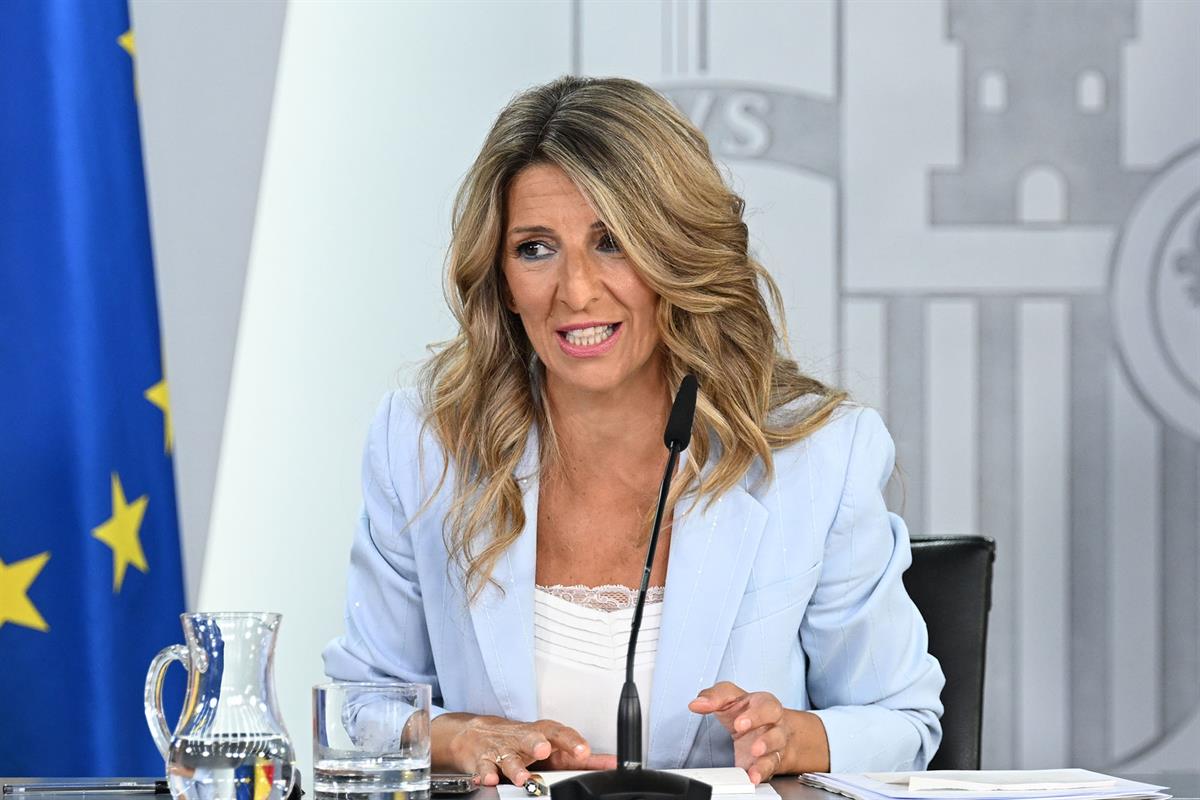 The Second Vice-President of the Government of Spain and Minister for Labour and Social Economy, Yolanda Díaz, during the press conference after the Council of Ministers | Pool Moncloa/Borja Puig de la Bellacasa
The Council of Ministers has approved the royal decree governing the special employment relationship for artists. The bill, known as the Artists' Statute, updates the legislation in force since 1985 and constitutes "the major labour reform for people working in the cultural sector", in the words of the Second Vice-President of the Government of Spain and Minister for Labour and Social Economy, Yolanda Díaz. She pointed out that this sector employs 771,000 people in Spain, accounting for 3.6% of total employment.
The Vice-president emphasised that the Royal Decree modernises the concept of 'public performance' set out in the 1985 legislation to take account of current realities such as digital channels and live or streaming broadcasts via the internet. Furthermore, it covers the entire cultural professionalisation chain, encompassing not only those working in the performing, audiovisual, and musical arts but also those performing the technical or auxiliary tasks necessary for such work. It also regulates redundancies, including severance pay and unemployment benefit for these workers.
Yolanda Díaz also highlighted the dialogue held with business leaders, trade unions and 80 cultural organisations in drawing up the legislation, which reflects a mandate unanimously approved by a sub-committee of the Lower House of Parliament.
Regulation of child labour and protection against harassment
As the Vice-president explained, this is the first time that children's artistic work has been comprehensively regulated in Spain, in accordance with the principle of the best interests of the child. The aim is to prevent the "exploitation of children" in areas such as advertising on social media, in films and on television. Furthermore, the text establishes a standardised administrative authorisation process for all of Spain and eliminates self-employment for minors under 16; the only permitted employment status will be that of an employee. Young people must have a plan in place to adapt their work activities to their personal circumstances and schooling.
A second pillar of the royal decree is the adaptation of measures to combat sexual harassment to the intermittent nature and short duration of employment relationships in the cultural sector. Furthermore, in response to the industry's demand, the involvement of a specialist mediator will be mandatory for the filming of scenes or performances of an intimate nature.
With regard to working hours, the text brings the cultural sector into line with general labour law and defines 'actual working time' as all time spent under the company's direction, such as rehearsals or the promotion of a production. "This is now working time and must be recorded for all purposes - wages, social security contributions and tax", said Yolanda Díaz.
The bill also makes progress on pay transparency regarding intellectual property rights, among other new features that create "a regulation fit for the 21st century", according to the Minister for Labour and Social Economy.
Socio-economic transformation through the energy transition
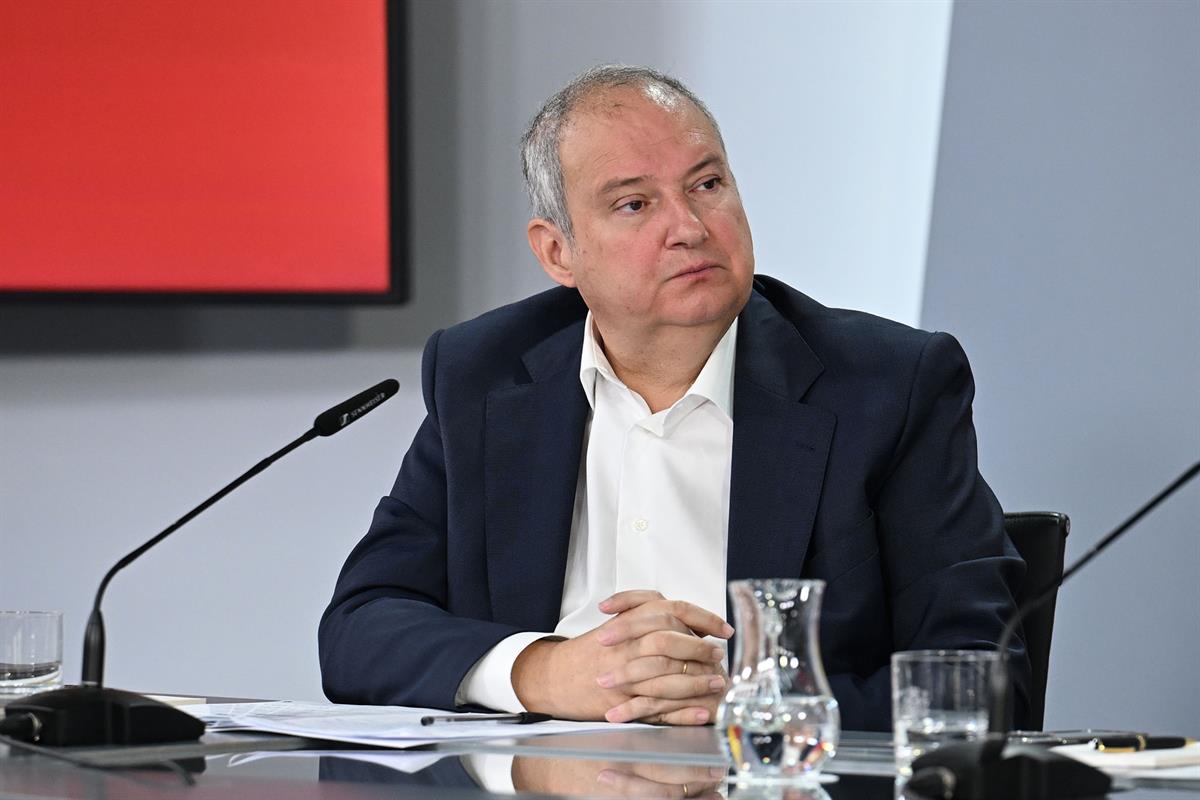 The Minister for Industry and Tourism, Jordi Hereu, during the press conference after the Council of Ministers | Pool Moncloa/Borja Puig de la Bellacasa
The Council of Ministers has agreed to invest €1 billion in two initiatives that treat the energy transition as a "major opportunity to boost our economy's industrial sector", asserted Jordi Hereu, the Minister for Industry and Tourism.
One such measure is a call for grant applications to offset the indirect costs of CO₂ emissions that industrial sectors pay through their electricity bills. Hereu highlighted that the allocation for this item has risen from €6 million in 2018 to €600 million for 2026. In addition to traditional recipient sectors - such as paper, metallurgy, chemicals and glass - this call includes others, such as organic chemicals, fertilisers and ceramic tiles.
Companies awarded the grants must carry out an energy audit and invest in energy efficiency measures or, alternatively, reduce their direct emissions. A third possibility is that they reduce their carbon footprint by using electricity generated from renewable energy sources. There is a three-year window to provide proof of investments made to decarbonise and improve energy efficiency. "In short, it is a major step towards maintaining the industrial competitiveness of our industrial sectors and sub-sectors", the minister said.
Subsidies for the purchase of electric vehicles
The second measure is the approval of the regulatory framework for the Auto+ Programme, an initiative forming part of the Auto 2030 Plan, described by Jordi Hereu as "a national strategy centred on one of our country's three major industrial sectors: the automotive industry". The cornerstones of the Auto 2030 Plan are the conversion of factories to produce electric cars, the establishment of a public charging network across Spain - there are already more than 56,000 charging points - and incentives to boost demand for electric and electrified vehicles.
The Auto+ Programme, with a budget of €400 million, aims precisely to boost this market, covering passenger cars, vans, light trucks, motorcycles and quadricycles. The Minister for Industry and Tourism explained that the scheme entails the direct management of these subsidies, applies retroactively from 1 January 2026, and is aimed at private individuals, the self-employed, SMEs and micro-enterprises. Once the call for applications has been approved, applications for grants can be submitted via an online system. The application may be made directly or through representatives, dealers or companies offering 'renting' or 'financial leasing' services.
The grants feature maximum amounts and percentages that vary based on several criteria, as the goal is to "promote, above all, electric vehicles that are affordable and manufactured in Europe and Spain", according to Jordi Hereu. For fully electric vehicles priced under €35,000 and manufactured in Europe, the buyer will receive 100% of the established grant amount. The Minister for Industry argued that this initiative will help transform the automotive market, which last month saw electrified vehicles - including pure electric and plug-in hybrid models - account for 23% of sales.
Promoting science and universities
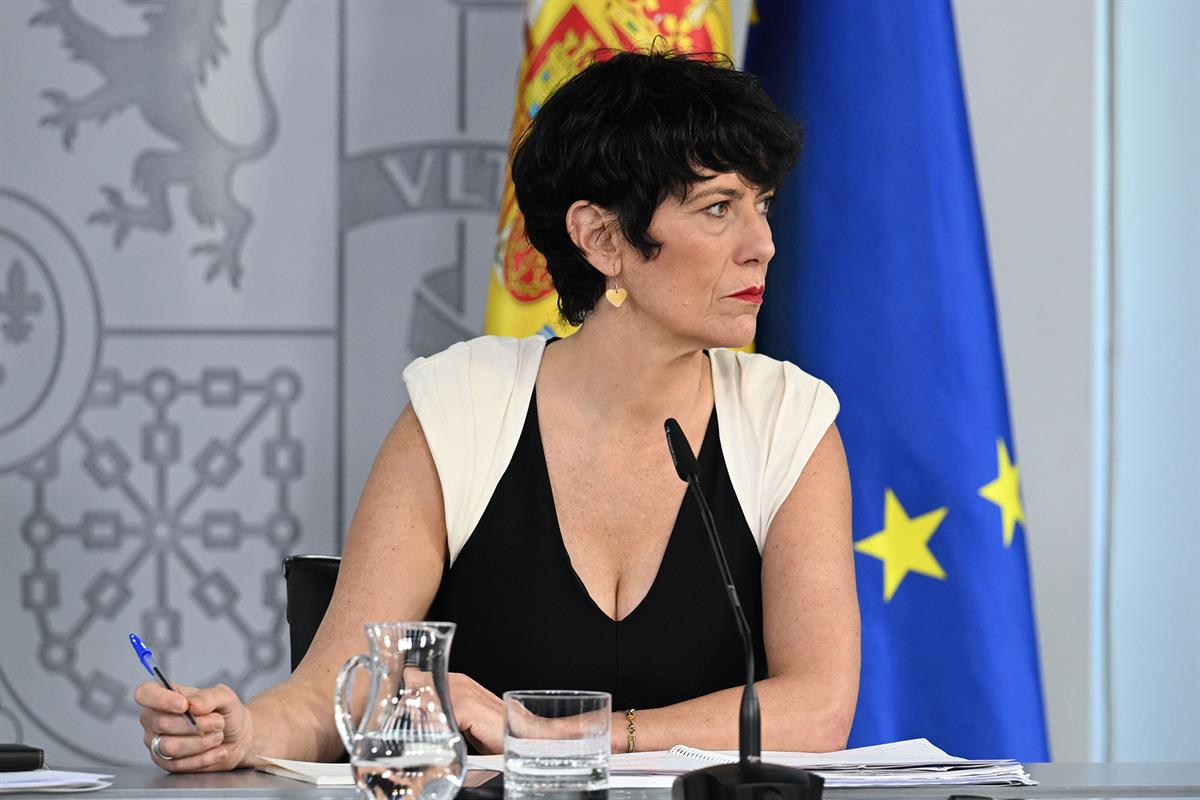 The Minister for Inclusion, Social Security and Migration, and Government Spokesperson, Elma Saiz, during the press conference after the Council of Ministers | Pool Moncloa/Borja Puig de la Bellacasa
The Minister for Inclusion, Social Security and Migration and Government Spokesperson, Elma Saiz, highlighted that the Council of Ministers reviewed a report on the preparations, organisation and coordination for a trio of eclipses visible from Spain between 2026 and 2028. She described this as a scientific event of international significance that will "place our country at the heart of global astronomical observation and astrotourism".
As the minister explained, the Government has been working for months to coordinate this initiative through an inter-ministerial committee comprising thirteen ministries, in which the regional governments and cities, the Spanish Federation of Towns and Provinces (FEMP), ONCE and other partner organisations are also involved. As a result of this coordination, a special security plan, a specific civil protection plan, studies on transport and economic impact, and recommendations to ensure the event takes place safely have already been drawn up.
The minister also announced the approval of a transfer of around €150 million to the regional governments under the María Goyri Programme to fund the recruitment of assistant lecturers with a PhD at public universities. She noted that this initiative will allow for the gradual recruitment of 5,638 new assistant lecturers by 2028, representing a 70% increase compared with the 2023-2024 academic year. The aim is to reduce job insecurity amongst university teaching staff, strengthen the teaching and research capacity of public universities, and facilitate generational renewal.
Plaque of honour for the women's and men's football teams
The Government Spokesperson congratulated the Spanish national football team on winning the World Cup and announced that the Council of Ministers has approved the awarding of the Plaque of Honour of the Order of Civil Merit to the men's and women's national teams. As she pointed out, this recognition goes beyond the world of sport and highlights principles such as perseverance, hard work, collaboration, respect, tolerance and talent, which project the best possible image of Spain both on and off the pitch.
Current Affairs
The minister began her speech by condemning the alleged gender-based murders that have taken place in the last few hours in Málaga, Toledo and Alicante. After pointing out that, should these cases be confirmed, 29 women would have been murdered as a result of gender-based violence so far this year and 1,370 since records of these crimes began in 2003, she reiterated that gender-based violence constitutes "a scourge" that society cannot normalise or accept, and called for unity, resolve and collective commitment to make progress towards its eradication.
Solidarity with those affected by the forest fires
Elma Saiz also conveyed the Government's solidarity with those affected by the forest fires ravaging various parts of the country. The minister highlighted the deployment of all the resources of the General State Administration made available to the regional governments since the start of the emergencies, and acknowledged the work of the professionals involved in fire-fighting operations and in protecting the public.
"The fire in La Mierla, in Guadalajara, is now the largest forest fire ever recorded in Castilla-La Mancha, with more than 29,000 hectares affected and more than thirty towns having had to be evacuated. At the same time, we are closely monitoring developments regarding the fire in Brieva, in Segovia, which has also forced the evacuation of several villages. Here in Aragón, we are keeping a close eye on the fire in Ejulve, in Teruel, which has already burnt 1,000 hectares. Fortunately, the positive developments regarding the fire in Orés mean that residents are now able to start gradually returning to their homes", explained the government spokesperson.
Furthermore, the minister called for caution in light of the high risk of fires following the onset of a new heatwave.
Non official translation