Council of Ministers
Government of Spain approves public employees' pay rises for 2025 and 2026
Council of Ministers - 2025.12.2
Moncloa Palace, Madrid
 Pool Moncloa/José Manuel Álvarez





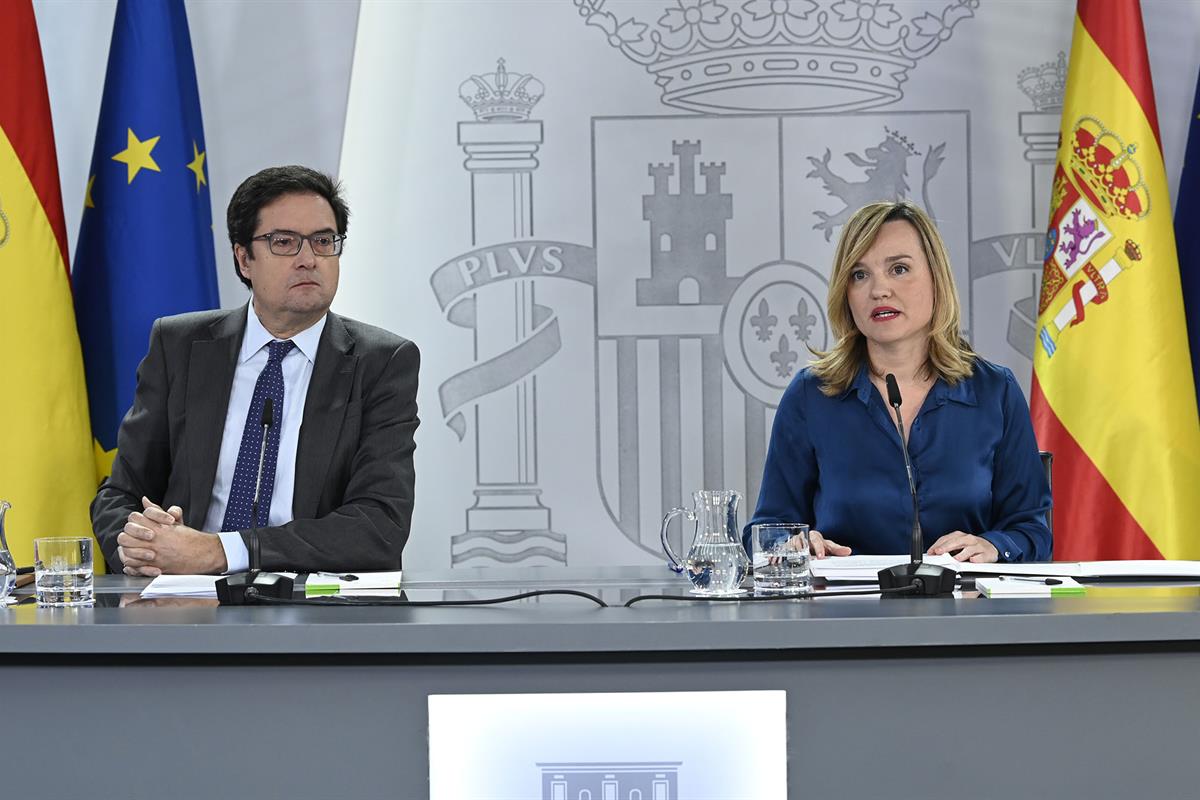
The Council of Ministers has approved a Royal Decree-Law to implement the public sector pay raises for 2025 and 2026. These pay increases are part of the Framework Agreement for improving the working and salary conditions of public sector employees until 2028, which the Government signed with social organisations last week at an event closed by the President of the Government of Spain, Pedro Sánchez.
The Minister for Digital Transformation and Civil Service, Óscar López, recalled that the agreement was signed with the UGT and CSIF unions and urged the CCOO union to join, because, in his opinion, it is "an excellent agreement for the public sector" and extends until 2028.
Óscar López argued that it is an important social agreement that embodies three essential characteristics of the Government: a commitment to social dialogue; quality in public employment; and the strengthening of the welfare state "after seven years of cuts in both the number and working conditions of civil servants".
The framework agreement guarantees the maintenance of purchasing power for more than three million public employees, who will see their salaries increase by 11% between 2025 and 2028. According to the Minister, it also includes many other measures to modernise the public sector and provide better services to citizens. Some of these initiatives include streamlining selection processes, strengthening internal promotion, advancing professional classification and improving the provision of jobs. In addition, the digital and artificial intelligence skills of employees in all administrations will be strengthened.
Public employee pay increase
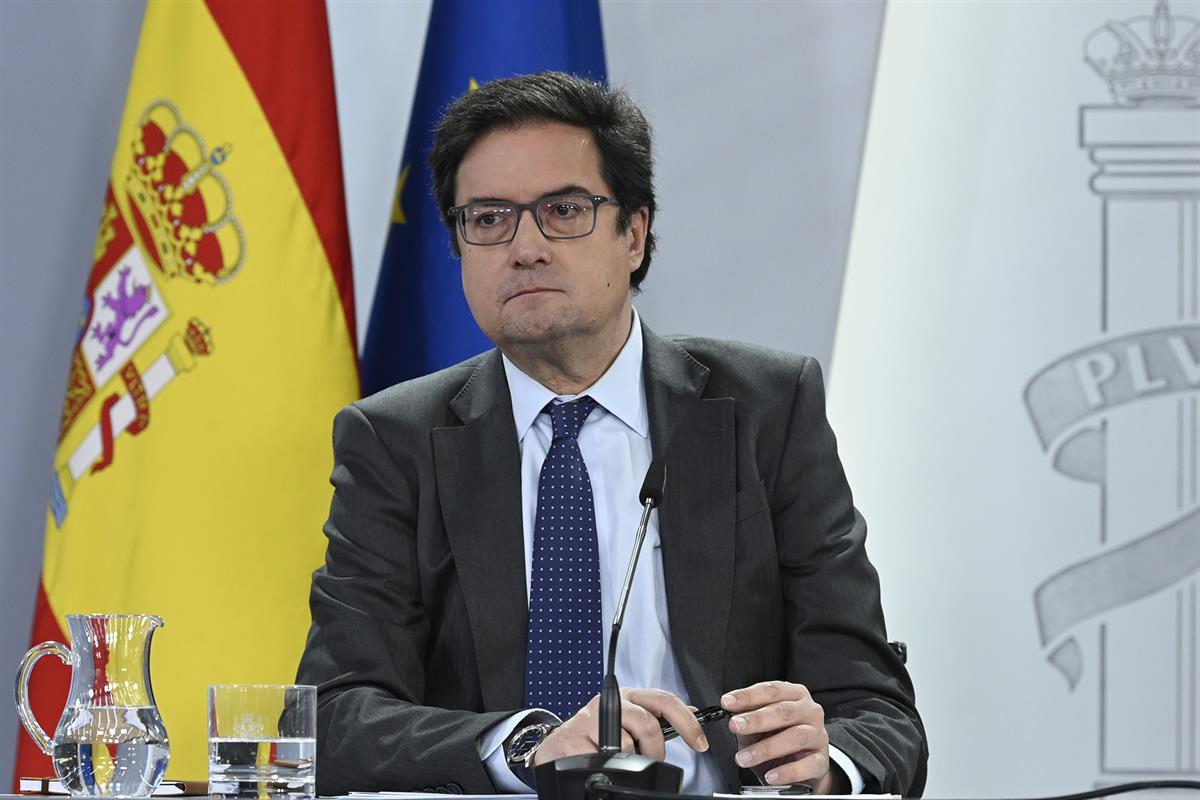
The salary increase will be 2.5%, consolidated for 2025, effective retroactively from January. Óscar López clarified that employees of the General State Administration will receive the increase in a single payment in this month's December payroll. The other public administrations will establish the payment schedule for the amounts and back pay related to 2025 according to agreements reached with the unions. "The amount is binding for all; the payment method will depend on what each administration agrees upon", the minister emphasised.
 Pool Moncloa/José Manuel Álvarez
For 2026, the regulation approved today establishes a consolidated 1.5% increase with respect to the increased salaries in effect on 31 December 2026. This increase will begin to be paid starting with the January payroll. Additionally, another 0.5% salary increase will be applied and consolidated if the CPI variation in 2026 is equal to or greater than 1.5%, which would be received at the beginning of 2027. In other words, the salary increase would reach 2% in 2026.
The minister also stressed that the agreement includes a review in 2026 of the residence and insularity allowance received by public servants in the Balearic and Canary Islands.
Óscar López indicated that, apart from the increases approved today, the framework agreement signed with the unions establishes a 4.5% increase in 2027 and a 2% increase in 2028.
In this context, the Minister for Civil Service concluded by pointing out that under the previous administration, the salary increase for public employees was 3.7% over seven years, while under the current administration it has been 17%.
Selection of national civil servants returned to Catalonia
The Government has agreed to amend the Law Regulating the Foundations of Local Government to return to the Generalitat of Catalonia the management of public employment offers and the selection processes for national civil servants. The measure, which is part of a royal decree-law that must be ratified by the Lower House of Parliament, returns to the Generalitat a power it already exercised between 2007 and 2013.
Óscar López highlighted the importance of the national civil servant, especially in rural Spain, due to the work these officials perform in local councils (auditing, treasury, accounting, legal advice, etc.). The minister also emphasised that four out of every ten positions in this body are vacant and that Catalonia is the autonomous community with the most unfilled positions. A "historical problem" that the Government has addressed by announcing 1,000 extraordinary positions and with this legal change.
"A large part of the reason these positions remain unfilled today is that, when someone applies, they don't know if they'll end up in Vigo, Barcelona, Cádiz, or somewhere else in Spain", the minister explained. Assigning the management to Catalonia will help eliminate this uncertainty and bring the administration closer to citizens, said Óscar López, who noted that this has been a constant demand of Junts per Catalunya.
2024 surplus for sustainable local and regional investments
 Pool Moncloa/José Manuel Álvarez
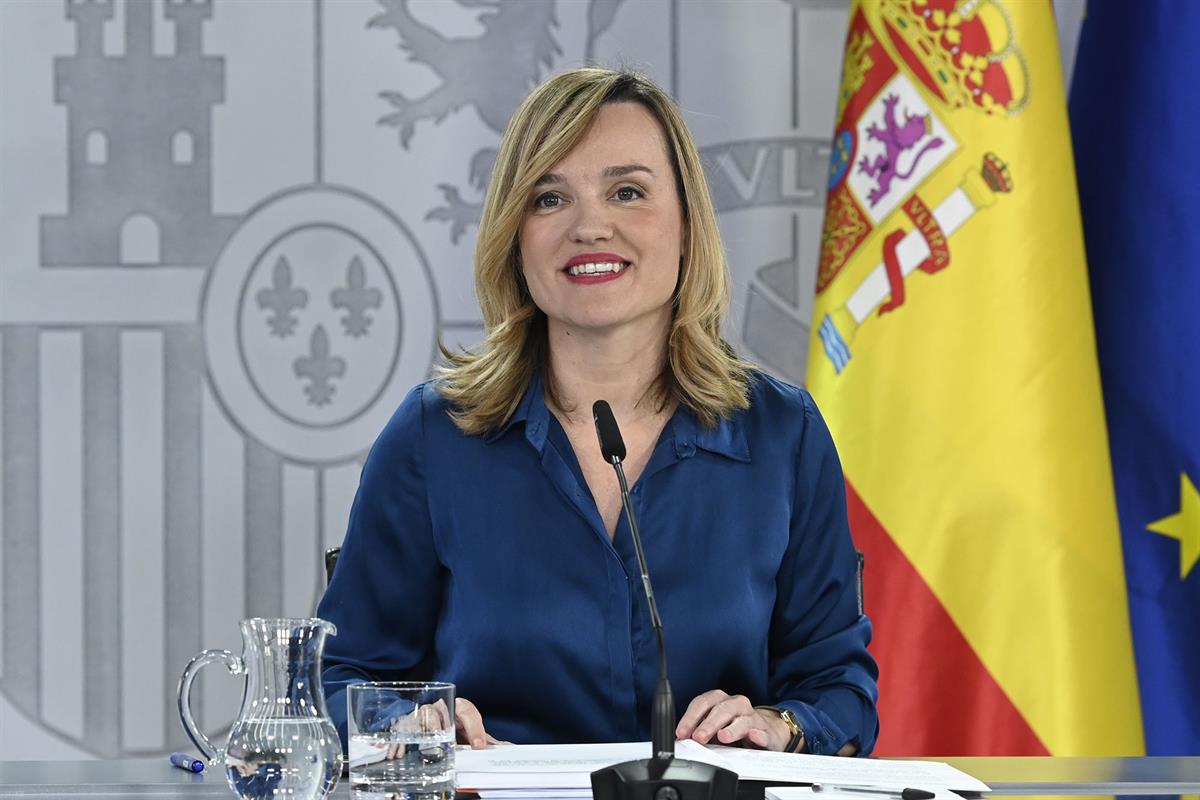
The Minister for Education, Vocational Training and Sports and Government Spokesperson, Pilar Alegría, explained that the Royal Decree-law will allow autonomous communities and local entities to use the surplus obtained in their accounts during 2024 for financially sustainable investments during 2025, 2026, and 2027.
As the government spokesperson detailed, communities and local entities will be able to use these resources for services such as water supply, public lighting, housing, waste collection, social assistance, or investments with positive effects on climate change and for improving energy efficiency.
Furthermore, the regulation includes an extension until 2027 for SMEs and the self-employed to comply with the requirements established in the so-called "Verifactu Regulation" for their electronic invoicing systems. Thus, Alegría explained, those companies whose deadline for carrying out this adaptation began on 1 January 2026, will be able to do so until 1 January 2027, while those whose deadline was 1 July 2026, will be able to adapt their computer systems until 1 July 2027.
Public employment offer at the UNED
The Government has authorised the public employment offer for teaching and research staff at the National University of Distance Education (UNED), as well as for technical, management, and administrative and service staff. The Minister for Digital Transformation and Public Function announced that this will allow UNED to hire 95 professors and 98 technical staff members. The announcement demonstrates the Executive's commitment to public universities and equal opportunities, according to Óscar López.
Stability targets and new crown prosecutor
Pilar Alegría has confirmed that the Council of Ministers has re-approved the 2026-2028 stability targets for public administrations-which it had already approved on November 18-in order to resubmit them to Parliament after their rejection in the Lower House of Parliament.
On another note, regarding the appointment process of Teresa Peramato as the new Crown Prosecutor of the State, the spokesperson stated that the Executive's proposal has already been reviewed by the General Council of the Judiciary, which has submitted its corresponding favourable report "unanimously" to the Government. Following this step, the Lower House of Parliament will set the date for Teresa Peramato's appearance before the Justice Committee.
La Palma, home of the National Centre for Volcanology
The Minister of Education has announced the Council of Ministers' designation of La Palma as the new physical headquarters of the future National Centre for Volcanology consortium. Alegría stated that the island represents the "ideal" option to host the headquarters of this centre, which aims to "make our country a world leader in the comprehensive management of volcanic activity".
The centre will have the participation of the General State Administration - through the Ministry of Science, Innovation and Universities-and the Government of the Autonomous Community of the Canary Islands: both will contribute 50% of the resources for its upkeep.
In the application submitted by the Canary Islands to host the centre-the only one received by the Executive-the Government highlighted that this region is the only Spanish territory with active volcanism and a history of volcanological risk management, thus offering numerous opportunities for on-site research, from both a scientific and social perspective.
International Day of Persons with Disabilities
The Government spokesperson also referred to the Executive's commitment to the rights of people with disabilities, within the framework of the celebration of the International Day of Persons with Disabilities, commemorated every 3 December.
"One of the most important milestones we have achieved as a country has been the reform of Article 49 of the Constitution", Alegría recalled, reiterating her commitment to "continue working on laws that guarantee inclusion, autonomy, and accessibility for people with disabilities in Spain".
Other topical issues: latest employment and unemployment figures
 Pool Moncloa/José Manuel Álvarez
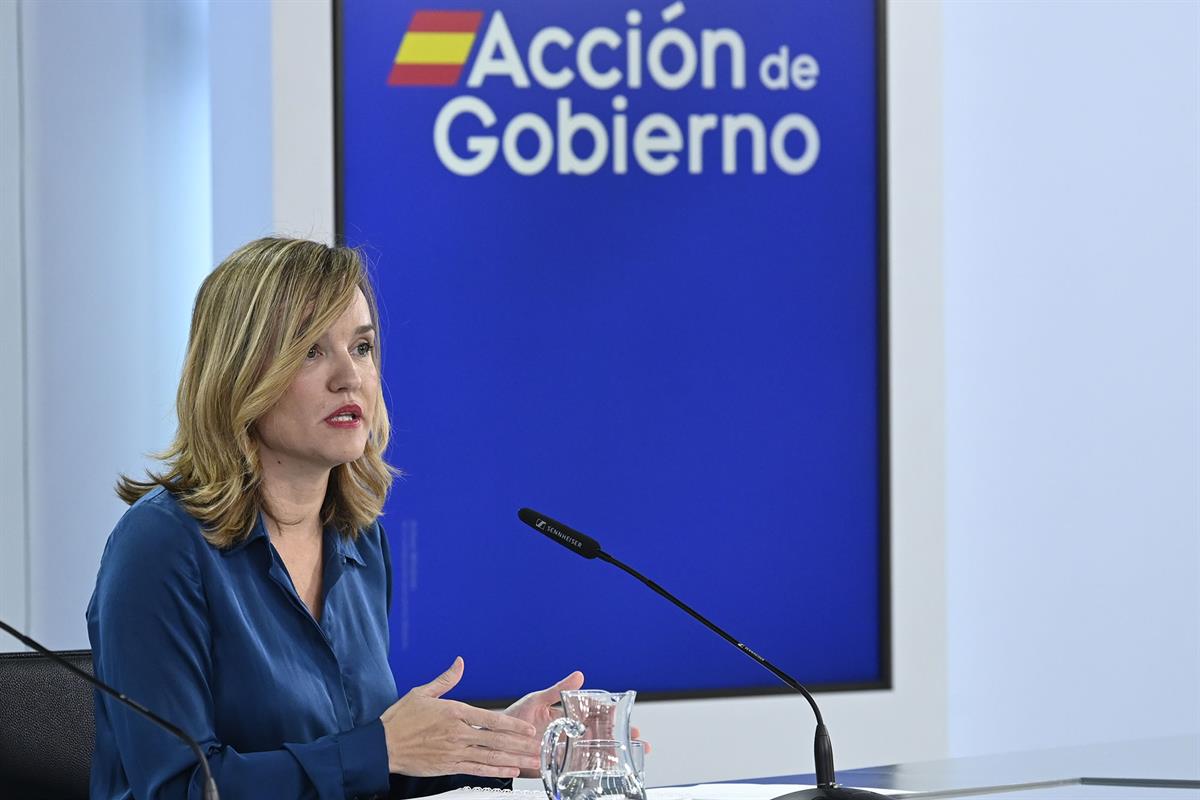
Pilar Alegría began her speech at the press conference following the Council of Ministers meeting by celebrating the employment and Social Security affiliation figures for November. "The most important figure is that unemployment has fallen and is at its lowest level for a November in the last 18 years", explained the minister, who noted that unemployment has decreased by more than 160,000 people this year.
Furthermore, the number of national insurance contributors remains stable at 21,800,000, a figure that, according to Alegría, allows the government to "face the final stretch of the year with optimism", as it "reflects the reality of a country that is progressing, growing, and continuing to lead the economy and employment in Europe".
Non official translation