The Government of Spain approves 30 million euros in direct aid and advance payments for the victims of the Urda rail accident and their families
Council of Ministers - 2026.11.3
Moncloa Palace, Madrid
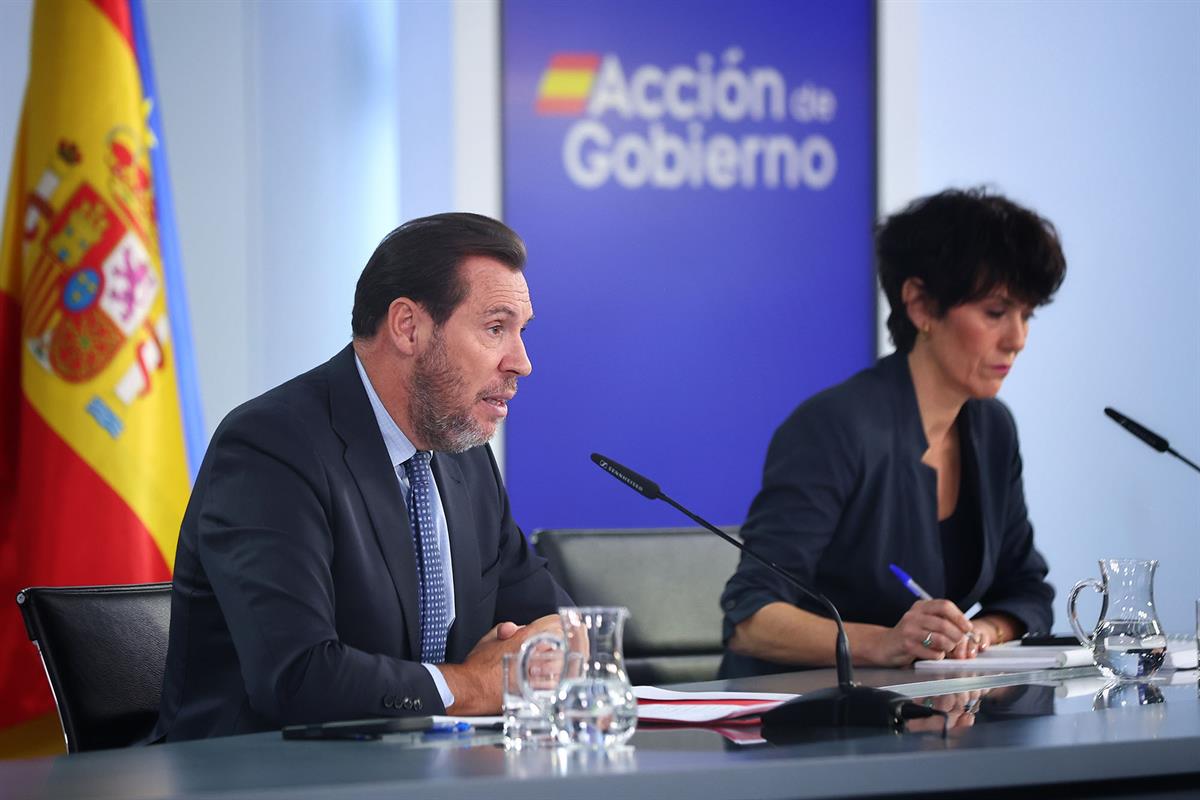 The Minister for Transport and Sustainable Mobility, Óscar Puente, during the press conference after the Council of Ministers (Pool Moncloa/Sandra Armada)



The Council of Ministers has approved a Royal Decree-law to support the victims of the Urda (Toledo) rail accident, with a budget of 30 million euros, to facilitate immediate access to financial assistance and bring forward compensation payments, without having to wait for administrative and legal proceedings to be completed.
The Minister for Transport and Sustainable Mobility, Óscar Puente, explained that two further measures are being introduced alongside the direct financial aid. On the one hand, "a cap on the prices of transport alternatives to the train", whilst the lines remain closed due to the emergency situation; and, on the other hand, the launch of "an extraordinary plan to strengthen high-speed rail safety in Spain".
For her part, the Minister for Inclusion, Social Security and Migration and Government Spokesperson, Elma Saiz, has, on behalf of the Government, conveyed her condolences to the families, wished those hospitalised a speedy recovery, and thanked the more than 1,000 state personnel who have taken part in the relief efforts for the victims, alongside regional and local services.
The Government Spokesperson has acknowledged the public's right to receive answers about what happened, although she pointed out that some of these will only become clear as the judicial investigation progresses. She also reiterated that the Government's priority is to support the victims and their families throughout the process.
Material support and institutional backing
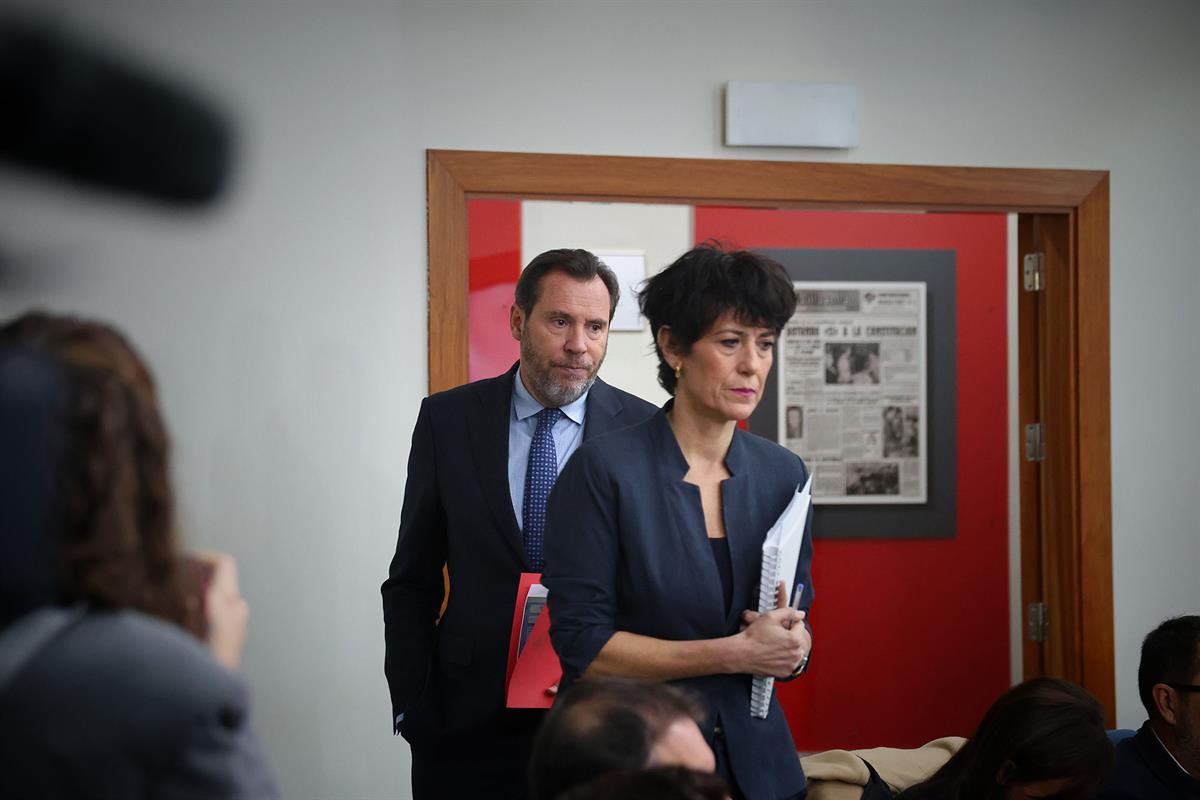 The Minister for Transport and Sustainable Mobility, Óscar Puente, and the Minister for Inclusion, Social Security and Migration and Government Spokesperson, Elma Saiz, upon their arrival at the press room | Pool Moncloa/Sandra Armada
Oscar Puente stated that this is the same "aid scheme" that was implemented following the Adamuz accident last January. "It is a matter of approving or providing material support, but also certainty and institutional backing at a time of particular vulnerability," the minister emphasised.
The regulation establishes a special scheme for direct financial assistance and a system of advance payments of compensation under civil liability insurance. Furthermore, this assistance is supplementary to and compatible with the cover provided for by law for victims of railway accidents; and it will be received in full, as it will be exempt from tax.
Of the 30 million euros earmarked, 15 million will be allocated to direct aid and a further 15 million to advance payments of compensation under civil liability insurance. In the event of death, a payment of 72,121.46 euros is provided for, along with an advance payment of the same amount. For those who have suffered physical injuries, the amounts will be determined according to the severity of the injuries, ranging from 2,404 to 84,141 euros - the same as for the insurance advance payment. "It is a matter of time, and we believe the victims cannot wait," emphasised Óscar Puente.
Price caps on transport alternatives to the train
The Royal Decree-law approved by the Government also includes price caps on transport alternatives to rail whilst the Madrid-Andalusia high-speed line remains out of service, as well as on certain accommodation services linked to the journeys affected.
The Minister for Transport and Sustainable Mobility explained that the aim is "to prevent excessive price rises that harm consumers". "We have seen huge price rises in the hours immediately following the accident, and now, a few days later, we are seeing prices that have risen eight- or nine-fold compared with the period before the accident. And that, clearly, is unacceptable," the minister stated.
Special protection for affected workers
The legislation also provides for exceptional protection for workers affected by the accident. Oscar Puente explained that sick leave due to temporary incapacity resulting from the accident will, on an exceptional basis, be treated as a work-related accident. This measure will enable those affected to receive benefits from the first day of sick leave, at a higher rate than that applicable to temporary incapacity due to common contingencies.
Furthermore, pensions for permanent disability, death and survivors' benefits, as well as benefits for partial permanent disability resulting from an accident, shall be calculated in accordance with the conditions laid down for accidents at work, provided that this is more favourable to the beneficiaries.
In the case of persons covered by the Civil Service Pension Scheme, special retirement pensions for permanent disability, widowhood, orphanhood or for parents may be granted where these provide greater financial protection. The minister emphasised that these measures will be applied automatically, without the need to submit an application, and will have retroactive effect.
Comprehensive victim support centres
The Government has also approved the establishment of one-stop shops to provide comprehensive support to the victims of the Urda rail accident, which will be set up through the Government's regional and sub-regional offices to facilitate the application for and processing of financial assistance and advance payments.
Furthermore, those affected who are unable to travel to these offices will be able to receive assistance at their own homes, anywhere in the country, through the 'Administration Close to You' programme run by the Ministry of Territorial Policy and Democratic Memory.
Extraordinary plan to improve high-speed rail safety
 The Minister for Transport and Sustainable Mobility, Óscar Puente, during his speech at the press conference after the Council of Ministers | Pool Moncloa/Sandra Armada
The Transport Minister also announced the approval of a special plan to strengthen the safety of the high-speed rail network. Óscar Puente pointed out that, although international organisations rank the Spanish rail system amongst the safest in the world, recent accidents "demonstrate the urgent need to strengthen the system and improve its protocols for dealing with exceptional circumstances".
The plan will be rolled out on "three fronts": technological innovation, control and safety protocols, and human resources. "We are committed to working tirelessly to restore public confidence in high-speed rail," the minister emphasised.
In the field of technology, Óscar Puente has announced the development of new software for railway control centres, which will incorporate automatic alerts, electronic call logs, validation checklists and improved visual ergonomics to make it easier to understand the location of trains and the status of the tracks.
In addition, an artificial intelligence agent and a digital twin of the rail network will be created, enabling the system's operation to be monitored, scenarios to be anticipated, anomalies to be detected and conversations between train drivers and signallers to be monitored.
The minister explained that these tools are designed to make "employees' work easier and minimise the possibility of human error". He also acknowledged that "we are entering uncharted territory. We are not aware of any examples of this type of mechanism or technology in any other railway system, and so we will have to blaze this trail ourselves for the first time".
Furthermore, Óscar Puente has announced that the roll-out of the RTMS2 system on the Madrid-Seville line will be completed in accordance with the planned schedule, and that the State Railway Safety Agency will carry out an immediate and extraordinary review of the safety systems on this infrastructure. Until both tasks have been completed, the Ministry will reduce the number of services operating on the line once services have resumed.
Restoration of the Madrid-Seville line
With regard to the reopening of the line, the minister has reported that work to remove the derailed trains has now been completed and that judicial authorisation has been sought to begin reconstruction and restoration of the infrastructure.
The Minister for Transport and Sustainable Mobility has explained that, although the damage affects just over 40 metres of track, as a precautionary measure work will be carried out on a section of approximately 400 metres. According to his estimates, once judicial authorisation has been obtained, the work could be completed within a maximum of ten calendar days, which would allow services to resume whilst exercising the utmost caution.
New control and safety protocols
In the second area of the plan, the minister announced changes to the management protocols for control centres to incorporate cross-checking mechanisms. Consequently, where automatic blocking systems are not available, decisions taken at control centres must be supervised and validated by a second human controller.
In addition, the State Railway Safety Agency will review the system's regulations and operating procedures. A technical study will also be carried out with independent experts to assess new passive safety measures inside trains.
Among the measures to be considered is the redesign of the luggage areas, with enclosed compartments to prevent suitcases and other items from shifting in the event of sudden braking or accidents.
Increasing staff numbers and improving working conditions
Finally, the plan includes measures aimed at strengthening staffing levels at control centres and improving working conditions for their staff, in line with the plans agreed with the trade unions. The minister has announced an amendment to Article 38 of the Royal Decree governing these conditions, to adapt air traffic controllers' rest periods to periods of peak operational demand.
Fatigue management protocols, currently in place for train drivers, will also be extended to other critical roles, such as safety staff at railway worksites, site supervisors and pilots.
In addition, continuous training for controllers will be reinforced through mentorship programmes, new accreditations and regular simulations to improve their preparedness for exceptional situations. Óscar Puente concluded that these eight measures will help to strengthen the Spanish rail system and restore public confidence in high-speed rail.
Healthy eating in hospitals, care homes and nurseries

The Minister for Inclusion, Social Security and Migration and Government Spokesperson, Elma Saiz, has announced the approval of a royal decree, proposed by the Ministry of Social Rights, Consumer Affairs and 2030 Agenda, which restricts the availability of foods high in saturated fats, sugars and salt in hospitals, care homes and pre-school settings.
The regulation stipulates that at least 70 per cent of the products in vending machines must be healthy and provides for a greater proportion of fruit and vegetables.
Improving working conditions for junior doctors
The Council of Ministers has also agreed, following a proposal from the Ministry of Health, on new regulations governing the training of specialists in health sciences. As explained by Elma Saiz, the regulation updates the employment relationship of junior doctors and strengthens safeguards relating to working hours, rest periods, remuneration and health protection.
Extension of the benefit for caring for children with serious illnesses
With regard to social security, the Council of Ministers has given the go-ahead for the improvement and updating of the benefit for the care of children affected by cancer or another serious illness.
The Government Spokesperson has pointed out that the measure broadens the criteria for eligibility for this benefit and makes it easier for both parents to receive it either alternately or simultaneously, with the aim of alleviating the difficulties families face in looking after their children.
Strategic Plan for Inclusive Education 2026-2031
The Government has also approved, on the recommendation of the Ministry of Education, the Strategic Plan for Inclusive Education 2026-2031. Elma Saiz explained that this is a roadmap designed to ensure that all children can develop their full potential, regardless of their personal circumstances.
Update on the situation in Ceuta
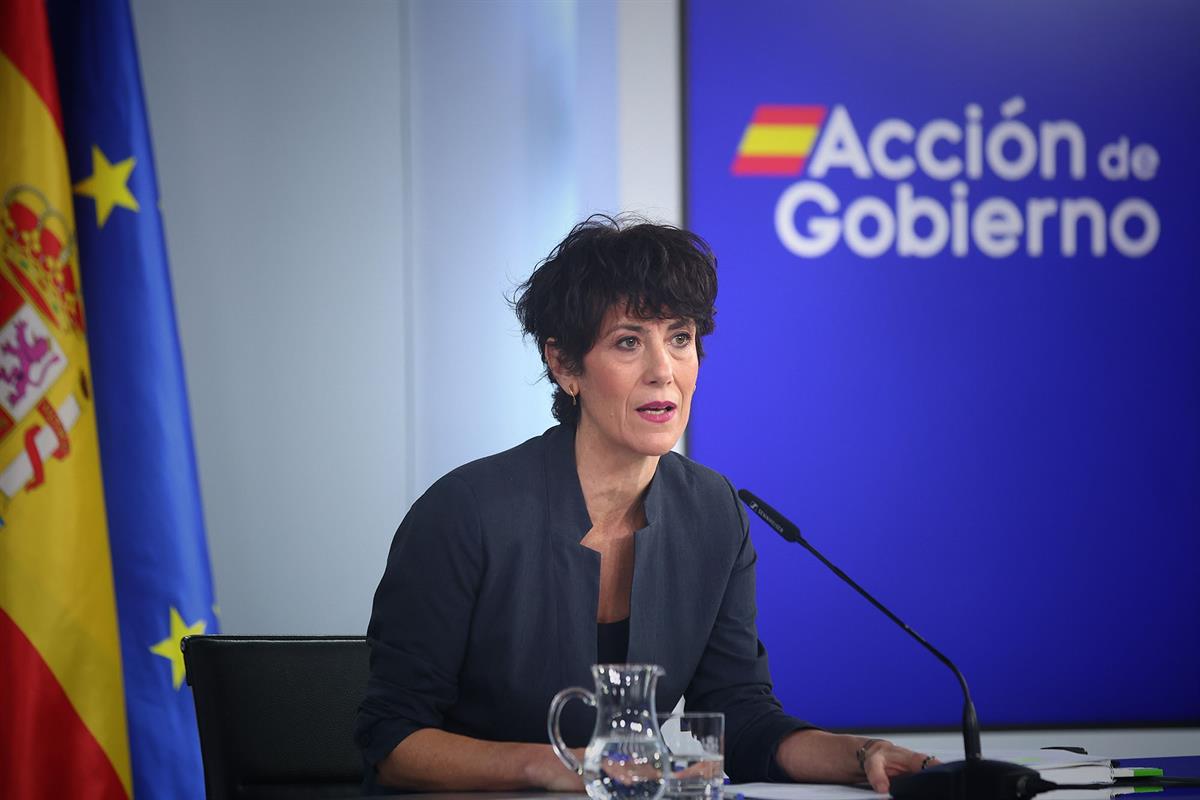 The Minister for Inclusion, Social Security and Migration and Government Spokesperson, Elma Saiz, during her speech at the press conference after the Council of Ministers | Pool Moncloa/Sandra Armada
Finally, Elma Saiz provided an update on developments in Ceuta, where the Government has continued to work to dismantle the temporary migrant reception centres and restore normality.
According to the latest figures, 14,818 people have returned to Morocco, 995 more than the previous week. Of these, 14,180 were voluntary returns and 638 were deportations. In addition, 6,113 people have gone through the triage process and 3,650 minors are currently in the regional protection system.
As regards minors resettled on the mainland, 135 have been transferred for the purpose of family reunification and a further 181 have been resettled in various autonomous communities in accordance with Article 35 of the Immigration Act. In addition, 89 reports have been sent to Morocco.
Non official translation