Council of Ministers
The Government allocates 250 million euros to improve training for workers
Council of Ministers - 2026.9.22
Moncloa Palace, Madrid
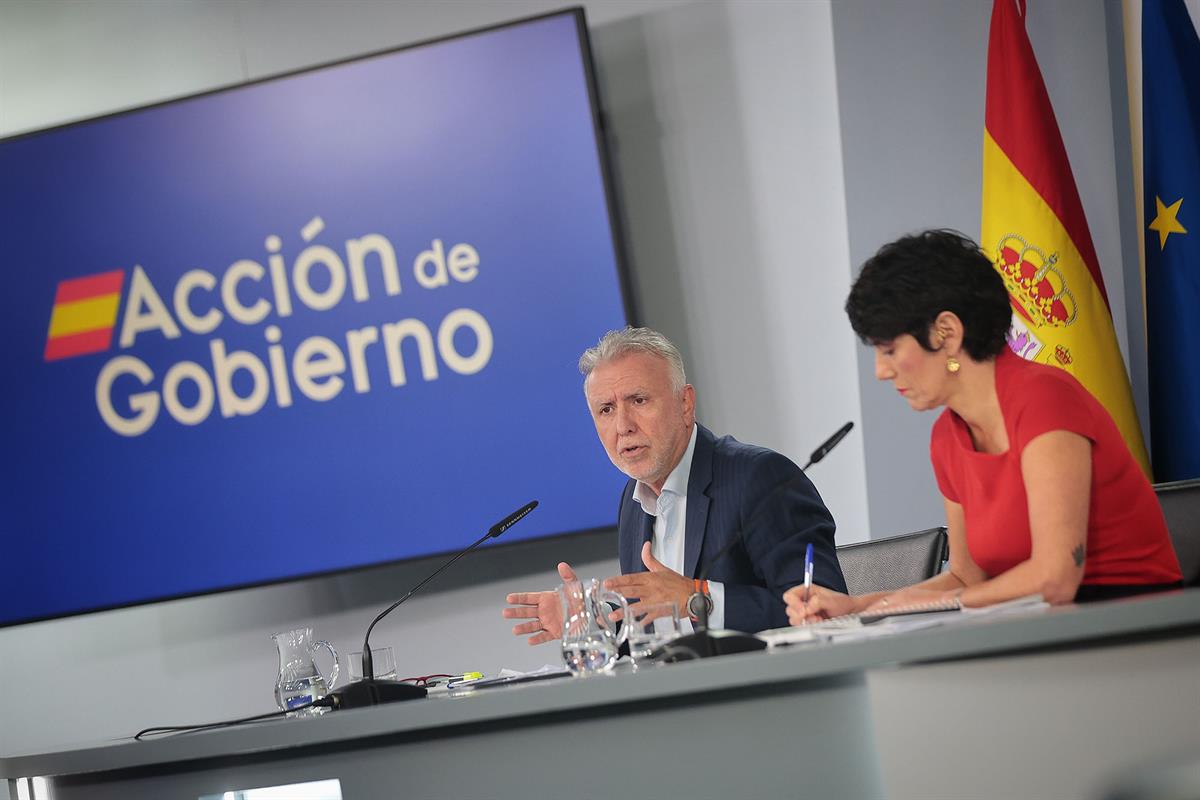 The Minister for Territorial Policy and Democratic Memory, Ángel Víctor Torres, and the Minister for Inclusion, Social Security and Migration, and Government Spokesperson, Elma Saiz, during the press conference (Pool Moncloa/Sandra Armada)






The Council of Ministers has approved a funding allocation of 250 million euros to finance training programmes for workers, aimed primarily at those in employment. The investment, funded from the budget of the Public State Employment Service (SEPE), aims to promote training and employment opportunities. Elma Saiz, Minister for Inclusion, Social Security and Migration and Government Spokesperson, emphasised that these funds will, at the same time, help to advance employees' career prospects and boost the competitiveness of businesses.
The call for applications covers new types of training and particularly strategic sectors such as energy, climate change and healthcare. The professional training is aimed at all workers: employees, the self-employed and those working in the public sector.
Ceuta: managing the migration crisis
The Minister for Territorial Policy and Democratic Memory, Ángel Víctor Torres, presented an updated report on the situation in Ceuta. The Government's priorities over the past week have been to set up two sites at the port to accommodate 1,700 migrants, to step up support for schools, and to continue processing the cases of unaccompanied minors and adults currently housed in the areas designated by the Government.
During his appearance at the press conference following the Council of Ministers meeting, the minister emphasised that the transfer of 1,700 migrants to the new facilities set up at the port of Ceuta took place over four hours without any serious incidents or injuries. The minister explained that the operation had been scheduled for Wednesday morning, but had to be postponed due to technical issues and was temporarily halted by a ruling from the National High Court. Once the interim injunction had been lifted, the transfer finally took place on Friday morning.
Ángel Víctor Torres reported that more than 6,000 adult migrants are being accommodated in facilities set up by the State, whilst the autonomous city is looking after more than 2,000 unaccompanied minors. He emphasised that the aim is "to put in place the necessary measures to ensure that no one spends the night on the streets or on the beaches of Ceuta".
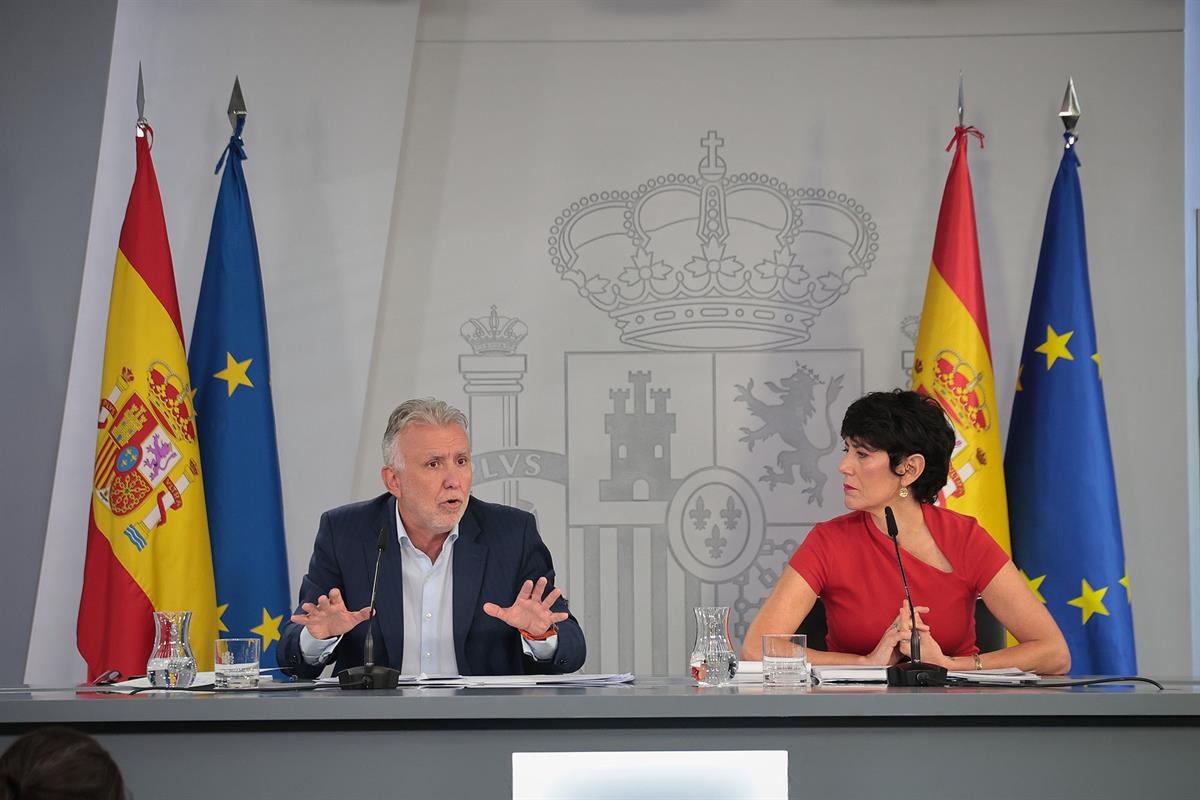 Speech by the Minister for Territorial Policy and Democratic Memory, Ángel Víctor Torres, during the press conference after the Council of Ministers | Pool Moncloa/Sandra Armada
Torres pointed out that the most recent Council of Ministers have approved a total of 88 million euros in aid for the autonomous city to fund accommodation facilities, and announced that new facilities will be set up this week and next, in agreement with the Ceuta authorities. "It is essential that everyone is able to be in designated areas so they can be registered, and we can begin proceedings for the return of those who cannot remain in our country because the law does not permit it," he said.
With regard to personal details, the minister pointed out that 2,321 minors have been identified, but the Government estimates that between 500 and 700 are still living on the streets without any support. He also stated that the number of adults triaged stands at 2,546.
Returns and family reunification
The official in charge of coordinating the migration crisis stated that, since 10 August, more than 7,000 people have returned to Morocco, of whom 6,791 did so voluntarily and 318 were deported.
Ángel Víctor Torres outlined the case-processing procedure, which determines who is entitled to international protection and who must be returned. In this regard, the minister stated that the majority of those seeking international protection are Moroccans, who are told that they are not entitled to it and that return proceedings will be initiated against them, whereupon "they return voluntarily to Morocco because they have already been told that they are going to be returned".
With regard to minors, the Minister for Territorial Policy reiterated that "family reunification is the priority", and work is currently underway on this with the autonomous city. Those who cannot be reunited with their families will have to remain in Ceuta or be relocated to the rest of Spain in accordance with the procedures set out in the legal framework.
In his speech, Torres reaffirmed the Government's commitment to continuing to increase resources and amend the necessary regulations to streamline immigration procedures.
Meanwhile, the Minister for Territorial Policy stated that school attendance stands at 90 per cent, compared with 75 per cent at the start of the school year, and therefore described the situation as having returned to normal.
Other measures taken by the Government
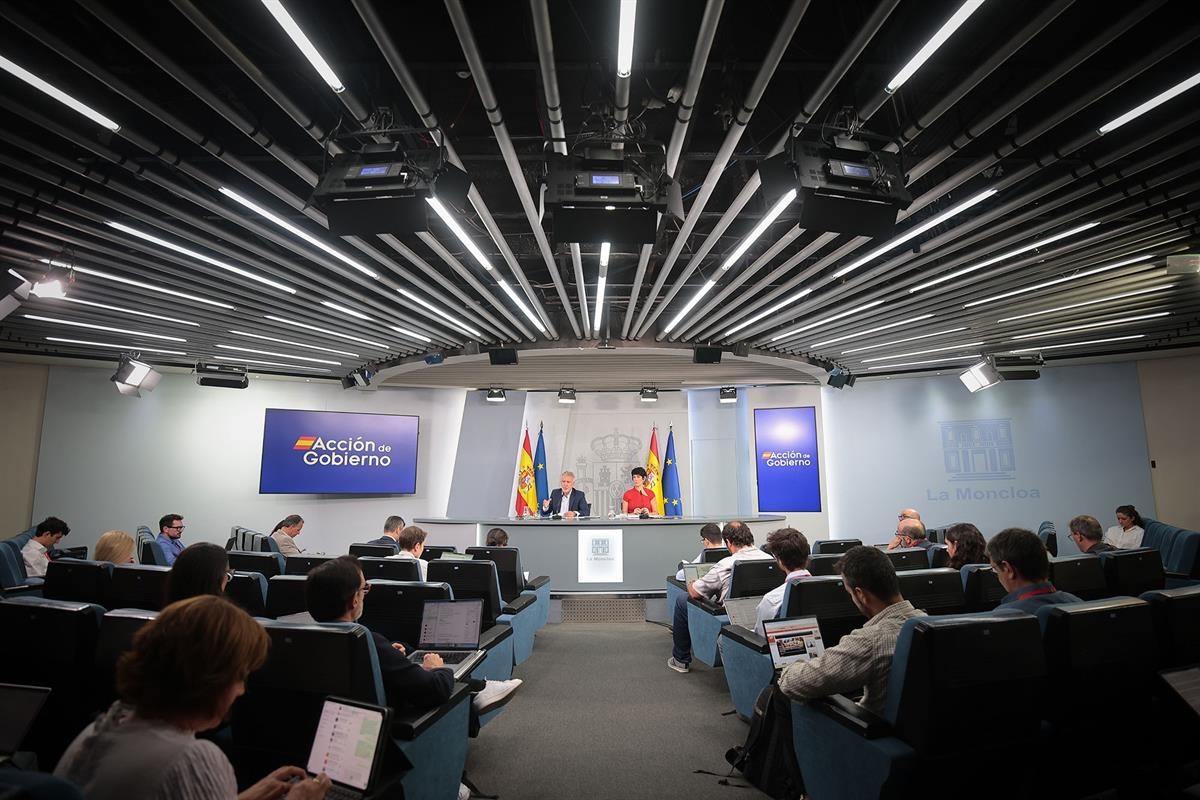 The ministers appear before the media after the Council of Ministers | Pool Moncloa/Sandra Armada
Speaking about the Government's actions in Ceuta over the past week, the minister stated that 24 people remain in hospital and 2,117 have been vaccinated. In addition, 730 girls are in emergency accommodation, and women will be relocated in the coming days as vulnerable individuals.
Furthermore, the Ministry of Foreign Affairs is promoting the possibility of Ceuta and Melilla joining the European Committee of the Regions. Ángel Víctor Torres also announced that he will return to Ceuta on Thursday to chair a further Situation Committee meeting, and reaffirmed the Government's commitment to continue increasing resources and amending the necessary regulations to streamline immigration procedures.
Condemnation of the incidents of violence
Both the Minister for Territorial Policy and the Government Spokesperson have called for harmony following the latest acts of violence in the autonomous city. Elma Saiz stated: "Anyone who spreads false rumours and, of course, anyone who incites hatred and violence, must take responsibility for what they say and for the consequences of their words."
In the same vein, Ángel Víctor Torres believes that those who spread messages inciting people to "hunt down and persecute immigrants" are responsible for these acts of violence, and has called on parties, the media and the public to reject any form of violence or incitement to hatred. In his view, a return to normality in Ceuta depends on allowing the authorities to continue their work.
Reduction of public debt
The First Vice-President of the Government of Spain and Minister for Economy, Trade and Business, Carlos Cuerpo, has presented the annual report on the Public Treasury's borrowing policy for the year 2025 to the Council of Ministers.
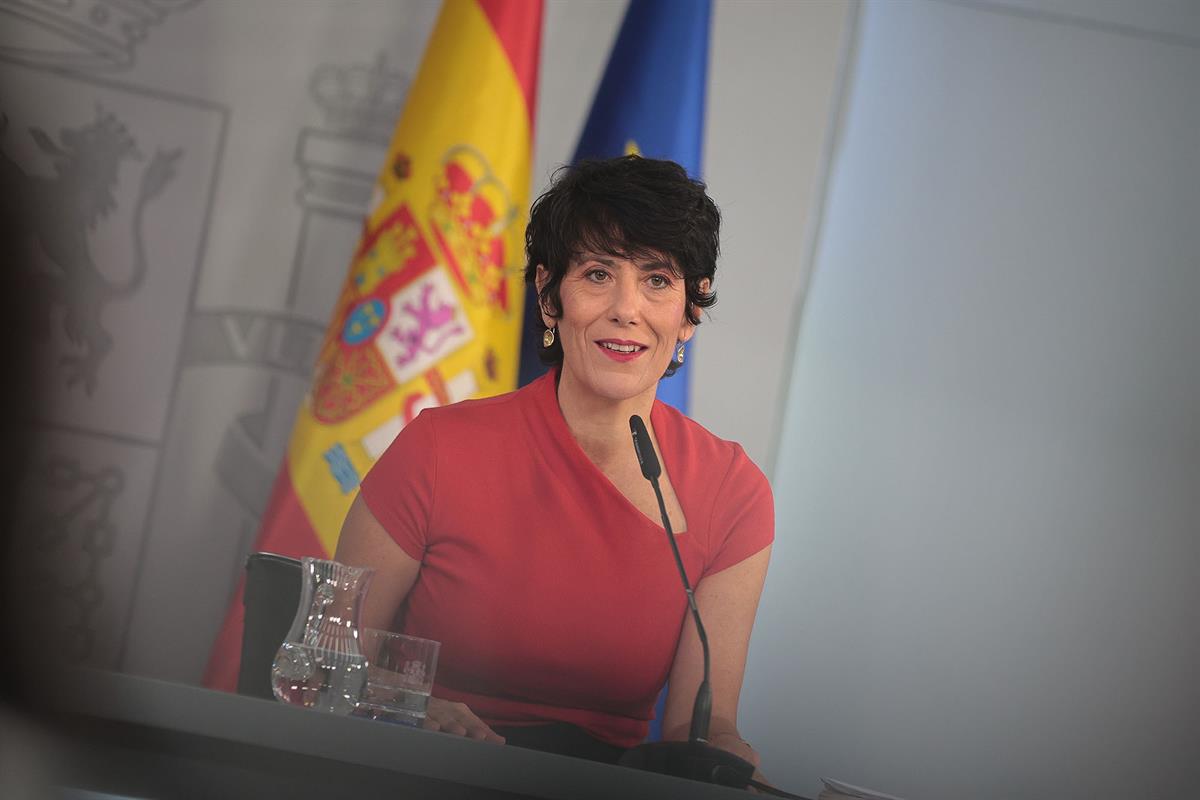 The Minister for Inclusion, Social Security and Migration and Government Spokesperson, Elma Saiz, during her speech at the press conference after the Council of Ministers | Pool Moncloa/Sandra Armada
The report, which will now be submitted to the General Courts, "highlights the positive trend in our country's debt levels, despite having had to contend with economic downturns, inflationary shocks and the pandemic itself", said the Government Spokesperson. Elma Saiz added that this trend is set to continue in 2026, when the Government forecasts that debt will stand at below 100 per cent of gross domestic product (GDP). The minister also highlighted the improvement in Spain's credit rating, which "contributes to a more diversified demand for investment and helps to increase investor interest from other countries".
According to the spokesperson, the report also highlights the "sound economic management of the progressive coalition government" and demonstrates that economic growth and fiscal responsibility are compatible with boosting social spending and modernising the productive sector.
Condemnation of the sexual exploitation and trafficking of women and children
The Minister for Inclusion, Social Security and Migration announced that the Council of Ministers, on the initiative of the Ministry of Equality, has approved an institutional statement to mark the International Day Against Sexual Exploitation and Trafficking of Women and Children, which is observed on 23 September.
The text reaffirms the Government of Spain's commitment to full and effective equality between women and men, expresses its solidarity with the victims and condemns this serious violation of human rights. In this regard, Saiz highlighted Spain's role as an international leader in the fight for equality and reiterated the Government's determination to continue combating sexual exploitation and human trafficking.
Spain has made progress in protecting victims of sexual exploitation and human trafficking by passing laws that strengthen comprehensive support, impose harsher penalties and ensure the specialisation of the judicial authorities.
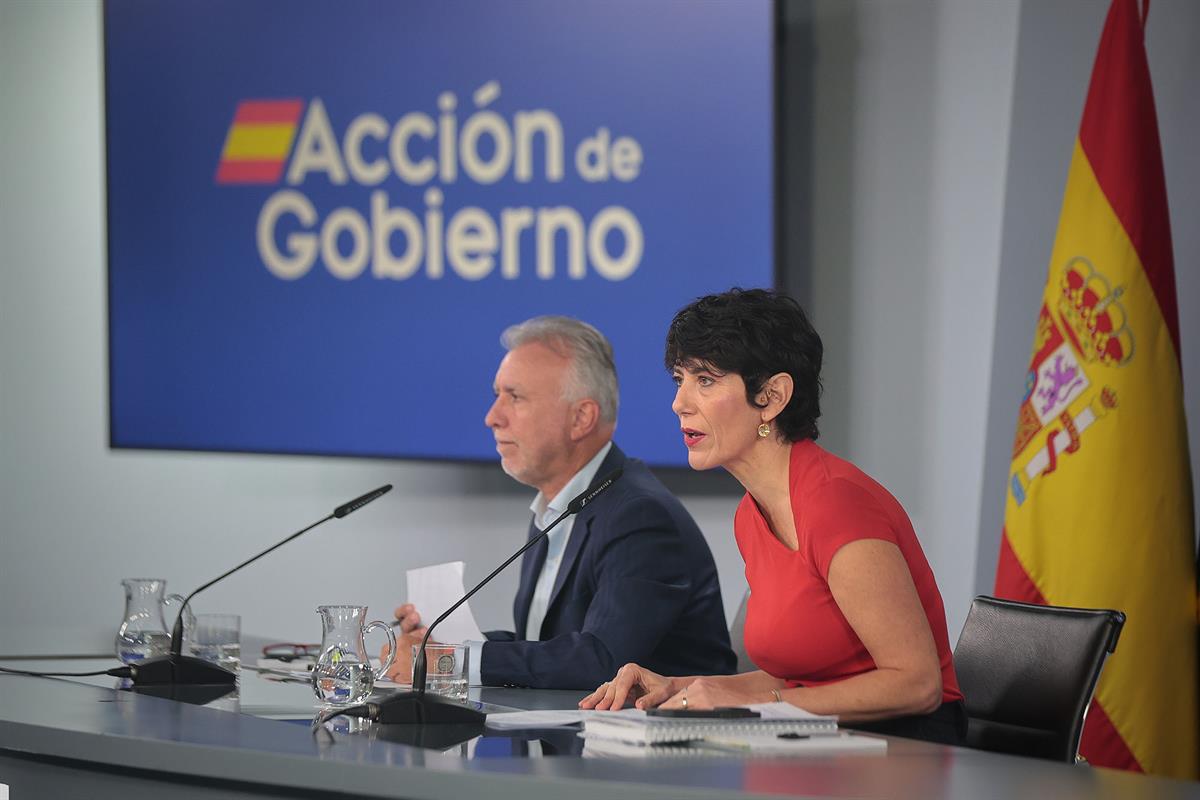 The Minister for Inclusion, Social Security and Migration, and Government Spokesperson, Elma Saiz, during her speech at the press conference | Pool Moncloa/Sandra Armada
According to data from the 2024 Global Report on Trafficking in Persons, produced by the United Nations Office on Drugs and Crime (UNODC), 61 per cent of the more than 202,478 victims of trafficking identified worldwide are women and girls, who also account for 92 per cent of victims of sexual exploitation.
Current Affairs
Elma Saiz expressed her condolences to the families and loved ones of the two women murdered by their partners in recent days.
The Government Spokesperson pointed out that, so far in 2026, 38 women have been killed as a result of gender-based violence and 26 children have been left orphaned. "It is a tragedy that we must all fight against - fight as a country and not take a single step backwards," she emphasised.
Non official translation