The Government of Spain has agreed on the highest ever spending ceiling to safeguard the welfare state
Council of Ministers - 2026.7.7
Moncloa Palace, Madrid
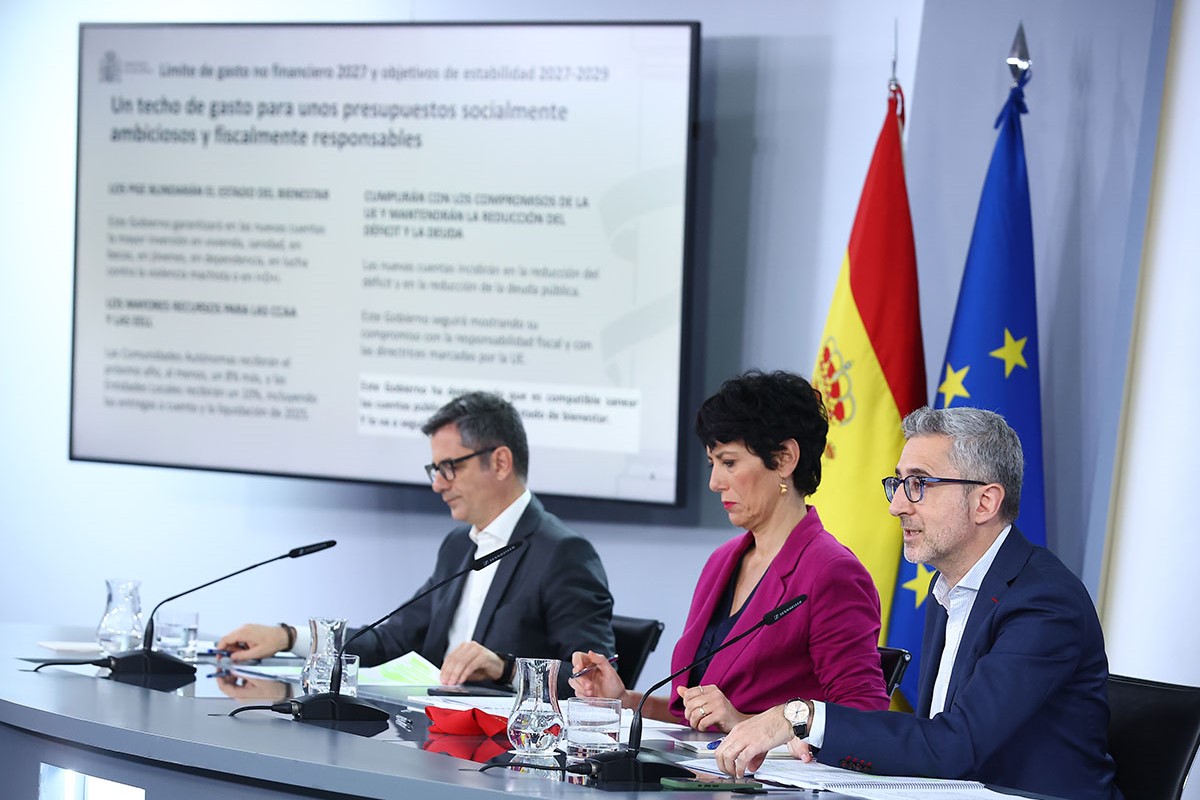 The Minister for the Presidency, Justice and Parliamentary Relations, Félix Bolaños, the Minister for Inclusion, Social Security and Migration and Government Spokesperson, Elma Saiz, and the Minister for Finance, Arcadi España, at the press conference






The Council of Ministers has approved the agreement setting the "non-financial spending ceiling" for the General State Budget for 2027 and the budgetary stability and public debt targets for the period 2027-2029. As explained by the Minister for Finance, Arcadi España, both agreements constitute "a crucial step towards approving next year's public accounts", which, as announced by the president of the Government of Spain, will be "socially ambitious and fiscally responsible".
The Finance Minister has stated that future public accounts will build on the economic policy pursued by the Government in recent years, a strategy which, in his view, has enabled Spain to become "the engine of growth for the European Union".
The highest spending ceiling in history
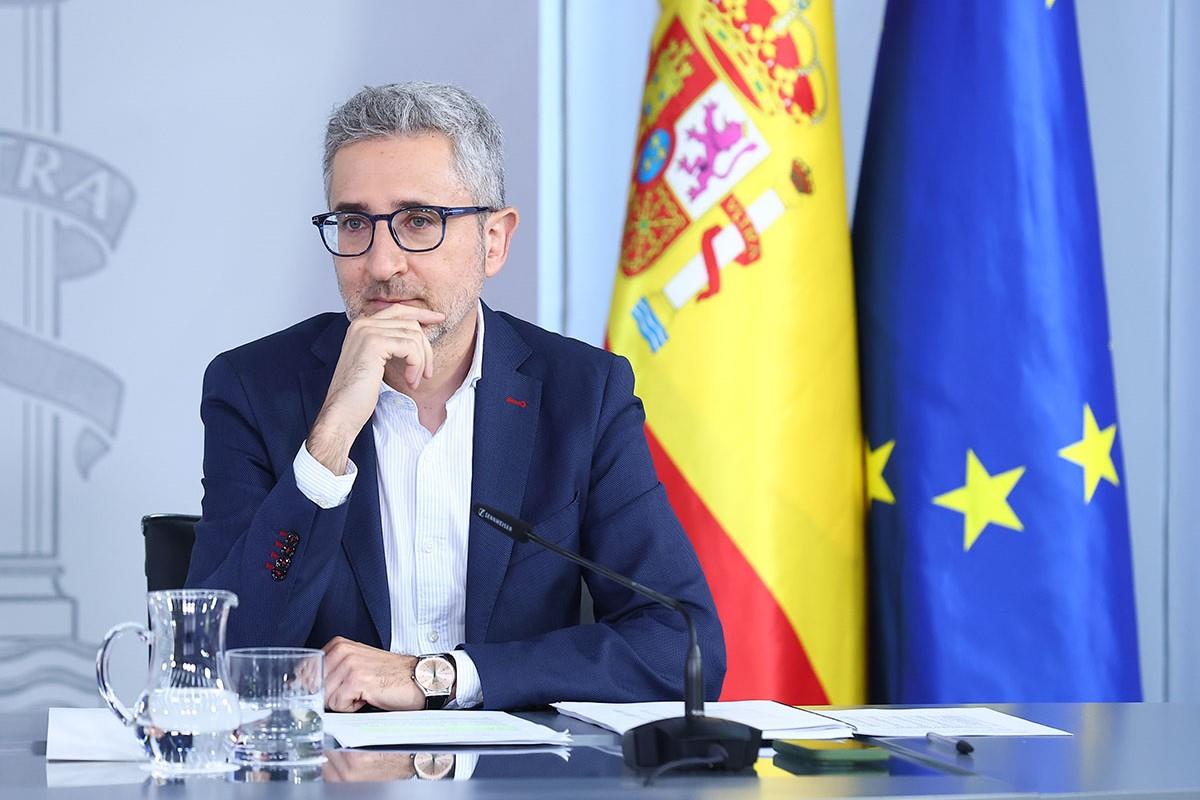 The Minister for Finance, Arcadi España, at the press conference after the Council of Ministers | Pool Moncloa/Fernando Calvo
Arcadi España explained that the non-financial spending limit approved for 2027 amounts to 226.032 billion euros, "the highest figure ever approved". This figure represents a 6.6 per cent increase on the national spending ceiling for 2026, equivalent to an additional 14,006 million euros, and marks an 88 per cent increase on the figure approved in 2018.
As he pointed out, this level of funding will enable the General State Budget to allocate "the largest amount of funding in history" to public policies such as housing, grants, care for dependents, the fight against sex-based violence and R&D. In his view, these public accounts will be designed to "safeguard the welfare state", strengthen equality and guarantee public services that are "of high quality and always universal in scope".
An economic policy that combines growth and social protection
During his appearance before Parliament, the minister placed these agreements in the context of the Spanish economy's performance, which he described as the fastest-growing economy among the European Union's major economic powers. He pointed out that gross domestic product rose by 0.6 per cent during the first quarter of the year, six times the EU average and double that of Germany and Italy. He also highlighted that Spain has a record number of 22.4 million national insurance contributors and that, in the first half of 2026 alone, 621,925 jobs were created, whilst the unemployment rate stands at its lowest level since 2008.
Arcadi España pointed out that this economic development, as reflected in the macroeconomic figures, has been accompanied by initiatives aimed at society, such as the Response Plan to the War in Iran, with a budget of 6.8 billion euros; an additional 6.2 billion to fund the long-term care system; the State Housing Plan, with 7billion euros; a 66% rise in the national minimum wage since 2018; and the index-linking of pensions to the Consumer Price Index. However, he has warned that the Government remains "fully aware" that significant challenges remain, such as access to housing, improving wages and reducing inequality.
Deficit and debt reduction
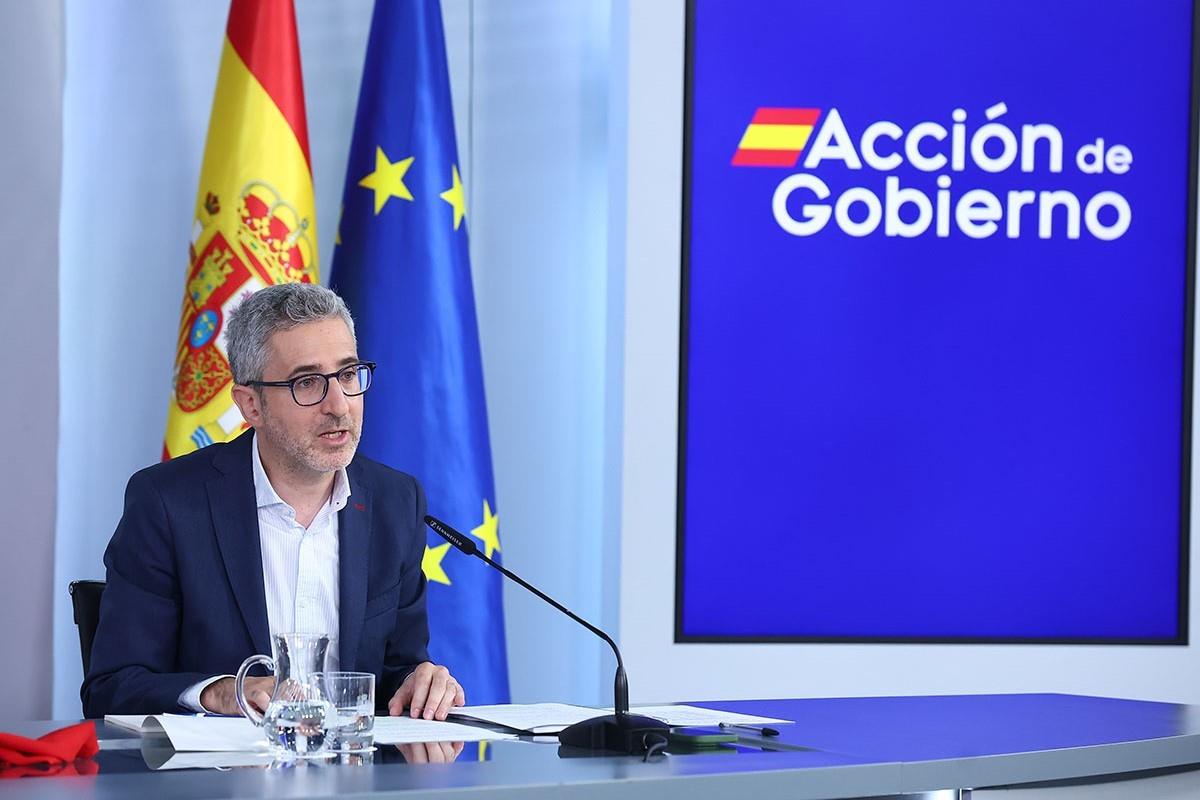 The Minister for Finance, Arcadi España, explains the agreements reached during the Council of Ministers | Pool Moncloa/Fernando Calvo
The Council of Ministers has also approved the budgetary stability path for 2027-2029, which sets a deficit target of 1.8% of GDP for 2027, 1.6% for 2028 and 1.5% for 2029 for the general government sector as a whole. The Finance Minister has emphasised that in 2025 the deficit stood at 2.4% of CPI, "the lowest in 18 years".
"Our deficit is lower than the euro area average and also lower than that of Italy, France or Germany. "The last time Spain had a better fiscal balance than Germany was in 2007," España emphasised.
The minister explained that this approach will enable the deficit and public debt to be reduced further, whilst complying with European fiscal rules. In this context, he emphasised that the regional governments will maintain a deficit target of 0.1% throughout the period, "without being required to make any additional fiscal effort". He also announced that, in terms of interim payments, both the regional governments and local entities will receive "the highest level of funding in their history" in 2027, with increases of at least 8% for the regional governments and close to 10% for local entities.
The Council of Ministers has also approved the public debt targets for the period 2027-2029, which aim to maintain the downward trend that began in recent years. Specifically, total general government debt will stand at 97.6 per cent of GDP in 2027, representing a reduction of 1.5 percentage points compared with the target set for 2026, and will continue to fall to 96.4 per cent in 2028 and 95.3 per cent in 2029.
A law tailored to the challenges of the 21st century
The Minister for the Presidency, Justice and Parliamentary Relations, Félix Bolaños, has announced the approval, in a second reading, of the draft Organic Law on Civil Protection of the Right to Honour, Personal and Family Privacy and One's Own Image, which will replace the legislation in force since 1982. As he explained, the bill will now begin its parliamentary process following the incorporation of contributions made by advisory bodies and institutions such as the General Council of the Judiciary, the Fiscal Council, the Spanish Data Protection Agency, the State Council and the Council of Consumers and Users.
Bolaños pointed out that the future law addresses the need to update a piece of legislation passed more than four decades ago, in order to bring it into line with today's technological and social realities. In this regard, he explained that the reform has three main objectives: to bring the regulations into line with the changes to legislation that have taken place since 1982, to address the new challenges arising from the digital environment, and to strengthen the protection of particularly vulnerable groups, such as minors and people with disabilities. He also pointed out that this initiative forms part of the Action Plan for Democracy and that, with its approval, the Government has now implemented 87% of the measures included in this programme.
Greater protection against artificial intelligence and the unauthorised use of images
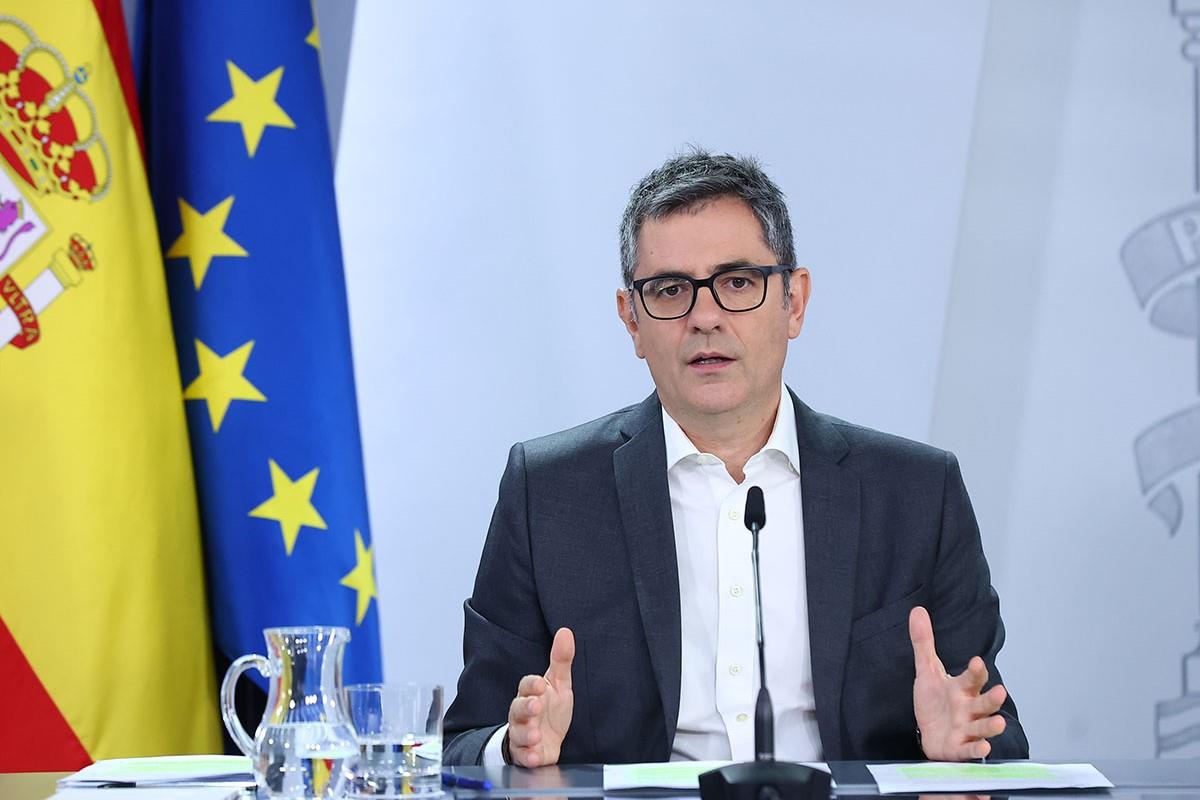 The Minister for the Presidency, Justice and Parliamentary Relations, Félix Bolaños, at the press conference after the Council of Ministers | Pool Moncloa/Fernando Calvo
Among the main changes, Bolaños emphasised that sharing a photograph or video on social media "does not mean you are relinquishing your rights to that image", so no one may reuse that content for purposes other than those for which it was published without the consent of the copyright holder, except in cases covered by freedom of information relating to matters of public interest. Furthermore, the law sets the minimum age for giving consent to the use of one's own image at 16 and strengthens procedural safeguards for minors, stipulating that the Public Prosecution Service must be involved in all legal proceedings affecting them.
The forthcoming legislation devotes a specific chapter to artificial intelligence and other technologies capable of generating or recreating images and voices with a high degree of realism. In this regard, it considers the use of a person's image or voice for advertising or commercial purposes without their authorisation to be an unlawful intrusion - a practice which, as the minister has explained, is already beginning to occur through the use of artificial intelligence tools. However, the regulations safeguard freedom of expression and creative freedom, permitting such uses where they take place in satirical, artistic or fictional contexts and do not mislead the public.
Furthermore, the law introduces the concept of a 'digital will', so that anyone may stipulate that their image or voice must not be used for commercial purposes after their death, or appoint a person to manage these rights in the future. The legislation also brings the legal framework into line with the reform of civil law on disability, fully recognising the capacity of people with disabilities to give consent and providing, where necessary, for appropriate support to enable them to exercise their rights effectively. According to Bolaños, the aim is to move towards a model that combines "autonomy and protection" for this group.
Regulation of 'true crime' and updating of criteria for compensation
Another key aspect of the reform is the regulation of audiovisual, literary or audio productions inspired by real criminal cases, known as 'true crime'. Bolaños explained that the law will provide particular protection for victims and their families when this type of content constitutes an unlawful infringement of their rights to honour, privacy or personal image, regardless of whether or not there is an intention to cause harm or to obtain financial gain. The legislation will even allow for the adoption of interim measures to suspend the dissemination of content that infringes these fundamental rights.
The new regulations also update the criteria for determining compensation for infringements of these rights, taking into account factors such as the seriousness of the infringement, the extent of its dissemination and the financial gain obtained by the party responsible, and prohibit the award of purely symbolic compensation. Furthermore, it provides for the possibility of publishing the identity of the convicted person and the amount of compensation in the Official State Gazette, where the injured party so requests. As the minister summarised, the aim of the reform is to "give people back control over their own image" and to bring the protection of the right to honour, privacy and one's own image "into line with the realities of our time".
Record number of judges and prosecutors in the history of democracy
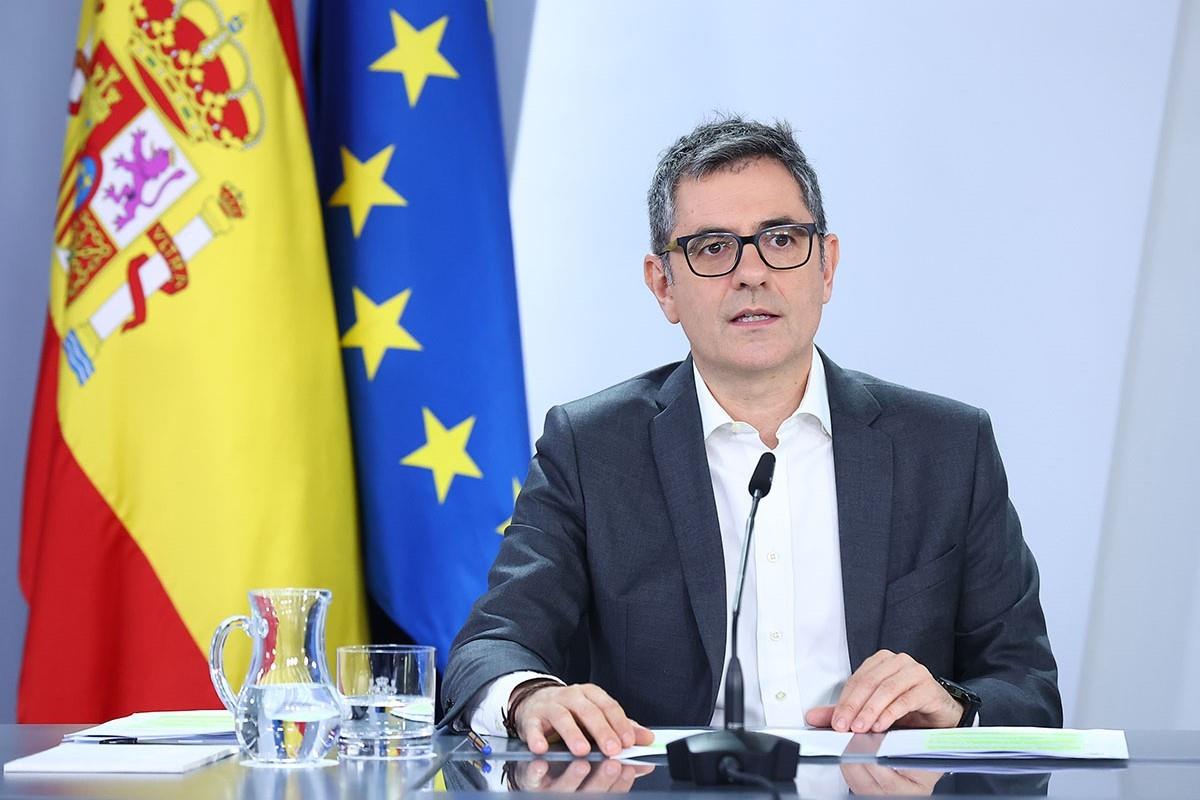 The Minister for the Presidency, Justice and Parliamentary Relations, Félix Bolaños, during his appearance at the press conference after the Council of Ministers | Pool Moncloa/Fernando Calvo
The Council of Ministers has also approved two royal decrees to create 500 new posts for judges and magistrates and 200 posts for prosecutors, a measure which, as Félix Bolaños has emphasised, constitutes "the largest creation of posts for judges and prosecutors in the history of democracy" and forms part of "the greatest transformation of the justice system in decades".
The minister explained that the expansion of the judiciary will be made possible by the introduction of the new magistrates' courts provided for in the Law on the Efficiency of the Public Justice Service, a model which replaces the former single-judge courts and allows for a more efficient increase in the number of judges. The new posts will be introduced gradually between December 2026 and November 2027, in accordance with the timetable agreed with the General Council of the Judiciary.
With regard to the public prosecution service, Bolaños has pointed out that the 200 new posts will make it possible to strengthen areas under particular strain due to the workload, such as data protection, hate crimes and discrimination, human trafficking, immigration, violence against women, international criminal cooperation and cybercrime. With this new appointment, the number of tax officials will rise to 3,004.
The minister emphasised that this measure forms part of the process of modernising the justice system being driven by the Government, based on structural, organisational, procedural and digital reforms. As he concluded, the aim is to continue moving towards "a public service tailored to the needs of 21st-century citizens".
Appointments to the Independent Administrative Authority for Technical Accident Investigation
The Minister for Inclusion, Social Security and Migration and Government Spokesperson, Elma Saiz, explained that the Council of Ministers has approved the appointments of the president and members of the new Independent Administrative Authority for the Technical Investigation of Railway, Maritime and Civil Aviation Accidents and Incidents.
Saiz pointed out that the role of this authority is "to improve safety by preventing future accidents and incidents". "It is an independent body that will begin operating this July and will take over the investigations already underway," he said.
As the minister explained, those selected are experts of "recognised standing" who possess proven professional qualifications in the field of transport safety. The list of candidates has "the backing of the Lower House of Parliament through the Committee on Transport and Sustainable Mobility", said Saiz.
Two million euros for healthcare for women in rural areas
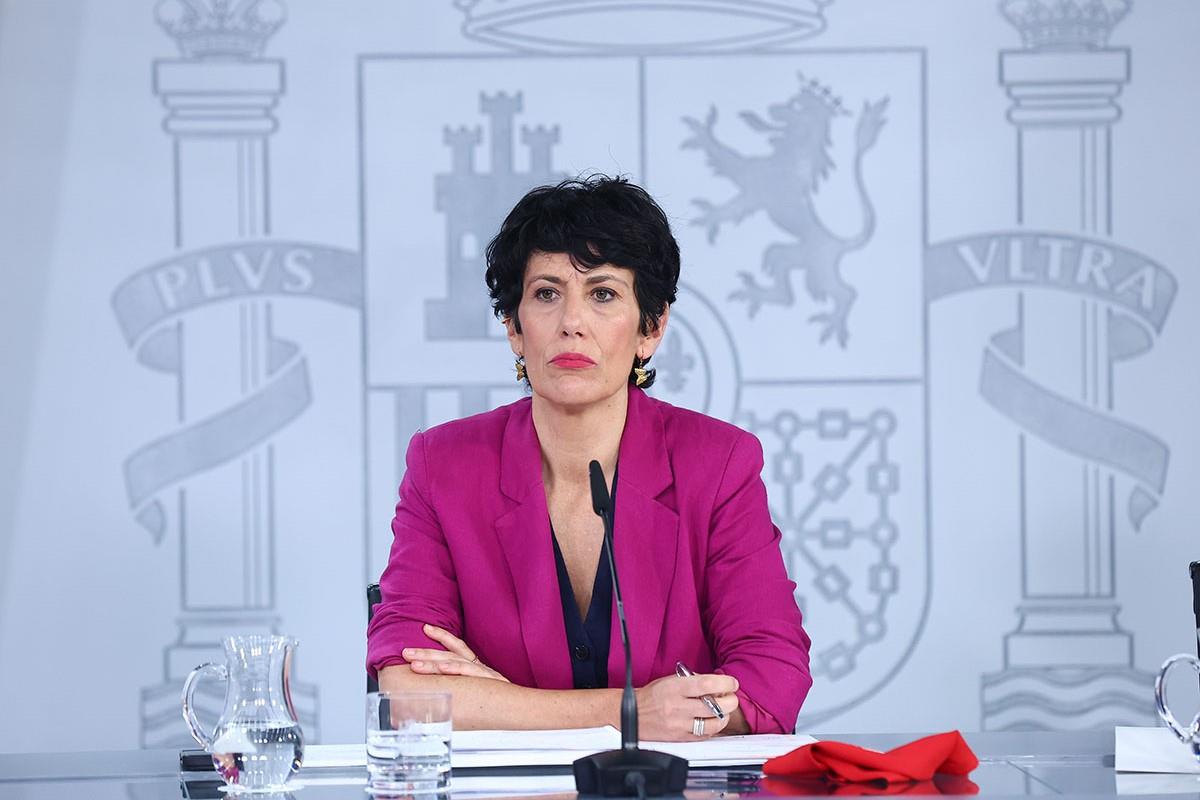 The Minister for Inclusion, Social Security and Migration and Government Spokesperson, Elma Saiz, at the press conference after the Council of Ministers | Pool Moncloa/Fernando Calvo
The Minister for Inclusion, Social Security and Migration and Government Spokesperson, Elma Saiz, was also responsible for announcing the award, through the Institute for Women, of grants totalling two million euros, awarded to 20 organisations carrying out "vital work" to promote equality, social inclusion and support for women in rural areas.
Elma Saiz pointed out that, with this initiative, "the Government continues to support the voluntary sector and, in particular, the feminist voluntary sector".
Current Affairs
Elma Saiz began her speech by expressing, on behalf of the Government of Spain, her "strongest and most unequivocal condemnation of gender-based violence" following the confirmation of two further femicides in the provinces of Alicante and Málaga.
"We reiterate the Government's absolute commitment to putting an end to this scourge," said the Government Spokesperson, who pointed out that the number of women murdered as a result of sex-based violence has now risen to 27 so far in 2026, and that 14 minors have been left orphaned as a result of sex-based violence. "We will not take a single step backwards, because putting an end to sex-based violence is a national priority that requires unity, public policies and a firm stance," she said.
Elma Saiz also highlighted the situation facing the Venezuelan people following the twin earthquakes that struck on 24 June 2026, and gave an assurance that the Government is closely monitoring developments in order to provide consular and humanitarian assistance "in whatever way is needed".
With regard to the fires that remain active in various parts of Spain, the Minister for Inclusion, Social Security and Migration and Government Spokesperson stated that the Government has deployed the necessary resources to assist with fire-fighting efforts through Civil Protection and the State law enforcement forces and agencies. "We are in the middle of the hottest times, so we would like to remind the public to be cautious, to avoid risks, and to follow the instructions of the emergency services at all times," said Elma Saiz.
Finally, the Government Spokesperson wished to congratulate the Spanish men's football team on reaching the quarter-finals of the 2026 FIFA World Cup, which is being held in Canada, Mexico and the United States.
Non official translation