The Government of Spain provides the autonomous communities and local authorities with the largest resources in history
Council of Ministers - 2026.6.2
Moncloa Palace, Madrid
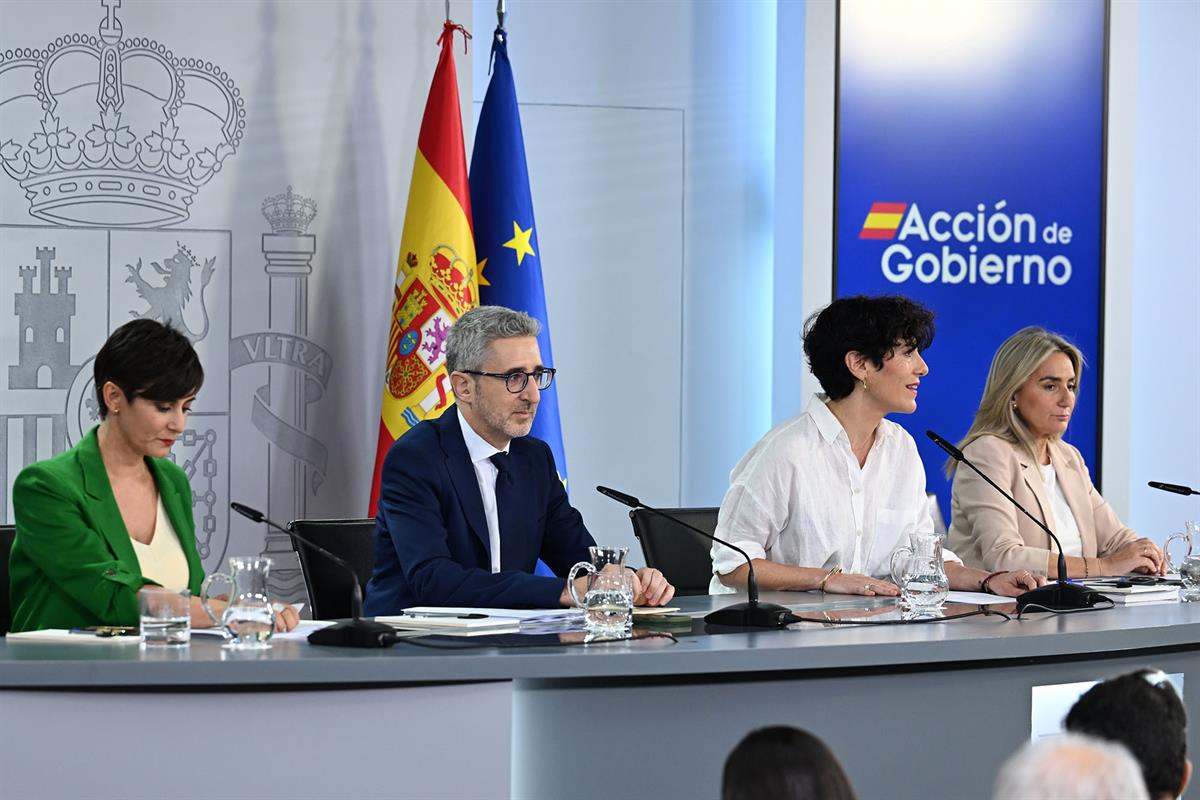 Ministers Isabel Rodríguez, Arcadi España, Elma Saiz and Milagros Tolón during the press conference after the Council of Ministers (Pool Moncloa/Borja Puig de la Bellacasa)






The Council of Ministers has reinforced the financing of the autonomous communities and local authorities through a royal decree law that includes two key measures. Firstly, the advance payments corresponding to 2026 are updated. Secondly, local authorities with a budget surplus in 2025 are allowed to dedicate it to financially sustainable investments.
The Minister for Finance, Arcadi España, recalled that the Council of Ministers already approved this update to the advance payments in December 2025 and last February, but the Lower House of Parliament did not ratify it on both occasions. España stressed that the autonomous communities and local councils are demanding these measures to guarantee their financial viability and meet their needs. "They are good for the system as a whole and, above all, for citizens," he said.
More financial resources for autonomous communities and local authorities
Thanks to the royal decree-law, the autonomous communities will be able to receive €157.731 billion this year in advance payments (payments made by the Spanish State as an advance based on its estimated tax revenue). This amount represents a 7% increase compared to the previous year. If the funds from the 2024 settlement (the balance between estimated and real revenue) are added, the autonomous communities will receive €170.3 billion this year via the financing model, 7.7% more.
The Minister for Finance stated that this is "the highest figure in history" and that, compared to 2018 data, the increase is 64%. Arcadi España argued that the increase is due to the economic policies promoted by the government, which are also reflected in the reduction of the deficit, the record number of registered workers and the drop in unemployment . "Higher public revenues, higher revenues for the General State Administration, but also for the autonomous communities", he stated.
The minister wondered why many citizens do not see this increase in funding reflected in the quality of public services, for example, in health and education. "We always only talk about revenue, but it is a good time to reflect on the management of these resources by public administrations, in this case, those with major responsibilities for the welfare state, such as the autonomous communities", he pointed out.
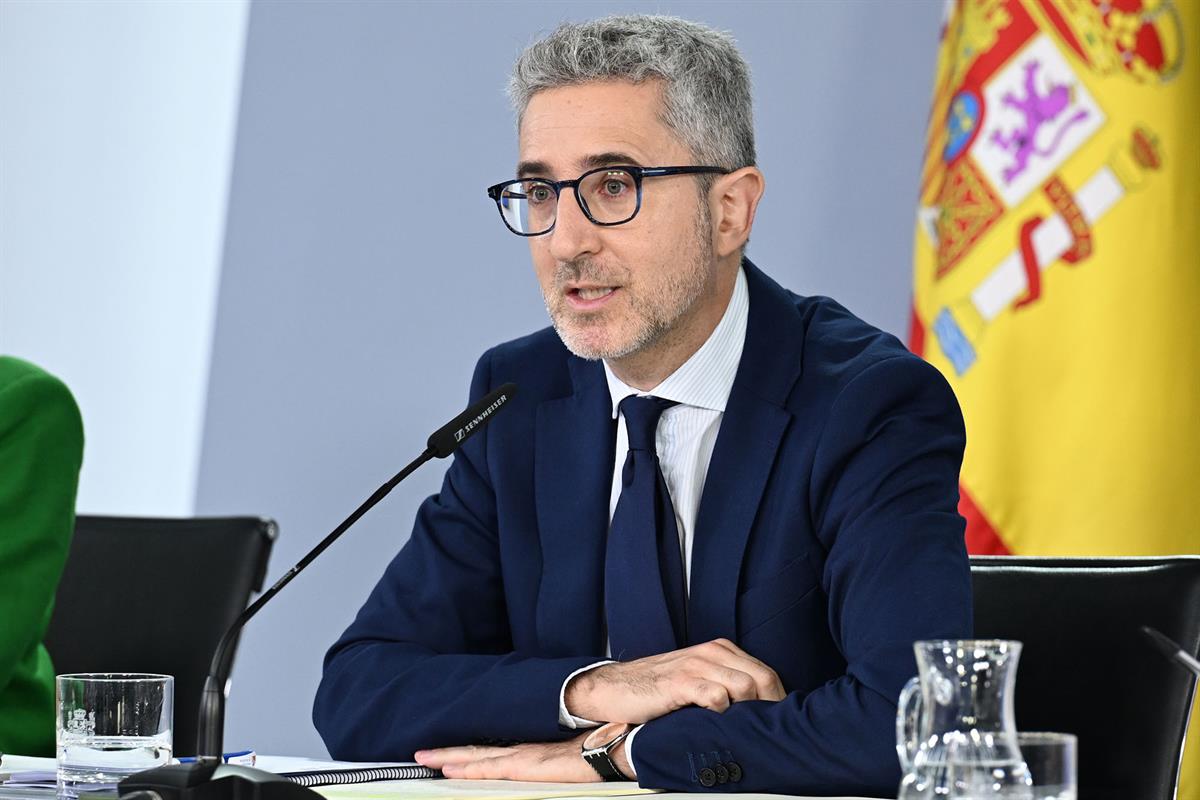 The Minister for Finance, Arcadi España, during his speech at the press conference after the Council of Ministers | Pool Moncloa/Borja Puig de la Bellacasa
As for local authorities, payments on account will also reach an all-time high in 2026: €29.247 billion, 8.8% more than the previous year. The increase in resources compared to 2018 is 67.5% in this case.
More flexibility to invest surpluses in housing policies
The second pillar of the royal decree law is the possibility for local authorities with a budget surplus in 2025 to allocate part of those resources to specific investments without them counting towards the spending rule (the legal limit on year-over-year spending increases). These investments include areas such as sanitation, industry, energy, commerce, civil protection and infrastructure, among others. The measure could benefit more than 2,540 local authorities, which could mobilise €3.168 billion for these types of financially sustainable projects.
As a major innovation, Arcadi España pointed out that the text establishes an exceptional regime allowing local councils to allocate their 2025 surplus, as well as the surpluses of the following four years, to housing policies. There will therefore be no need for a new legal authorisation every year. The objective, as the minister explained, is to guarantee the stability and long-term projection of housing policies, "reinforcing the measures promoted by the Government of Spain and the funding that will be distributed to the autonomous communities".
The remaining financially sustainable investments may also be multiannual in nature; that is, the 2025 surplus may be used for projects whose execution extends until 2030.
Expansion of the public housing stock
The Government has approved two housing agreements that reflect its priority of continuing to expand the public housing stock. Firstly, it has authorised an additional €260 million for the construction of 1,629 new homes for the public business entity CASA 47.
The Minister for Housing and Urban Agenda, Isabel Rodríguez, emphasised that, with this financial injection, the resources transferred from the Ministry of Housing to the entity stand at €2.08 billion. CASA 47 currently has 68 projects underway across the country. According to the minister, there are 44 residential building projects for the construction of 3,266 homes and a further 24 projects for the development of plots of land with a construction potential of 22,000 homes.
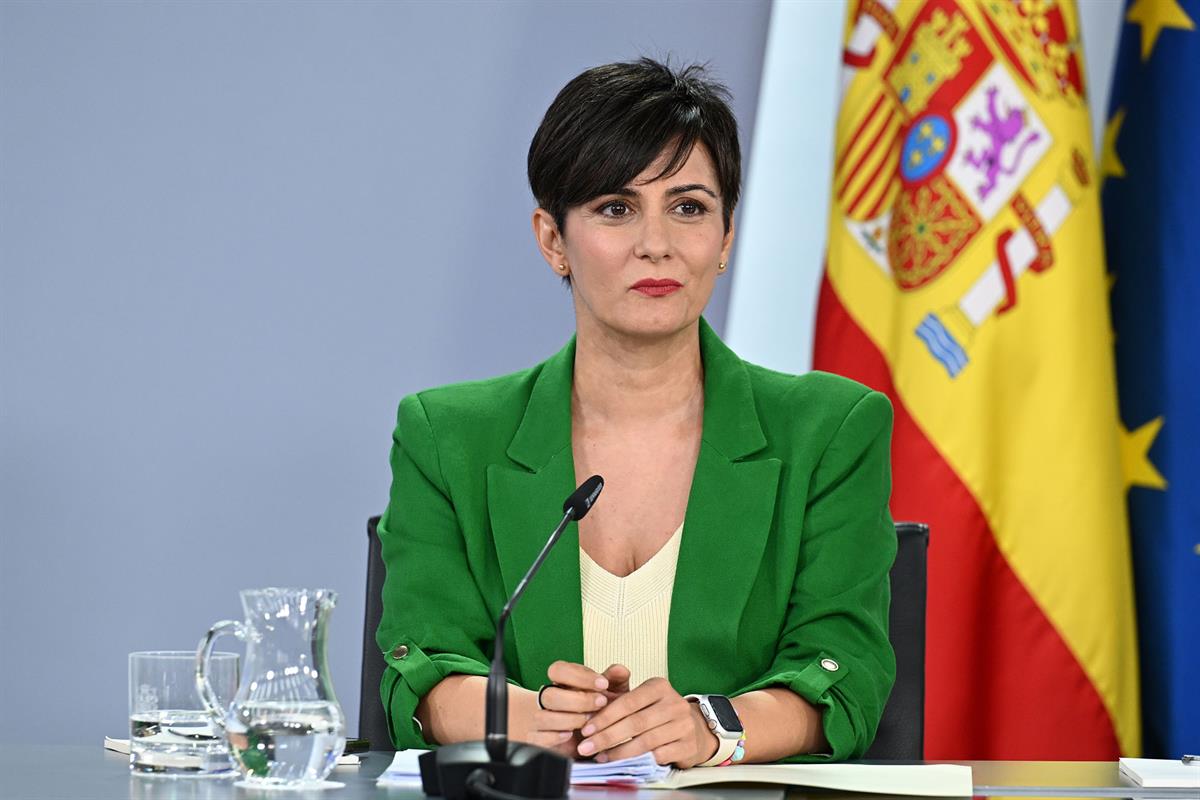 The Minister for Housing and Urban Agenda, Isabel Rodríguez, at the press conference after the Council of Ministers | Pool Moncloa/Borja Puig de la Bellacasa
Other initiatives of this public entity highlighted by the minister include the 40,000 SAREB homes that the government is making available to citizens and CASA 47's first purchase offer in Spain, with over €100 million to provide young people and families with affordable rental housing currently held by private individuals or 'vulture funds'.
Rodríguez recalled that CASA 47 promotes this public housing stock, guarantees that rents are always affordable-below 30% of family income-and that contracts are long-term, up to 75 years, providing access for the middle and working classes. It also ensures that these properties are part of a new urban concept, featuring green and sustainable spaces that contribute to the social and territorial cohesion of our country.
Maximum amounts of the State Housing Plan 2026-2030
The second agreement establishes the maximum amounts of the State Housing Plan (PEV) 2026-2030 and authorises the territorial distribution proposal unanimously agreed at the Sectoral Conference on Housing and Urban Agenda held on 21 May.
The minister stressed that all the houses to be built with the €7 billion of state funds from the PEV will be permanently protected: "With this investment effort, we are safeguarding the public housing stock and putting an end to other models where, even with these public funds, speculation was encouraged."
Isabel Rodríguez indicated that the PEV includes aid for both new housing construction and the renovation of existing housing stock, as well as for the groups-young people, families, vulnerable individuals-and regions that need it most. Furthermore, the minister clarified that the plan has retroactive effect from 1 January 2026, and that €800 million will be transferred to the autonomous communities in July so they can immediately implement their initiatives.
Government investment effort in housing
During her speech at the press conference following the Council of Ministers, the minister stressed that the Government's investment effort is yielding results in the construction of public housing.
In this regard, she pointed out that public housing tenders totalled €465 million in the first quarter of this year, representing the highest figure for public housing tenders since 2008.
The fight against doping in sport
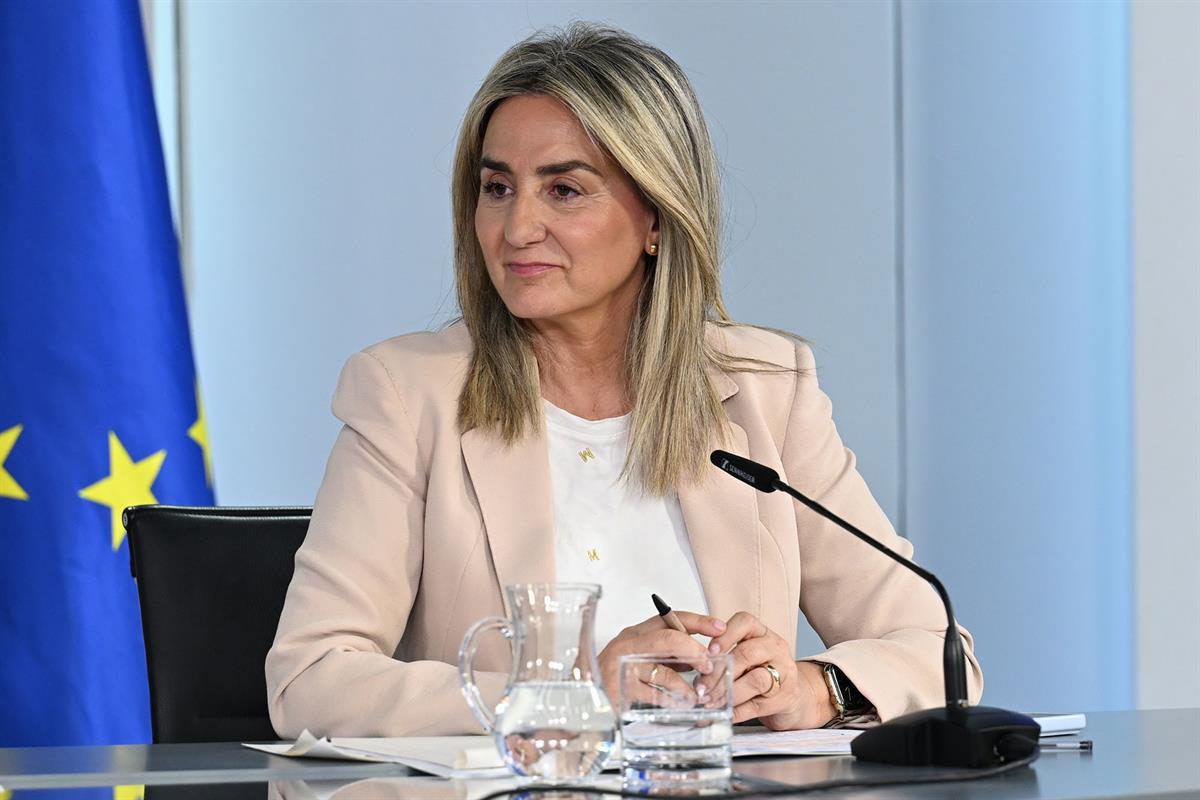 The Minister for Education, Vocational Training and Sports, Milagros Tolón, during the press conference after the Council of Ministers | Pool Moncloa/Borja Puig de la Bellacasa
The Council of Ministers has approved the urgent processing of the preliminary draft of the Organic Law on Anti-Doping in Sport, in order to adapt the Spanish law to the new World Anti-Doping Code, which will come into force on 1 January 2027.
The Minister for Education, Vocational Training and Sport, Milagros Tolón, presented the future regulation that reinforces the protection of athletes' health, the integrity of competitions and the defence of the values of clean and fair sport.
Toulon explained that the fight against doping has a clearly international dimension. Controls, sanctions and common rules are no longer organised solely by each country, but through a global and coordinated system of which Spain has been a part for more than 20 years.
Currently, the essential instrument of this system, she emphasised, is the World Anti-Doping Code, which is reviewed every six years to incorporate scientific advances, changes in sports practices and the experience accumulated in applying the rules. "Analytical methods are now much more precise and allow us, in a way, to detect increasingly smaller quantities of substances that may be used. There has also been an increase in complex cases related to unintentional contamination", the minister noted as an example.
Balancing the protection of sport and athletes' rights
The future organic law clarifies the obligations of athletes, specifies the sanctionable conduct and strengthens the regulations applicable to team sports. The minister added that it guarantees "the consistency of the sanctions system with the principles of legality, specificity and proportionality inherent in administrative sanctions law."
Milagros Tolón also argued that the fight against doping is an essential public policy for the protection of health, given that the use of doping substances has gone beyond the sphere of professional sport and has spread to non-professional sport and even to minors.
The text includes a specific section dedicated to doping prevention with training, awareness and support measures aimed at athletes, families and sports organisations. "Competitions deserve to be held with all guarantees and for the results to reflect the talent, work and dedication of those who participate in them, because clean sport is fairer sport", the minister concluded.
Framework Statute for healthcare personnel to eliminate 24-hour on-call shifts
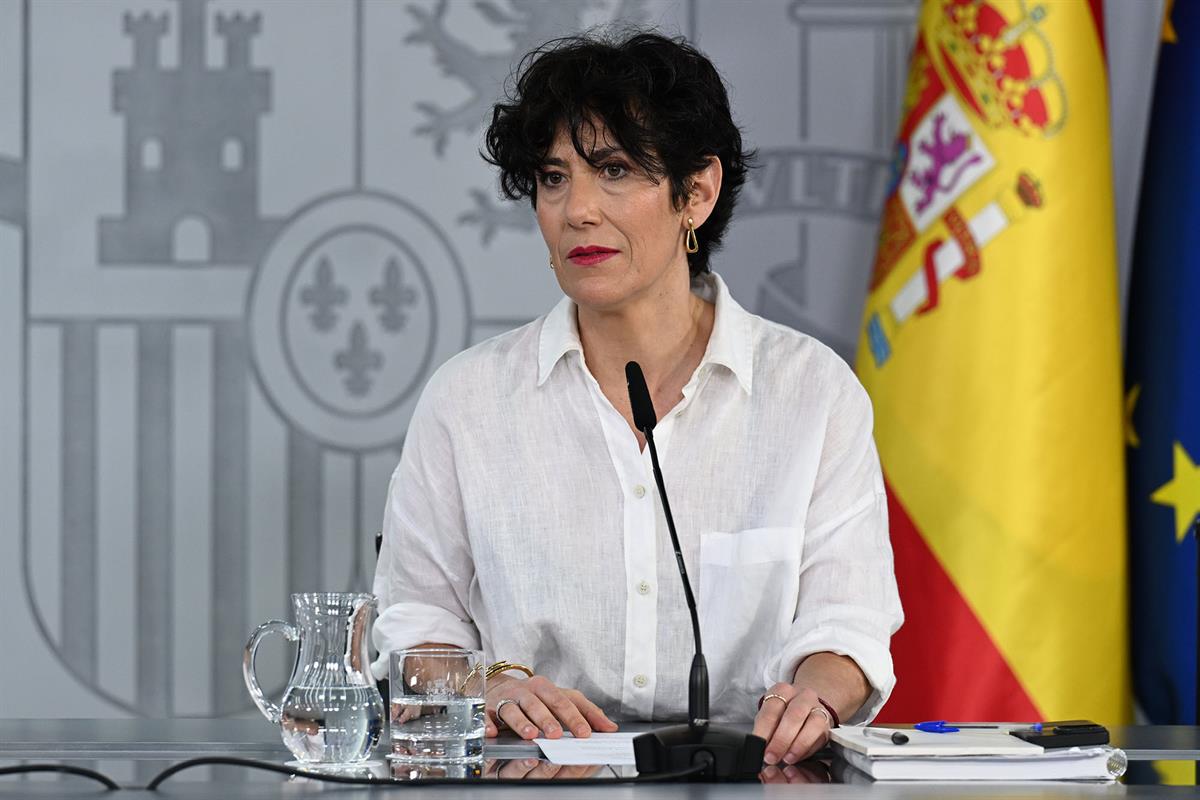 The Minister for Inclusion, Social Security and Migration and Government Spokesperson, Elma Saiz, during her speech at the press conference after the Council of Ministers | Pool Moncloa/Borja Puig de la Bellacasa
The Council of Ministers has approved the Draft Bill for the Framework Statute for Statutory Personnel of the Health Services, a comprehensive reform that updates a regulatory framework that is more than two decades old.
The Minister for Inclusion, Social Security and Migration and Government Spokesperson, Elma Saiz, pointed out that this text, the result of negotiations with the sector's majority trade unions, "incorporates historical improvements, such as the elimination of 24-hour shifts, as well as others relating to rest breaks, work-life balance and stability".
Saiz indicated that from now on, it will be up to the autonomous communities, "which have jurisdiction over salaries, staffing levels, service organisation and a large part of working conditions," to address the remaining demands of healthcare workers.
The new text aims to adapt the regulation of statutory personnel to the current reality of the National Health System, reinforcing job stability, improving working conditions and favouring more efficient human resource planning.
The draft bill establishes a five-year period for health services to implement the necessary organisational adjustments regarding working hours. Furthermore, it foresees the creation of a State Registry of Statutory Staff for the coordinated planning of human resources within the National Health System.
Appeal of unconstitutionality against the regional law that repeals the Balearic memory law
The Government Spokesperson, Elma Saiz, also announced that the Cabinet has agreed to request that the President of the Government of Spain file an appeal of unconstitutionality against the law that repeals Law 2/2018, on Democratic Memory and Recognition of the Balearic Islands.
The Government considers the appeal, which has received a favourable opinion from the State Council, necessary, given the impossibility of reaching an agreement with the Autonomous Community.
Current affairs: More than 22.3 million registered workers, a new milestone for the Spanish labour market
Ministers Isabel Rodríguez, Arcadi España, Elma Saiz and Milagros Tolón during the press conference after the Council of Ministers | Pool Moncloa/Borja Puig de la Bellacasa
The Minister for Inclusion, Social Security and Migration has welcomed the latest data on the labour market in Spain. "Employment sets a new record in May with 22.3 million national insurance contributors, after adding 232,000 employed people in one month. It is the second-best May on record", Saiz emphasised. Year-on-year, the increase is 553,431 registered workers, a rate of 2.54%, the highest in more than two years.
"It is a collective success. Every business owner who opens their doors and every worker plays a part in these results. They are all behind the figures. But they are also the product of well-targeted policies such as labour reform. Since its implementation, there are 2.3 million more people employed in Spain, and temporary employment has fallen to 11.8%, compared to 31.1% in May 2018", explained the Government Spokesperson.
For the Minister for Social Security, these are "unprecedented figures," especially regarding the affiliation of women, young people, the self-employed and foreign workers. As Saiz explained, for the first time, the number of female registered workers is approaching 10.6 million. Specifically, there are 271,290 more women registered with Social Security than a year ago and 1.8 million more than in 2018. The improvement in female employment since 2018 is 20.8%.
As for those under 30, Saiz pointed out that employment has grown by 33.2% since 2018, almost 900,000 more workers. The Government Spokesperson also emphasised the figures for foreign workers, who now account for more than 15% of contributors in Spain and account for 43% of the employment created since the implementation of the labour reform. "Figures to which we seem to have become accustomed, but which are nevertheless extraordinary," she insisted.
Non official translation