Council of Ministers
The Government of Spain approves the 2026-2030 State Housing Plan, endowed with 7 billion euros, to expand the public housing stock and curb speculation
Council of Ministers - 2026.4.21
Moncloa Palace, Madrid
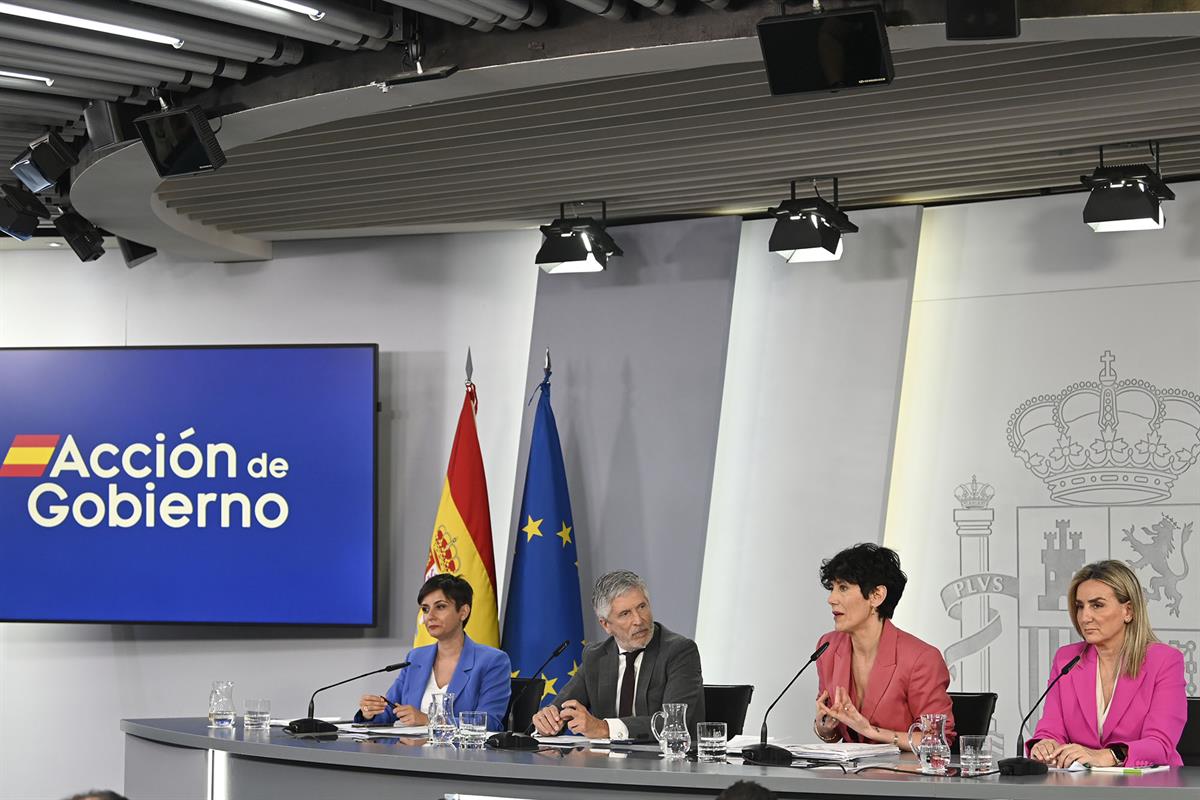 The ministers for Housing and Urban Agenda, for Home Affairs, for Inclusion, Social Security and Migration, and for Education, Vocational Training and Sports, at the press conference after the Council of Ministers (Pool Moncloa/César P. Sendra)





The Council of Ministers has approved the 2026-2030 State Housing Plan, "an important step" to address the difficulties in accessing housing and establish this right "against any other conception of housing," according to the Minister for Housing and Urban Agenda, Isabel Rodríguez.
The plan, she added, reflects the Executive's "two ambitions" in this area: the permanent construction of affordable and protected public housing and the fight against speculation to protect the social nature of housing. Isabel Rodríguez also highlighted that this instrument complements others created after the Housing Law, such as the new state-owned company Casa47,, and the budgetary reinforcements of recent years.
The minister stated that the plan responds to the public demand for an agreement that structurally addresses the main problem facing citizens, as President of the Government of Spain, Pedro Sánchez, explained last June to the presidents of the autonomous communities, who are the competent authorities in housing matters. "There are no quick fixes and no magic bullet," Rodríguez pointed out. The Minister for Housing underlined the paradigm shift regarding the role of the General State Administration, which will no longer be limited to providing funding without being able to influence policy.
The plan, as the minister pointed out, is the result of dialogue and collaboration: the ministry held more than 48 meetings with the autonomous communities to finalise the text, which also incorporates a significant portion of the 400 contributions made by the sector. Furthermore, this is the first time the State Council has reviewed a national housing plan, in its capacity as a regulation implementing the Housing Law. Rodríguez described its opinion as "very favourable," with "some essential contributions" that improve the plan and strengthen legal certainty.
Increased public housing, investment and subsidies
Isabel Rodríguez explained that the plan is based on a series of measurable objectives that represent "national challenges." The main objective is to expand the public housing stock, but it is also essential to improve existing housing in areas such as energy efficiency and accessibility. The plan also aims to lower the age at which young people leave the parental home, reduce the financial burden on families for rent and mortgage payments, reverse the situation in the most strained areas, and address the needs of rural communities.
The three key areas of action to achieve these objectives are building more public housing, renovating and mobilising the existing housing stock, and increasing aid for those facing the greatest difficulties in accessing housing.
The plan has a budget of 7 billion euros, tripling the initial investment of the previous plan in shared responsibility policies with the autonomous communities (the central government will contribute 60% of the funds and the autonomous communities the remaining 40%). This funding, the Minister for Housing stressed, is conditional because "it is important to build more, but not just any way." Forty percent of the investment must be allocated to expanding the supply of public housing, either through new construction or the acquisition of new properties to create a public housing stock at affordable prices. Renovation will account for 30% of the funds, and the same percentage will be allocated to aid for those in need.
"The autonomous communities have exclusive responsibility for housing policy in their statutes; what we do is inspire it, guide it, strengthen it-in short, provide the response our country needs," Rodríguez stated.
Protecting the public housing stock and fraud control
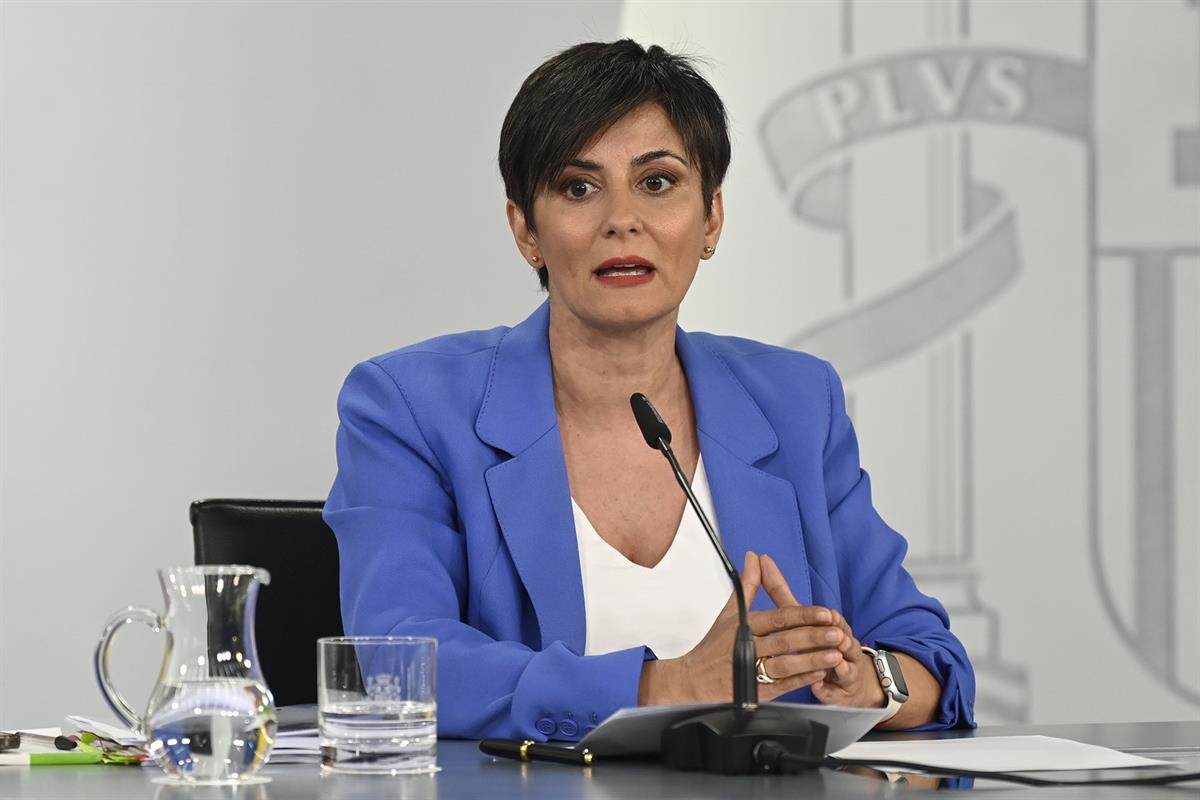 The Minister for Housing and Urban Agenda, Isabel Rodríguez, at the press conference after the Council of Ministers | Pool Moncloa/César P. Sendra
Among the new features of the plan, the Minister for Housing emphasised the guarantee of protection for the public housing stock built or acquired with these resources from the General State Administration. "Spanish society is not willing to allow, once again, a few to enrich themselves with everyone's money while others are left without homes," she asserted.
Furthermore, to strengthen controls, the plan incorporates an "anti-fraud clause" to ensure that social housing benefits those who need it. The plan reinforces controls on housing applicant registries and ensures transparency in the allocation of housing.
The plan also stipulates that public administrations must share housing data and make it available to the public and the media. Furthermore, the Housing Advisory Council will analyse the plan's effective implementation annually, which, according to the minister, will ensure it reaches the places and groups that need it most, "and not just what is easiest from a management perspective or due to the ideological concerns of each regional government."
Aid for construction, renovation and access to housing
Isabel Rodríguez explained that the plan significantly increases aid to promote the construction of public housing, incorporating elements such as industrialisation techniques and addressing areas with high demand. Aid for renovation is also increasing, an area that now includes the preservation of the heritage value of homes that would otherwise end up abandoned.
The minister highlighted the aid programmes aimed at young people, offering up to €300 for rent and up to €15,000 for those who build or purchase their first home in a rural area with a maximum of 20,000 inhabitants.
Regarding the plan's timeline, Isabel Rodríguez explained that technical meetings for its implementation will begin next week. The government has allocated the necessary budget so that the plan can be rolled out in the second half of this year, with the General State Administration assuming full responsibility this year to facilitate its implementation. "The Government of Spain is committed to this plan, and I also expect the commitment and loyalty of the other administrations," she concluded.
Improving conditions for teachers and non-university education
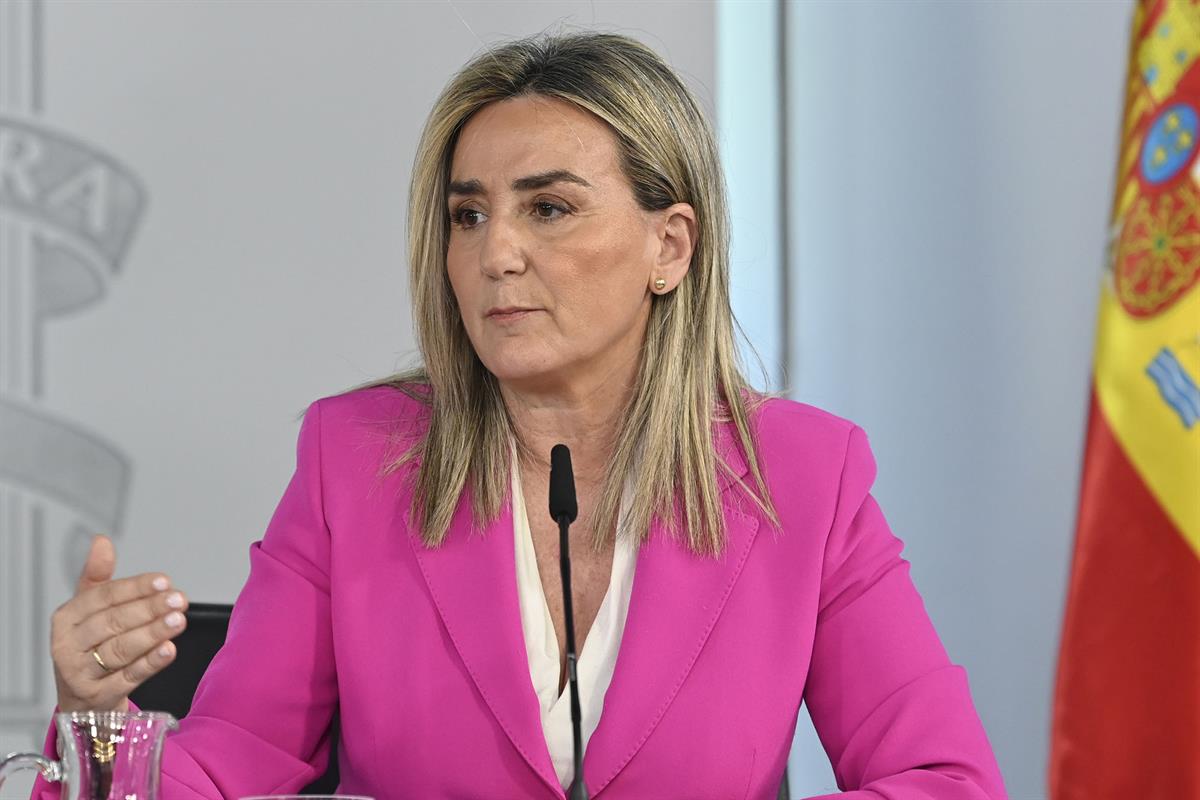 The Minister for Education, Vocational Training and Sports, Milagros Tolón, at the press conference after the Council of Ministers | Pool Moncloa/César P. Sendra
The Council of Ministers has approved sending a bill to Parliament to improve the working conditions of non-university teachers and achieve more personalised attention for students. The aim of the legislation is to correct the inequalities identified between autonomous communities.
The Minister for Education, Vocational Training and Sports, Milagros Tolón, stressed that this was intended to be the legislature for teachers and that this commitment is being fulfilled because the reform stems from a fundamental conviction: "If we improve the conditions of our teachers, we improve the education of our country, and that means improving the opportunities for our children and young people."
Milagros Tolón added that the reform has a component of fairness because it reverses the education cuts introduced in 2012, which particularly affected teachers. In this regard, the Minister outlined two measures that will be implemented gradually with the goal of being fully operational by the 2031-2032 academic year.
First, class sizes will be reduced. In primary schools, the number of students per classroom will be reduced from 25 to 22, and in secondary schools from 30 to 25. Tolón stated that an equity criterion is being incorporated: "Each student with special needs will count as two places, and this will allow for a much better adjustment to the classroom situation and guarantee fairer and more personalised attention."
Secondly, the teaching load will be reduced. The future law generally sets the maximum teaching hours for teachers at 23 in preschool, primary, and special education centres, and 18 hours in secondary, high school, and vocational training centres. "This is not simply a technical matter; it is a commitment to giving teachers much more time to prepare their classes, attend to their students, and carry out their work in a more dignified manner," Tolón remarked.
The Minister for Education emphasised that the project is the result of consensus with the educational community and that the State School Council issued a favourable opinion on the document on 12 February. "This is not a unilateral decision; it is a shared progress that has been carried out with the participation of the autonomous communities."
The minister announced that the government is also working to improve the quality of education and teachers' working conditions in terms of professional teaching skills, as well as the selection systems for entry into the teaching profession and ongoing professional development. Furthermore, progress is being made in implementing sovereign Artificial Intelligence to reduce the bureaucratic burden.
A preventive, comprehensive and proactive Civil Protection Model
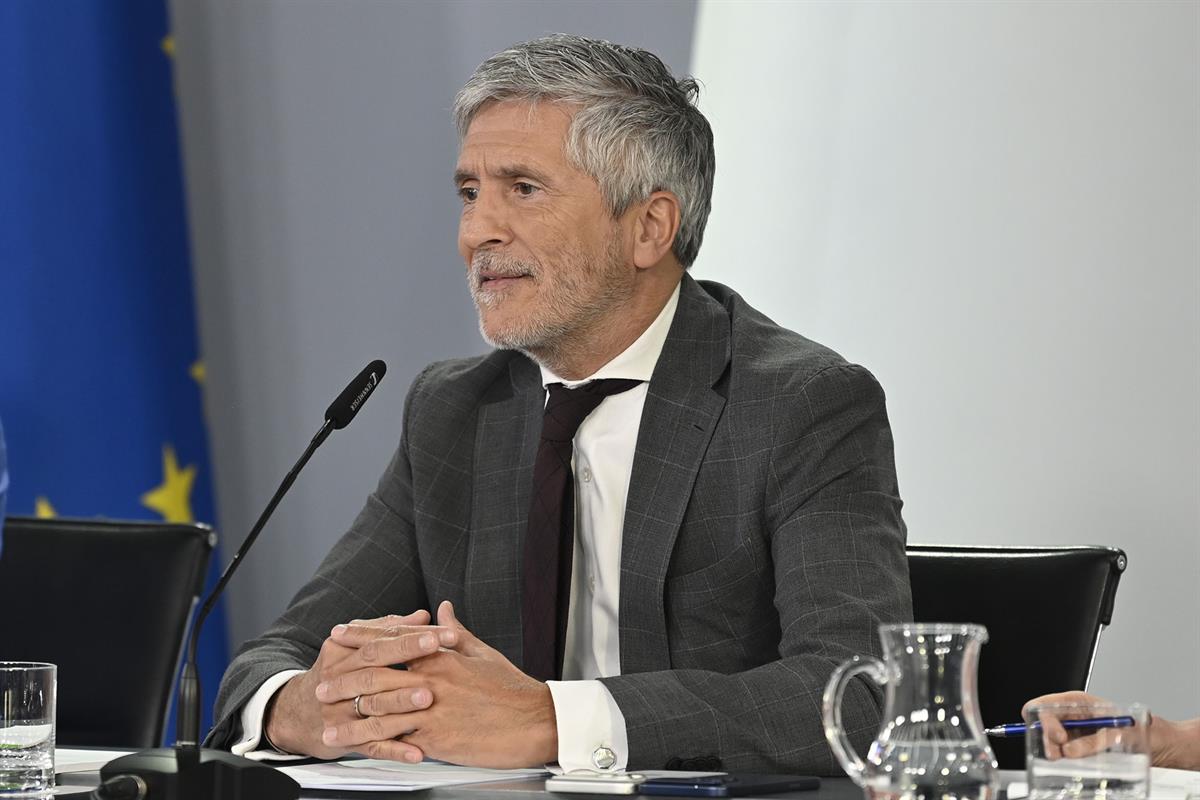 The Minister for Home Affairs, Fernando Grande-Marlaska, at the press conference after the Council of Ministers | Pool Moncloa/César P. Sendra
The government has approved measures to strengthen the National Civil Protection System and transform it, in collaboration with state, regional, and local administrations, into a decentralised co-governance model capable of minimising the effects of emergencies and climate change.
The Minister for Home Affairs, Fernando Grande-Marlaska, argued that to address the increasingly frequent, complex, and damaging emergency and catastrophic situations, "it is essential to equip the Civil Protection model with a preventive, comprehensive, and proactive approach that goes beyond the traditional, merely reactive management."
With this objective, the Government has agreed to create the General Secretariat for Protection and Emergencies, as well as the National Platform for Disaster Risk Reduction. Furthermore, it has approved the basic guidelines that plan the coordinated and standardised response of public institutions to certain risks: adverse weather events, forest fires, floods, and accidents involving the transport of hazardous goods by road.
New bodies
Grande-Marlaska outlined the organisational structure of the new General Secretariat for Protection and Emergencies, which will allow for the systematic organisation of functions related to an emergency cycle. These functions include those related to a culture of prevention; emergency planning, its operational management and the management of the response mechanism, as well as the coordination of public recovery policies and the processing of all state subsidies and aid in the field of civil protection.
The Minister reiterated that the Government's ultimate goal is the creation of the State Civil Protection Agency, included in the State Pact to tackle the climate emergency promoted by the President of the Government of Spain, Pedro Sánchez.
The National Platform for Disaster Risk Reduction will be a body integrating all ministerial departments, the autonomous communities and cities, the Spanish Federation of Municipalities and Provinces, and up to 29 groups and sectors of civil society. According to Grande-Marlaska, "this collaborative organisation will facilitate the integration of risk reduction policies into public planning and strengthen coordination at the international, national, and regional levels."
New guidelines
Fernando Grande-Marlaska also announced that all public administrations must adhere to basic guidelines regarding floods, forest fires, adverse weather events, and accidents involving the land transport of hazardous goods when developing their special civil protection plans for their territories. The minister emphasised the commitment of all administrations to reach a consensus on these guidelines, which were unanimously approved by the National Civil Protection Council on 24 March.
Report from the State Observatory on Violence against Women
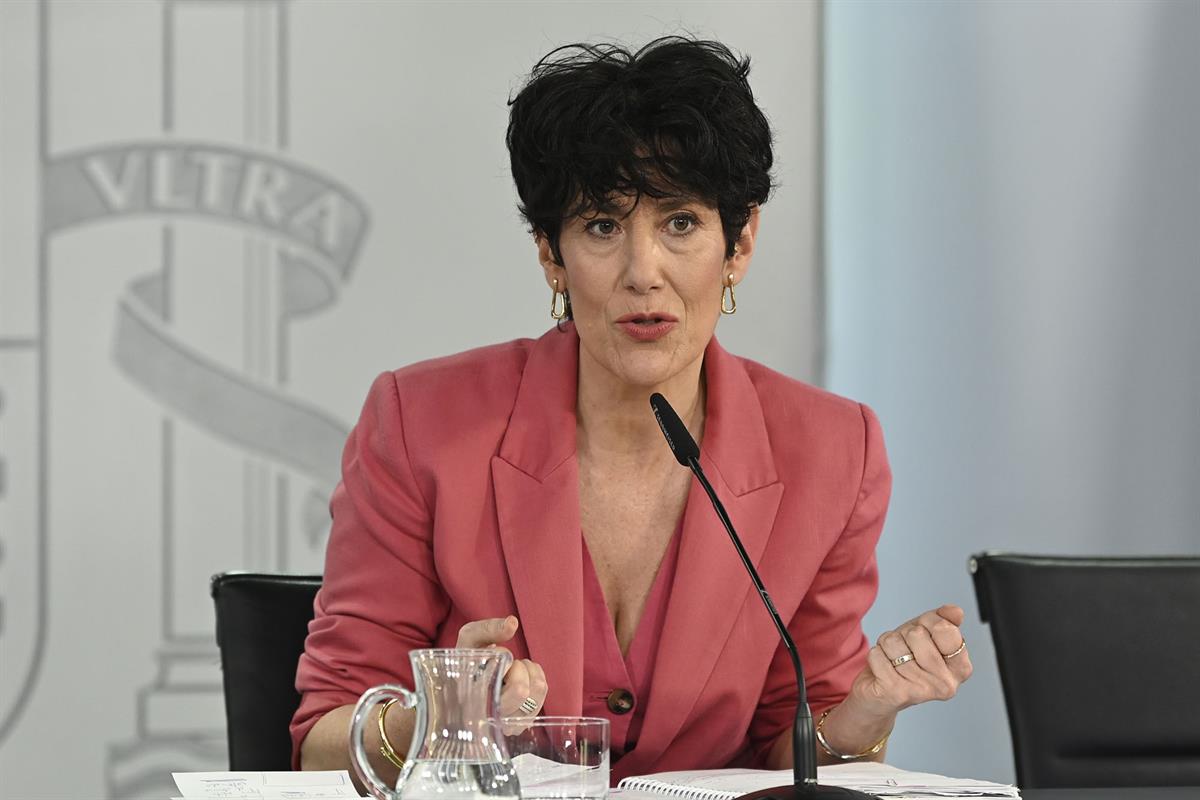 The Minister for Inclusion, Social Security and Migration and Government Spokesperson, Elma Saiz, during her speech at the press conference after the Council of Ministers | Pool Moncloa/César P. Sendra
The Minister for Inclusion, Social Security and Migration and Government Spokesperson, Elma Saiz, stated that the Council of Ministers has addressed the "18th Annual Report of the State Observatory on Violence against Women," covering 2024, and has agreed to submit it to the General Courts. According to her, it is "a key tool" for guiding public policies based on updated data on victims, complaints, institutional protection, and support resources.
The Government Spokesperson emphasised the "worrying" context in which the report is being presented: "On many Tuesdays at this same press conference, you have heard me begin my remarks by giving new figures on victims, lives taken by gender-based violence. So far this year, 16 women have been killed by their partners or ex-partners, bringing the number of fatalities since 2003 to 1,359."
However, as Saiz explained, the report prepared by the Government Delegation against Gender Violence also details the institutional effort to "prevent, protect against, and eradicate this catastrophe." Among the progress achieved, 1,697 financial aid packages were granted in 2024, "the highest number since the beginning of the historical series," and 405 subsidised contracts were formalised for women victims of violence perpetrated by their partner or ex-partner. The study also reflects that "in 2024, 49 deaths were recorded due to violence perpetrated by a partner or ex-partner, compared to 58 in 2023, and, along with 2025, it is the year with the lowest incidence since records began."
The report notes, in the judicial and social services sphere, the existence of 435 specialised courts, more than 17 million euros allocated to legal aid, and thousands of psychological support interventions. "For its part, the 016 helpline handled more than 106,000 calls in 2024, consolidating its position as an essential resource for informing, advising, and assisting victims," she noted.
Promoting culture in rural areas
Elma Saiz highlighted that the Council of Ministers has authorised the proposed distribution of €14.5 million among the autonomous communities from the Ministry of Culture's budget. Of this amount, €3 million will be allocated to promoting cultural activity in rural areas, with the aim of supporting cultural stakeholders and contributing to the revitalisation of less densely populated regions.
Non official translation