Council of Ministers
The Government of Spain authorises the release of oil reserves to mitigate the impact of the war in Iran
Council of Ministers - 2026.3.17
Moncloa Palace, Madrid
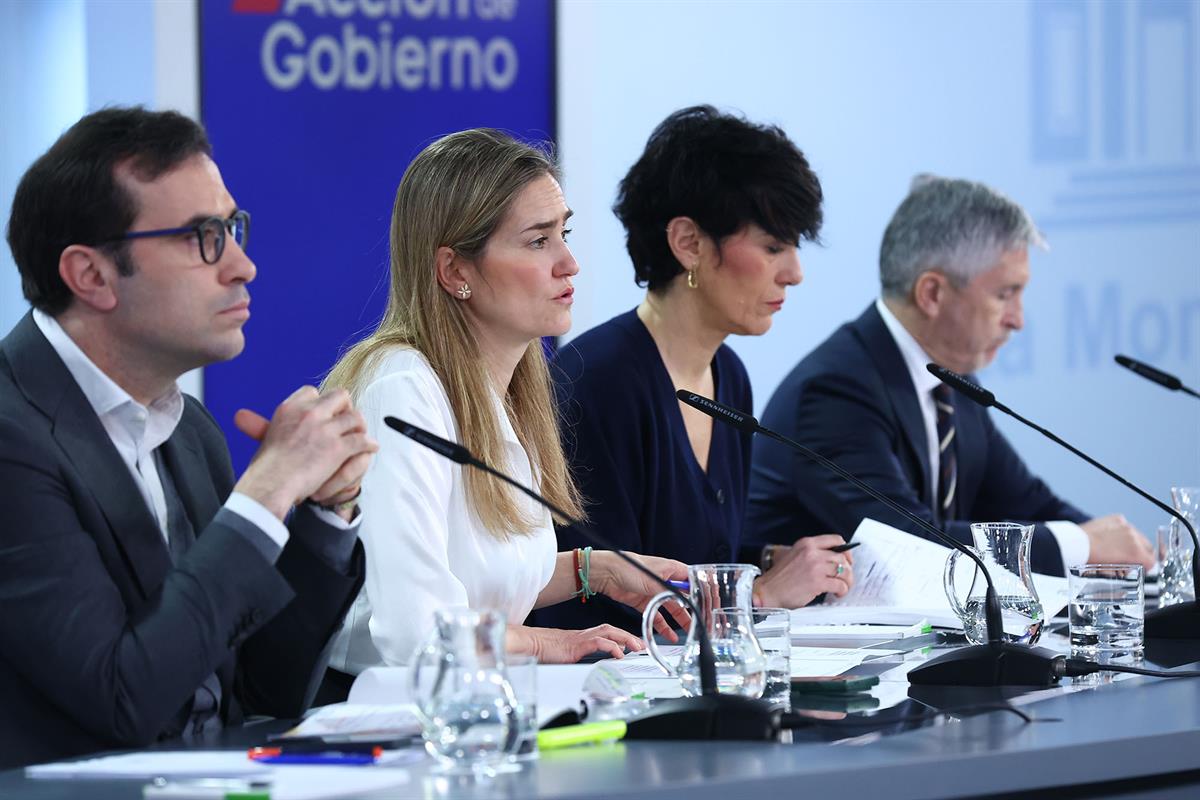 Ministers Carlos Cuerpo, Sara Aagesen, Elma Saiz and Fernando Grande-Marlaska during the press conference after the Council of Ministers (Pool Moncloa/Fernando Calvo)






The Council of Ministers has authorised the release of up to 11.5 million barrels of oil, equivalent to 12.3 days of national consumption, in response to the situation caused by the war in Iran.
The measure follows the agreement reached on 11 March by members of the International Energy Agency (IEA) to make 400 million barrels of oil available to the market from emergency reserves over the next 90 days, with the aim of mitigating the impact on consumers of the blockade of the Strait of Hormuz on oil tanker traffic.
The Third Vice-President of the Government of Spain and Minister for Ecological Transition and Demographic Challenge, Sara Aagesen, explained that a third of the strategic reserves of the member states are being released jointly: "This is the largest release of reserves in the history of the International Energy Agency."
In the case of Spain, the release of 11.5 million barrels will take place in several phases. In the first phase, 3.75 million barrels will be released onto the market for 15 days. Subsequently, the remaining reserves will be released depending on how events unfold.
Sara Aagesen clarified that "all of these products will be released from reserves currently held by the industry, distributors, and oil operators." This procedure will enable the reserves to reach the end consumer more quickly. Furthermore, the Spanish Strategic Petroleum Reserves Corporation (CORES) will oversee the procedure.
Comprehensive plan for responding to the consequences of the war
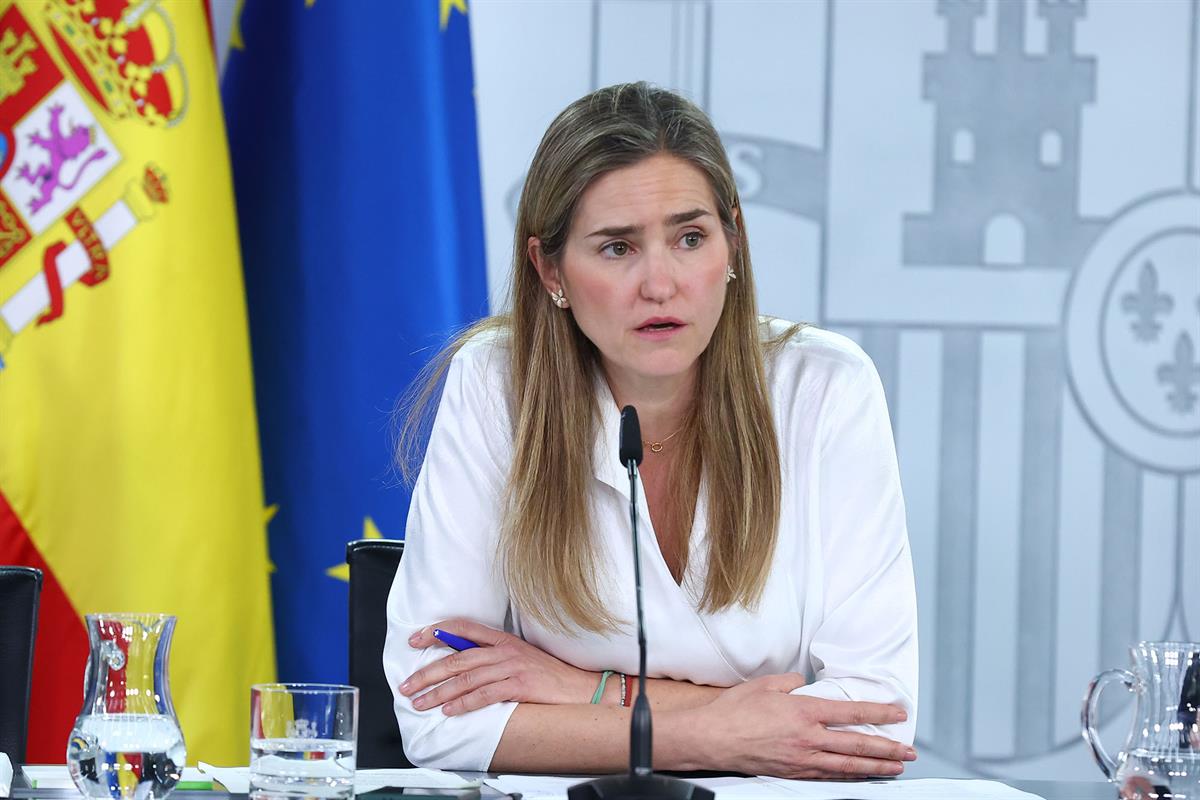 The Third Vice-President and Minister for Ecological Transition and the Demographic Challenge, Sara Aagesen, during the press conference after the Council of Ministers | Pool Moncloa/Fernando Calvo
Sara Aagesen reiterated that the Government will always respond by protecting citizens and productive sectors, adopting urgent measures to mitigate immediate impacts as well as structural measures to increase resilience and be better prepared for future situations.
The Vice-president conveyed a message of calm, because Spain's direct exposure to gas and oil supplies is limited, even though crude oil prices are 60% higher and gas prices 54% higher than in the weeks leading up to the war. She also indicated that Spain has a flexible energy system, with seven gasification plants, gas supplied via pipeline, which allows for diversification of supply, and nine refineries.
Aagesen added that Spain is better prepared than other European countries to mitigate price volatility in electricity markets, thanks to the boost given to renewable energies, which already account for 57% of the electricity generation mix: "If we look at the last two weeks, Spain has registered values 45% lower than many of our European counterparts."
The minister also emphasised that the government is closely monitoring the socio-economic impact of the price increases in coordination with other European countries, social partners, the sectors involved, and parliamentary groups to develop a comprehensive response plan that the government plans to present next Friday at an extraordinary Council of Ministers meeting.
Regarding this plan, the Minister for Inclusion, Social Security and Migration and Government Spokesperson, Elma Saiz, stated that "it will be proportionate, targeted, and focused on limiting the impact of the rise in fuel and electricity prices, and will have sufficient flexibility to adapt the measures to the evolving situation." Saiz confirmed that the President of the Government of Spain, Pedro Sánchez, will appear after the Cabinet meeting to report on these initiatives.
Lower electricity costs for Spanish SMEs
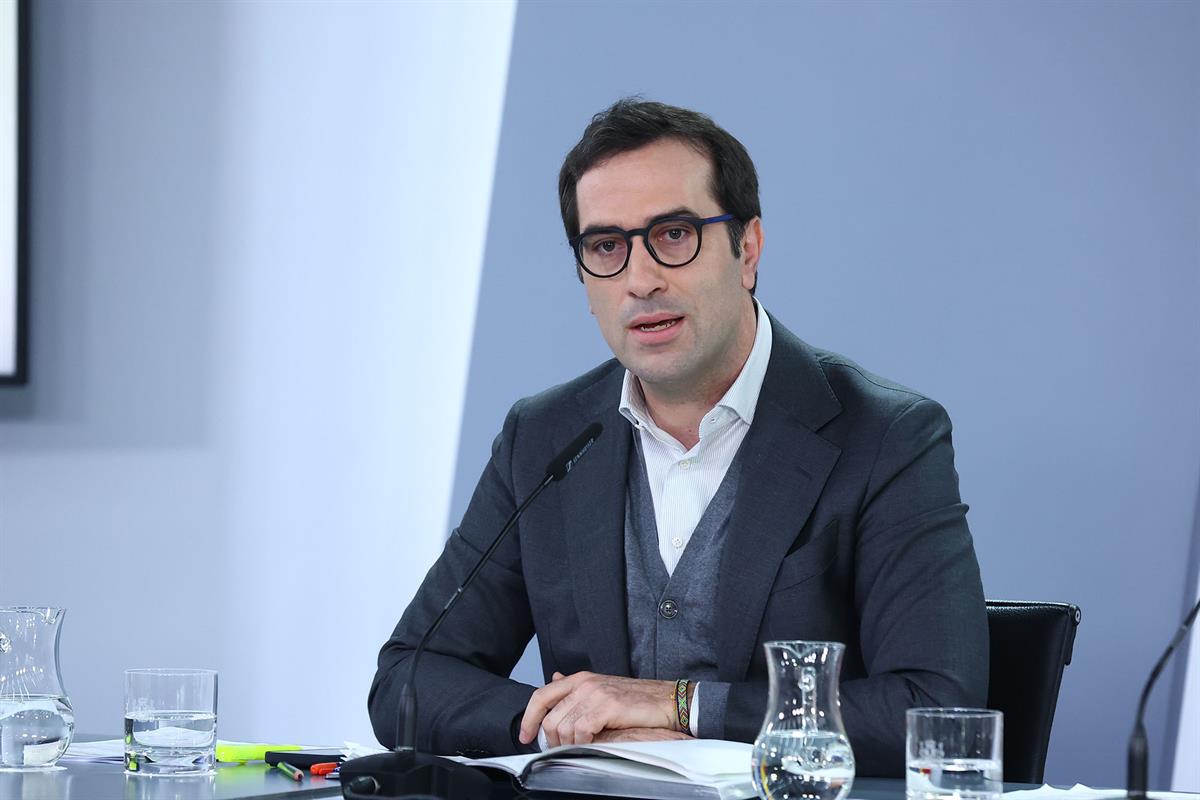 The Minister for Economy, Trade and Business, Carlos Cuerpo, during his speech at the press conference after the Council of Ministers | Pool Moncloa/Fernando Calvo
Elaborating on the impact of the conflict in Iran, the Minister for Economy, Trade and Business, Carlos Cuerpo, underlined the differences between the current situation and that caused by the war in Ukraine. The evolution of crude oil and gas prices is more contained, and, moreover, the impact of these increases on energy is less than it was then, thanks to the progress Spain has made in the energy transition, as Cuerpo explained.
The minister highlighted the lower price of electricity in Spain compared to neighbouring countries. "We have created a shield in terms of energy sovereignty that not only benefits wholesale markets but also lowers electricity costs for SMEs," he stated. Reduced dependence on foreign sources has strengthened the competitiveness of the Spanish economy, in addition to the massive influx of investment associated with renewable energy.
More growth and job creation than in neighbouring countries
The Minister of Economy explained that, in addition to improvements in infrastructure, reserves, and diversification of supplies, "we are also better prepared economically" than at the start of the war in Ukraine. As evidence of the strength of the Spanish economy, Carlos Cuerpo cited the number of workers registered with Social Security: as of 13 March 13, the figure is approaching 22 million, in seasonally adjusted terms; moreover, the increase is accelerating compared to February.
The minister also pointed to the increase in Gross Domestic Product (GDP): Spain has grown more than its neighbouring economies since 2019 and has better forecasts for 2026. These figures, he argued, reflect the government's commitment to modernising and transforming the economy, as well as its response to the pandemic and the war in Ukraine with measures such as the ERTE furlough scheme, the Recovery Plan, the social shield and the Iberian Mechanism, which capped gas prices. "Now, the challenge is to continue applying these lessons so that Spain remains a leader in growth and job creation, but also in productivity growth, reducing inequality, and improving household purchasing power," he stated.
Measures for the most exposed sectors
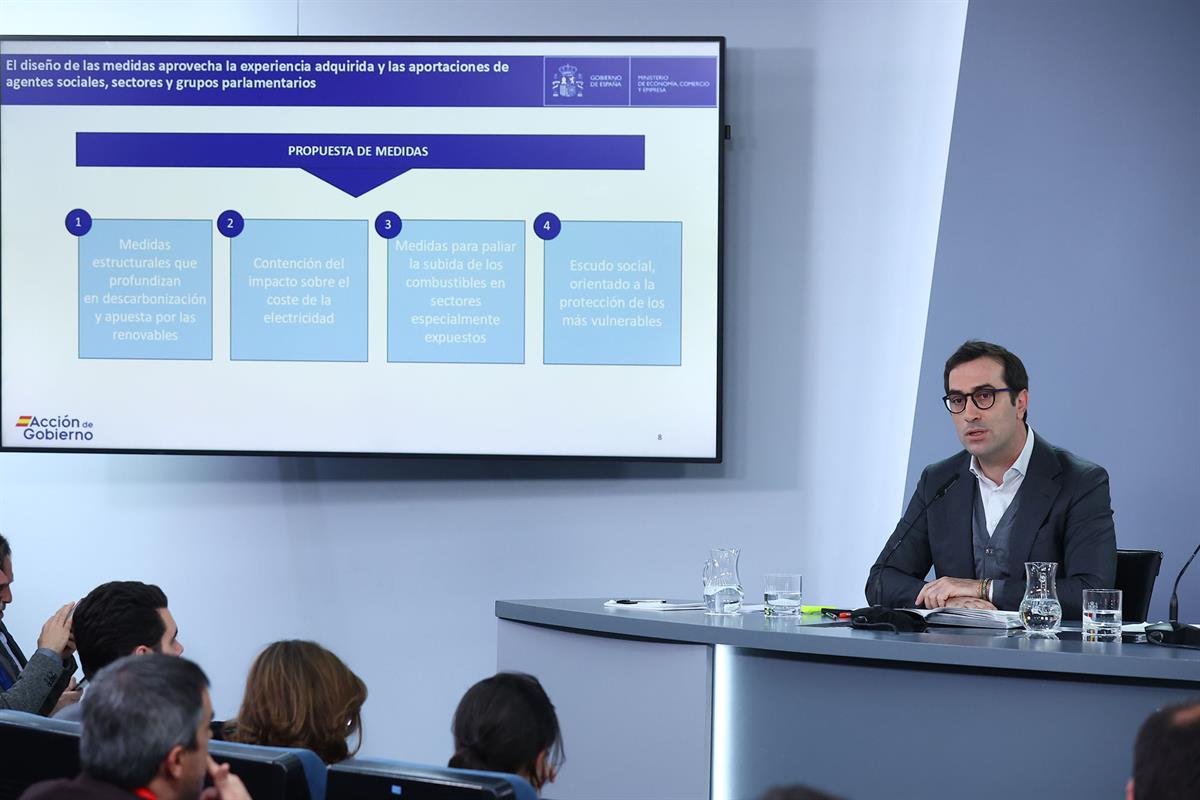 The Minister for Economy, Trade and Business, Carlos Cuerpo, during the press conference after the Council of Ministers | Pool Moncloa/Fernando Calvo
The biggest challenge in the face of price increases stems from the evolution of prices for three products, as explained by Carlos Cuerpo: gasoline, diesel, and fertilizers, which have become 16%, 28%, and around 45% more expensive, respectively, since the beginning of the conflict. The most exposed sectors are transport, logistics, agriculture and fisheries, as well as energy-intensive industries. The Minister for Economy pointed out that these sectors also impact the economy's value chains and, therefore, affect the prices of consumers' shopping baskets. "Hence the importance of specific action for these sectors," he maintained.
The final impact of the war, he added, will depend on the duration of the conflict, and given the "enormous uncertainty" surrounding it, the range of forecasts for oil and gas prices is vast. The minister stressed the importance of moving forward as quickly as possible with resolving the conflict, not only because of the humanitarian impact, but also to avoid long-term "structural damage" to the economy.
Based on the government's assessment and input from social partners, political groups, and the productive sectors, the extraordinary response plan will seek to protect citizens and businesses in the short term and against future impacts, Cuerpo stated. This protection will address the increase in energy costs, including fuel and raw materials such as fertilizers, with special attention to the most affected sectors and the most vulnerable citizens.
The response, the minister noted, must be swift, proportionate, and flexible; it will also be accompanied by enhanced monitoring of pricing at service stations, a task that the Ministry of Economy is carrying out with the Ministry for Ecological Transition and the National Commission for Markets and Competition (CNMC).
Protection of public and private entities operating in strategic sectors
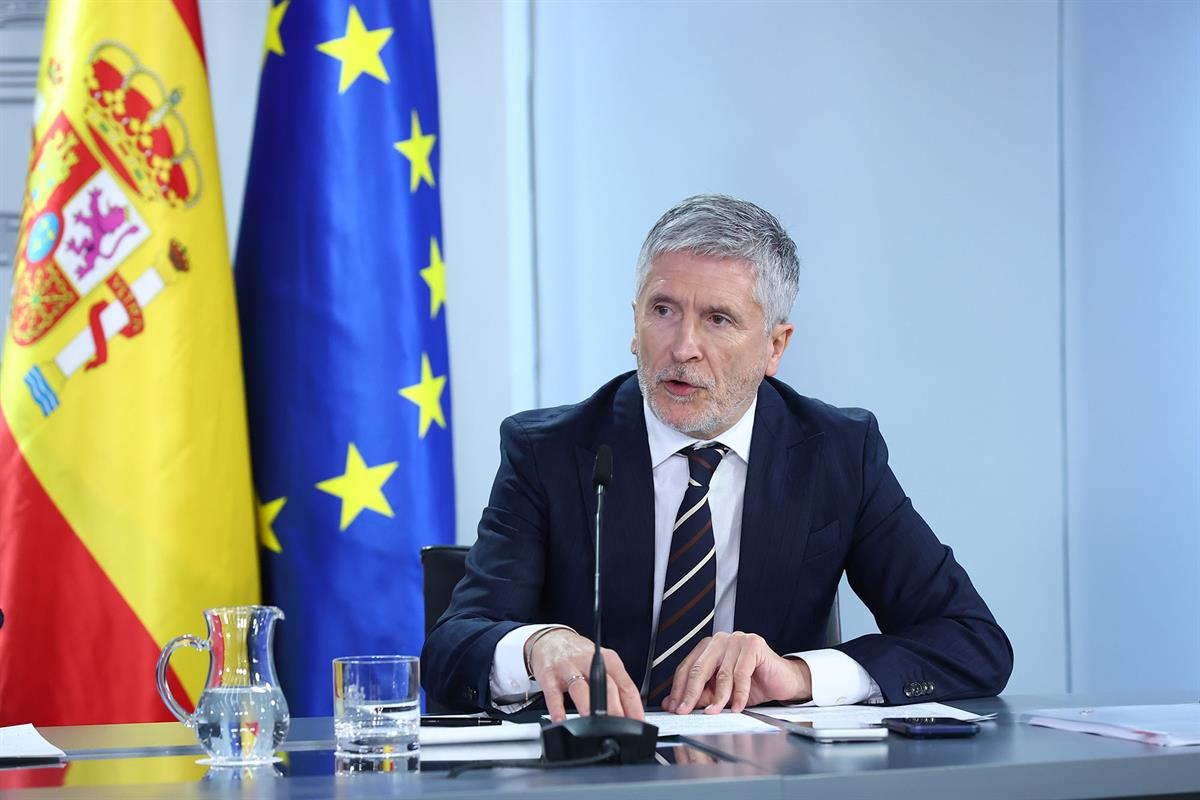 The Minister for Home Affairs, Fernando Grande-Marlaska, during the press conference after the Council of Ministers | Pool Moncloa/Fernando Calvo
The Government has approved sending to Parliament, for its legislative process, the draft Law on the Protection and Resilience of Critical Entities, which are those that provide essential services in sectors considered strategic, such as energy, transport, water, and healthcare.
The Minister for Home Affairs, Fernando Grande-Marlaska, who presented the legislation in May 2025, reiterated that the objective is to support public and private entities that operate critical infrastructure: "We want to help them be better equipped to face risks that could disrupt the essential services they provide. These are indispensable services for maintaining social functions and vital economic activities, not only nationally, but also within the European Union."
In this context, Grande-Marlaska announced that the future law will incorporate the most recent European directive on the matter into national law to "equip us with protection mechanisms against an increasingly dynamic and complex landscape of threats, from natural phenomena to sabotage, including weather risks and hybrid threats, always within an environment of growing interdependence between infrastructure and the sectors involved."
Key aspects of the future law
The law defines and identifies critical entities using criteria to be established in the National Strategy for the Protection and Resilience of Critical Entities and in the Threat and Risk Assessment, documents that will be drafted soon and updated every four years.
The Minister for Home Affairs indicated that the State Secretariat for Security will develop, maintain, and keep updated the catalogue of entities considered strategic. In addition to traditional sectors such as energy, health, and transport, this catalogue will include new sectors such as hydrogen, urban heating and cooling systems, private security, and wastewater, among others.
The public and private entities and organisations listed in the catalogue must comply with a series of requirements to strengthen their protection and minimise the risk of disruption to the essential services they provide. The minister stressed that they will have to develop a resilience plan that includes physical protection measures and response and mitigation strategies for any type of incident. They will establish a system for verifying the personal backgrounds of their employees to ensure their suitability for the position. They will designate a security and resilience officer as the point of contact with the competent authorities and will implement an incident reporting system.
The State Secretariat for Security will remain the competent national authority in this area, and the National Centre for the Protection and Resilience of Critical Entities will be attached to it. This centre will assume direct communication with these entities and will be the single point of contact for cross-border cooperation with the Member States of the European Union.
Furthermore, Fernando Grande-Marlaska pointed out that entities belonging to the banking, financial markets, insurance, and digital infrastructure sectors, although they may be considered critical, are excluded from the scope of the regulation because they are governed by their own specific legislation, as the minister explained. The same applies to entities dependent on the Ministry of Defence, the State law enforcement forces and agencies, and the police forces of the autonomous communities, which will be governed by their own regulations.
National Refugee Resettlement Programme
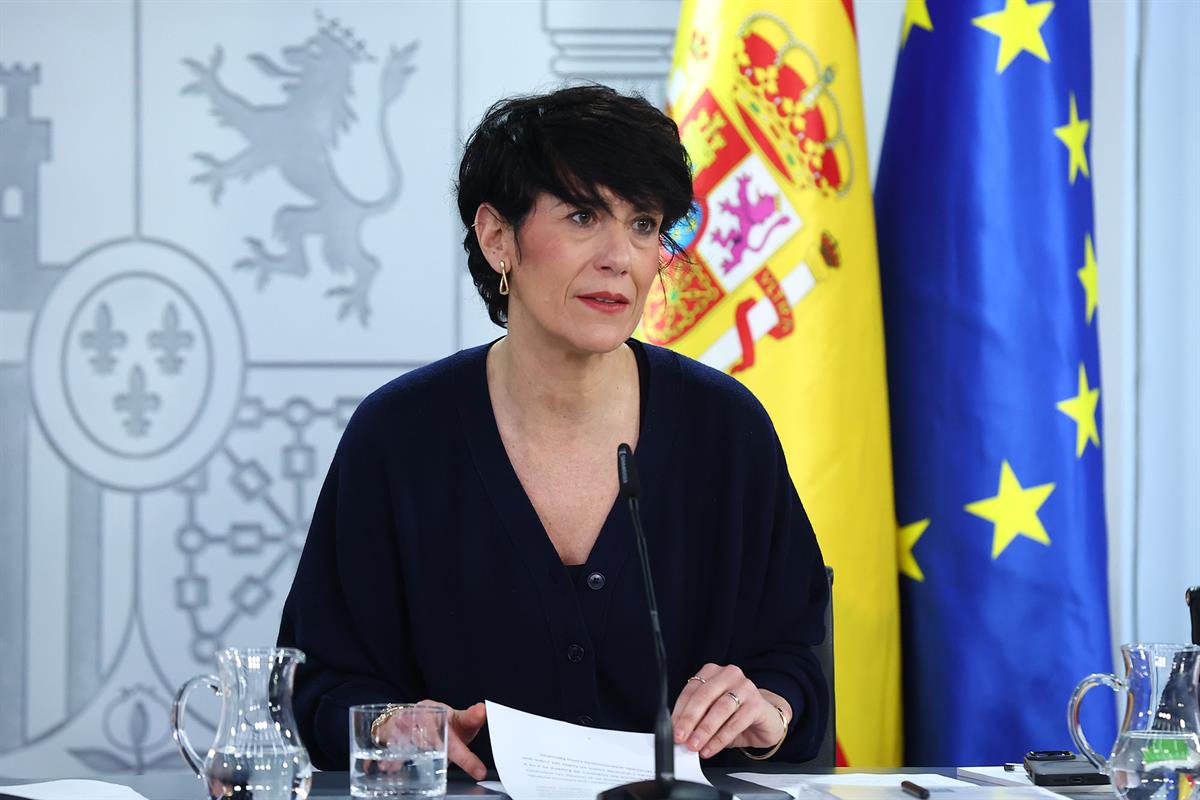 The Minister for Inclusion, Social Security and Migration and Government Spokesperson, Elma Saiz, during her speech at the press conference after the Council of Ministers | Pool Moncloa/Fernando Calvo
The Minister for Inclusion, Social Security and Migration explained that the Council of Ministers has approved the National Refugee Resettlement Programme in Spain for 2026, with a total of 1,200 places. As the minister explained, this international protection programme transfers refugees in highly vulnerable situations from their first country of asylum to another that can guarantee the required protection.
Spain has participated in this initiative since 2011, and in the last four years, it has resettled 3,600 refugees in the country. The investment planned by the Ministry of Inclusion, Social Security, and Migration amounts to €26 million and is co-financed by the European Asylum, Migration and Integration Fund (AMIF) to guarantee lasting protection for resettled individuals.
Also in the area of migration, the Council of Ministers approved the institutional declaration for the International Day for the Elimination of Racial Discrimination, celebrated every 21 March. Elma Saiz highlighted the work of the Spanish Observatory on Racism and Xenophobia (OBERAXE) and the need to strengthen monitoring tools such as FARO and the Hodio platform, recently presented by the President of the Government of Spain.
Extension of funding for the Senior Cinema programme
The Government Spokesperson welcomed the approval of the increased funding for the Senior Cinema programme, in response to the massive increase in audience numbers. "This campaign has far exceeded expectations, and therefore, cinemas will once again use up the grant awarded before the deadline," explained Saiz, for whom it is "great news" that the measures planned to ensure citizens' access to culture need to be extended due to the public's response.
Thus, the Ministry of Culture is adding an extra €3 million to the €8.5 million allocated when the third edition of this programme began last June. In its first 28 weeks, the programme has reached more than 1.5 million spectators. A total of 397 cinemas throughout Spain are signed up to the programme.
Current affairs: Gender-based violence
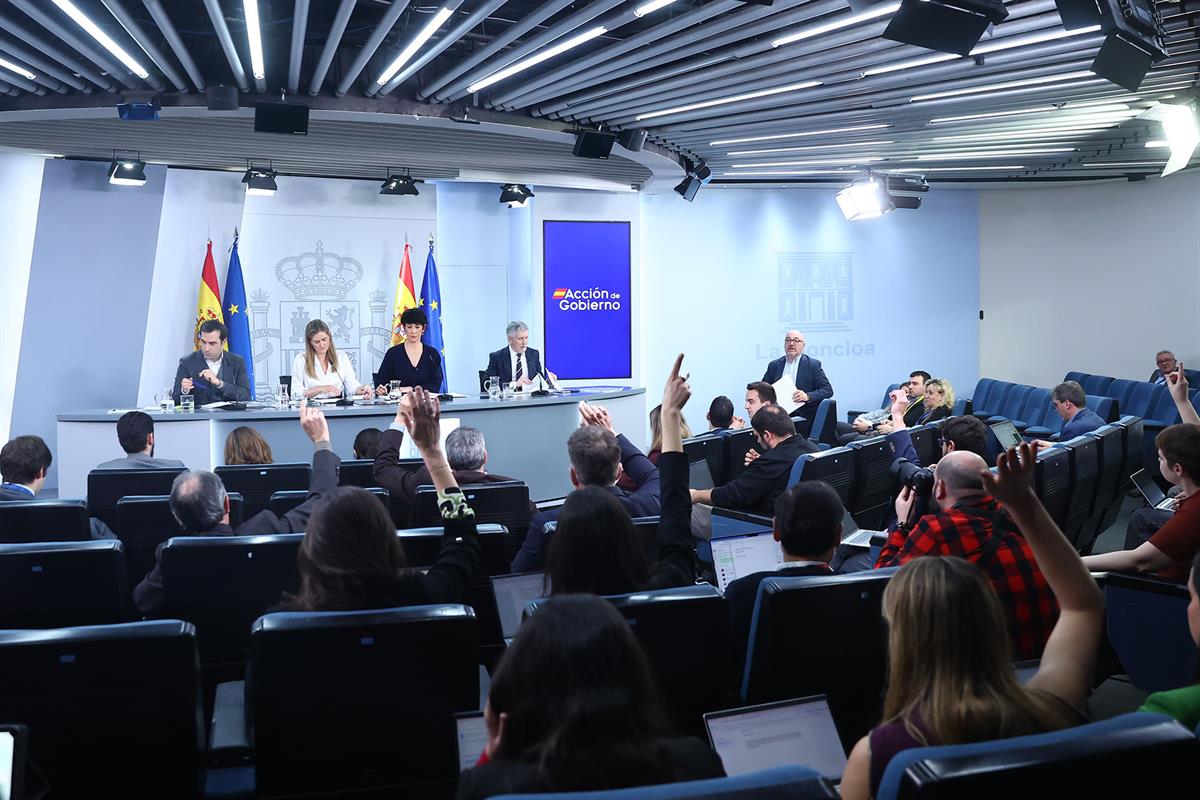 Ministers Carlos Cuerpo, Sara Aagesen, Elma Saiz and Fernando Grande-Marlaska during the press conference after the Council of Ministers | Pool Moncloa/Fernando Calvo
Elma Saiz began her remarks by expressing her regret at the recent cases of gender-based violence in Cantabria and Huesca, which bring the number of women murdered by their partners or ex-partners this year to 13. "2026 is proving unbearable," the spokesperson declared, emphasising that this figure represents more than one murder per week.
"There are no words to describe this true horror, and denying this reality costs lives," continued Saiz, who appealed for unity among all institutions and administrations in the face of the problem of "extreme sexism" and reminded everyone that the 016 helpline operates 24 hours a day to assist victims, a resource available in 53 languages that leaves no trace on the bill, although it should be deleted from the call history.
Non official translation