Council of Ministers
The Government of Spain allocates 2.559 billion euros to investment in grants, the ninth consecutive increase, and facilitates access to aid
Council of Ministers - 2026.3.10
Moncloa Palace, Madrid
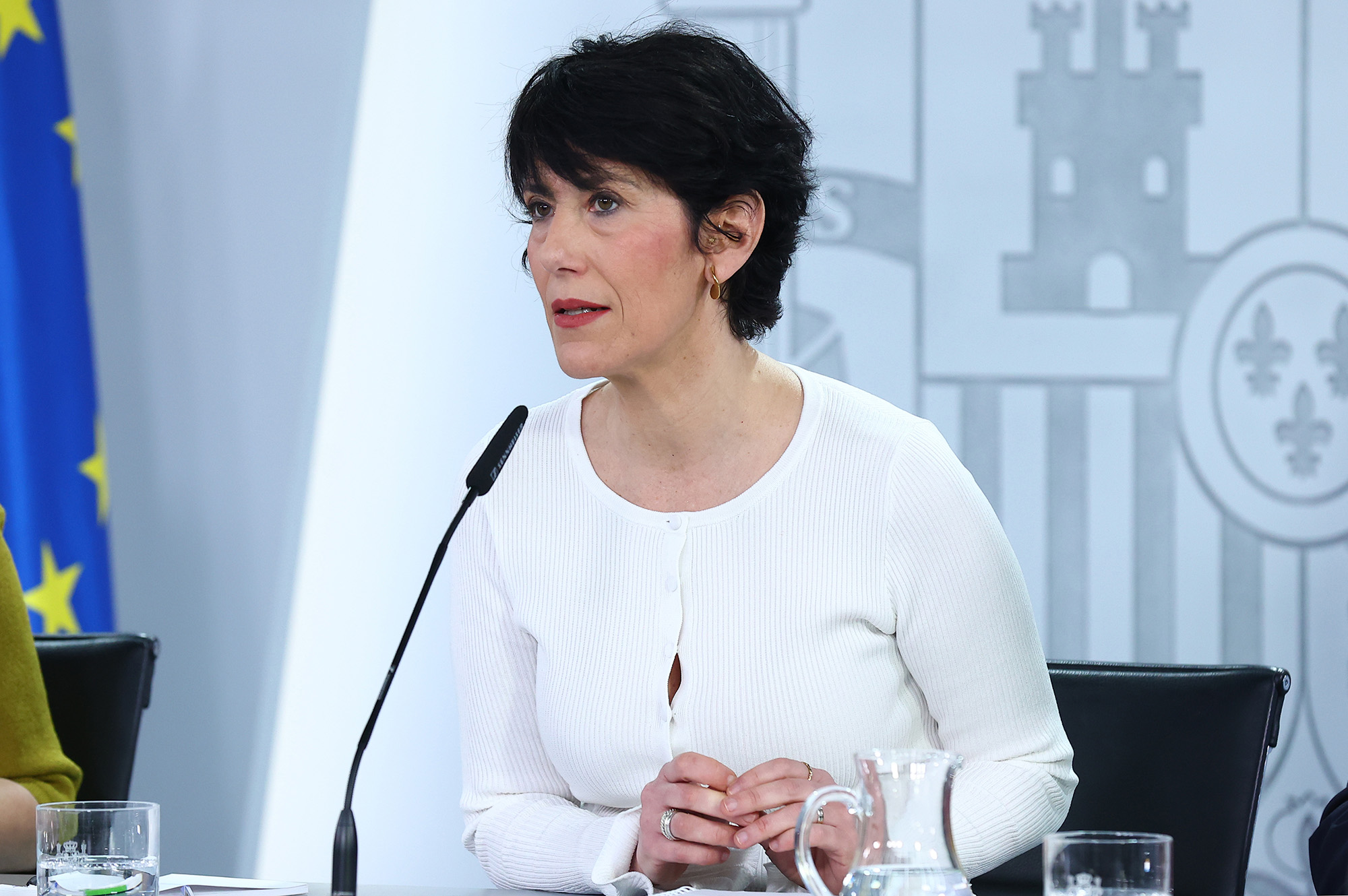
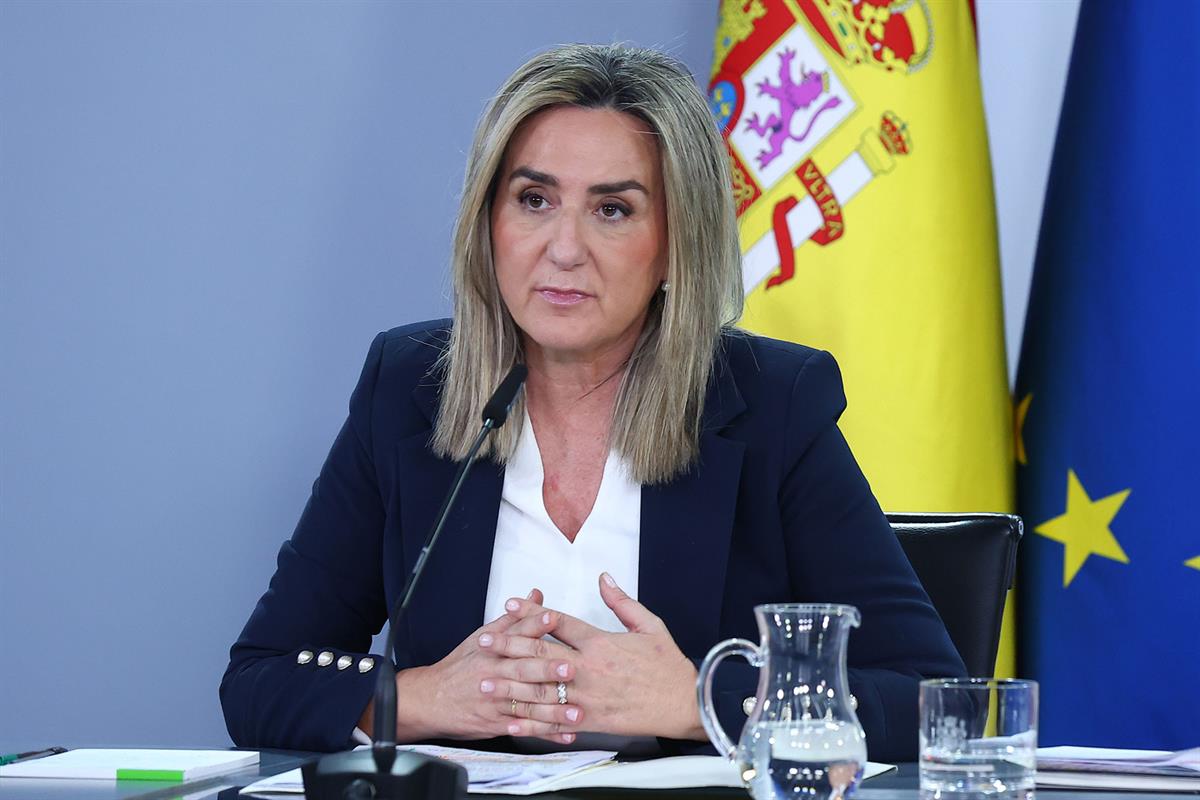 The Minister for Education, Vocational Training and Sports, Milagros Tolón, at the press conference after the Council of Ministers (Pool Moncloa/Fernando Calvo)





The Council of Ministers has established the economic thresholds of income and family wealth and the amounts of grants and study aids for the academic year 2026-2027.
The Minister for Education, Vocational Training and Sport, Milagros Tolón, has stated that this is a "historic investment" of 2.559 billion euros to continue strengthening equal opportunities. Tolón pointed out that this is the ninth consecutive increase in this item since 2018, that the cumulative increase is 83% and that the number of students with grants has risen from around 780,000 to one million.
Improved access to grants and study aids
The education minister highlighted four new features of the calls for applications for the next academic year that seek to "extend rights and facilitate access to the aid".
Firstly, students of university studies and higher artistic education with partial enrolment who are studying between 48 and 59 credits - some 20,000 students - will be able to receive part of the income grant and the residence grant. Milagros Tolón pointed out that this adapts the system to students who combine their studies with work and corrects an exclusion that particularly affects those with fewer resources.
The second change is aimed at students with disabilities. Until now, students with a degree of disability between 25% and 64% had to enrol for at least 60 credits to be considered full-time students. In the new calls for applications, it will be sufficient to register for 45 credits to be eligible for a grant, which will benefit around 2,000 students.
The recipients of the third improvement are students from Ceuta and Melilla who have to travel to the peninsula: the travel allowance is doubled, from 444 to 888 euros. "Distance cannot be an obstacle to access to education," Tolón emphasised.
Finally, the net worth thresholds are increased by 10%, after 15 years without being updated. The minister clarified that "it is not a question of relaxing requirements, but of avoiding outdated indicators and thus excluding families whose real economic situation has not improved."
In addition, Milagros Tolón recalled that yesterday the president of the Government of Spain announced the creation of the Medrano grants, a programme aimed at promoting the mobility of university students. The minister explained that by making it easier for students to study at universities in other autonomous communities, the cohesion of the university system, academic exchange and equal opportunities are strengthened.
Aid for textbooks and teaching materials
Also in the field of education, the Council of Ministers has earmarked 58.5 million euros to finance textbooks and teaching materials in publicly funded schools.
The minister for education, vocational training and sport explained that the Government has authorised the proposal for territorial distribution and the criteria for the distribution of this programme, which is being developed together with the autonomous communities and aims to guarantee that "no student is limited in their learning for economic reasons." The final distribution of funds will be agreed at the Education Sectoral Conference.
Strengthening energy autonomy
The Third Vice-President of the Government of Spain and Minister for Ecological Transition and Demographic Challenge, Sara Aagesen, began her speech by pointing out that her department's measures approved by the Council of Ministers reinforce the path of energy autonomy at a key moment in the international situation.
In this sense, Aagesen sent a message of calm and underlined the difference between the current situation in the Middle East and that experienced at the beginning of the war in Ukraine, since the direct supply coming through the Strait of Hormuz represents "quantities of less than 2% in terms of gas and 5% in terms of oil."
She also indicated that the strategic measures that the Government has been implementing since 2019 "have shown that our country is less exposed to these high volatilities that come from fossil fuels."
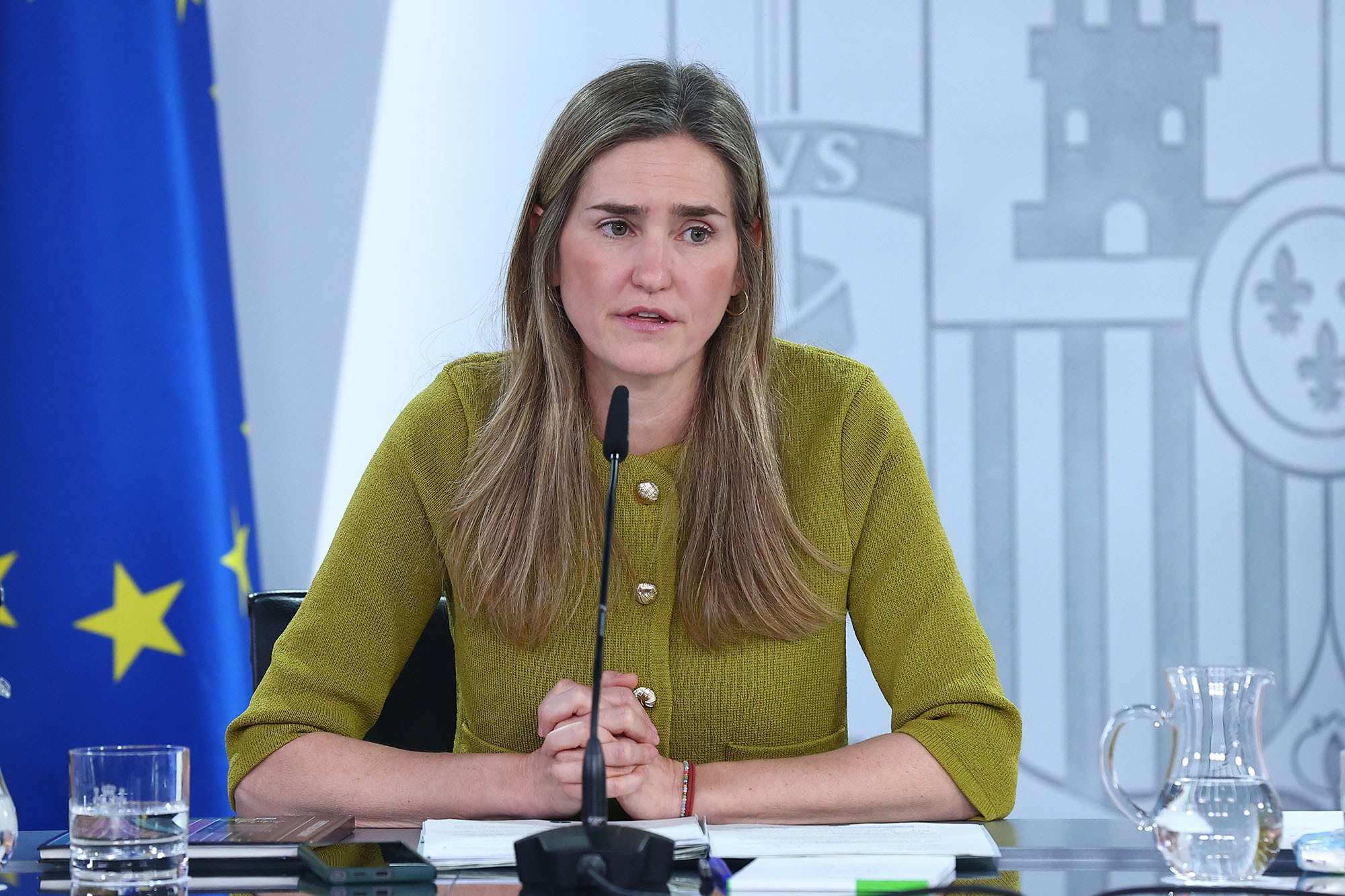 The third Vice-President and Minister for Ecological Transition and the Demographic Challenge, Sara Aagesen, explains the decisions adopted in the Council of Ministers | Pool Moncloa/Fernando Calvo
Boosting the mineral raw materials sector
It is in this context of energy volatility that the First Action Plan for the Sustainable Management of Mineral Raw Materials 2026-2030 is framed.
The initiative is aligned with EU regulations on critical raw materials and "responds to the growing demand around the green and digital transition," Aagesen explained. The plan envisages 34 actions and a public investment of 414 million euros.
Eight ministries, autonomous communities and local authorities, as well as the social partners, were involved in drawing up this initiative. "It is a 360-degree vision," said the minister for ecological transition and demographic challenge. "We want to identify what the real needs are in our country for raw materials" and "how far we can use the resources we already have," she added.
New national mineral exploration mapping
Within the plan, four strategic axes have been established - autonomy, promotion of industry, circularity and sustainable management - and eight priority actions. Among them, the National Mining Exploration Programme, to which the minister for ecological transition and demographic challenge also referred. This initiative will have an investment of 182 million euros and includes the improvement of the sector's regulatory framework, the use of mining waste and the analysis of the current needs of the Spanish industry, among other measures.
To this end, a mapping of Spain's mining potential will be carried out, which, as Sara Aagesen reminded us, is being updated for the first time in five decades, as the last similar prospecting "predates democracy".
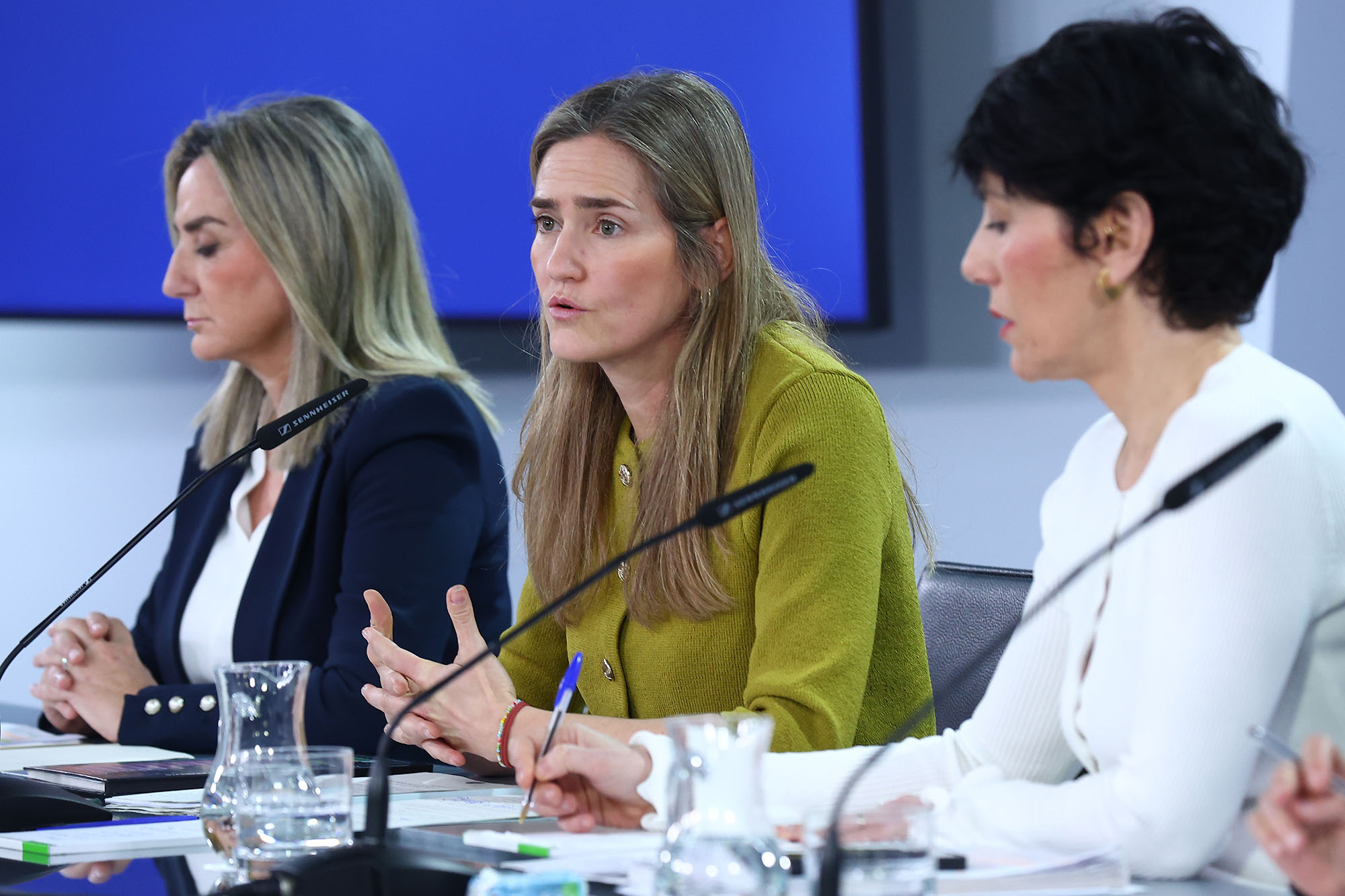 The Ministers for Education, Ecological Transition and Inclusion, Milagros Tolón, Sara Aagesen and Elma Saiz, at the press conference after the Council of Ministers | Pool Moncloa/Fernando Calvo
Middle East: humanitarian aid and crisis monitoring
The Minister for Foreign Affairs, European Union and Cooperation, José Manuel Albares, has presented a report on the situation in the Middle East, which is suffering a "resurgence of the escalation of war that is now completely destabilising the entire region" and has so far caused 1,800 deaths. Albares also highlighted the consequences for navigation in the Strait of Hormuz, which is essential for the supply of world energy markets, and the extension of the war to Lebanon, with 500 dead.
The minister stressed that "Lebanon's sovereignty and territorial integrity must be preserved" and condemned both Hezbollah's firing of rockets into Israel and Israel's massive attacks on Lebanon, "whose security and stability are vital for the whole region." "What Spain wants is a sovereign Lebanon, free of armed groups and external attacks, and in peace," he said. Albares has indicated that almost 10% of Lebanon's population, more than half a million people, are displaced, so shelters are overflowing in a country that has the highest number of refugees per capita in the world, most of them below the extreme poverty line.
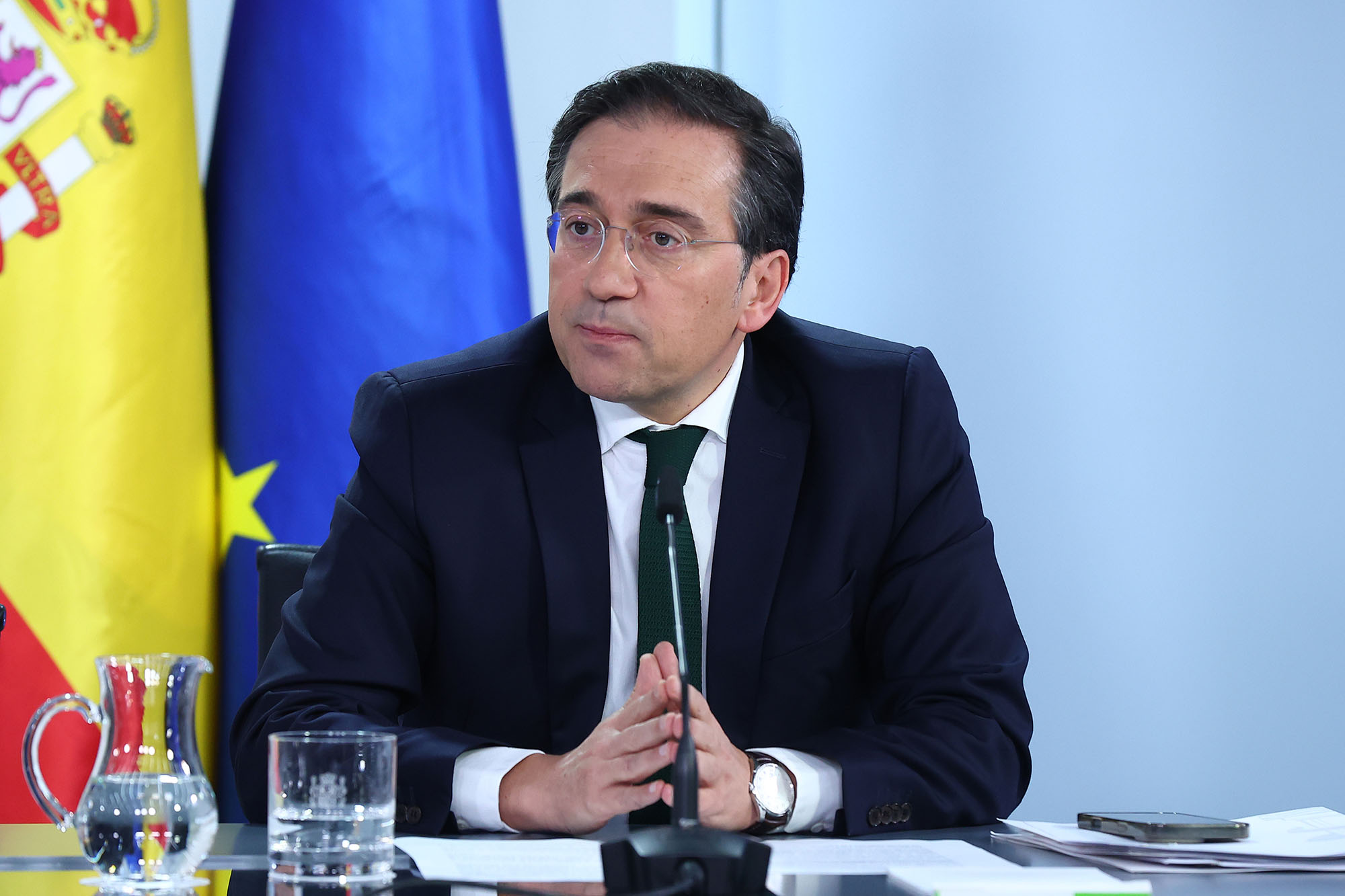 The Minister for Foreign Affairs, European Union and Cooperation, José Manuel Albares, during his speech at the press conference | Pool Moncloa/Fernando Calvo
In response to the Lebanese authorities' appeal, the Government of Spain has responded with a humanitarian aid package of 9 million euros. The foreign affairs minister detailed that an initial emergency aid package of 2.4 million euros will focus on assistance to the displaced population, including food, water, sanitation and basic health care. A plan for additional interventions, depending on needs, will send medicines and shelter materials. Part of the aid will be channelled through Spanish NGOs working on the ground.
The Executive is also closely monitoring the situation of the UN Interposition Force, following the recent attack on the Danish contingent. Spain has almost 700 soldiers deployed in this mission. "We reiterate our support for the mission's mandate, including support for the effective redeployment of the Lebanese Armed Forces to the south of the country," said Albares.
Repatriation of Spaniards
The foreign affairs minister reiterated that Spain's position on Lebanon and the war in Iran is clear: "We stand for international law, de-escalation and a return to the negotiating table and peace."
Albares detailed that he remains in contact with all partners in the region and with his European counterparts. The deterioration of the situation has led his ministry taking the decision to temporarily close and completely evacuate the Spanish embassy in Tehran, whose "extraordinary work" the minister once again thanked.
Of the 31,000 Spaniards in the region at the beginning of the conflict, Spain has already evacuated 5,685, and the number will reach 6,000 with today's flights from the Emirates and Qatar. All evacuation operations are still open, through all possible channels, except for the one in Iran, which was successfully completed last Saturday. The objective is "to repatriate every last Spaniard who wishes to do so, we are not going to leave any Spaniard behind," said Albares, who stressed that special attention is being paid to particularly vulnerable cases.
Specifically, nine land evacuation operations and three air evacuation operations were carried out with Spanish Army aircraft. Flights from other EU countries have also been used to repatriate Spanish citizens, just as other EU citizens have travelled on flights from Spain. In addition, the Foreign Affairs Ministry is making representations to all airlines flying to and from the region to relocate Spanish passengers on commercial flights.
The minister also stressed that the Foreign Affairs Ministry's crisis room remains operational at all times. Since 28 February, it has dealt with more than 6,000 calls, in addition to those being received by the Spanish embassies and consulates in the region, which provide ongoing assistance. Contact with Spanish ambassadors and chargés d'affaires is also continuous in order to coordinate the global response and adapt it to the specific circumstances of each country.
Future comprehensive response plan to the effects of war in the Middle East
The Minister for Inclusion, Social Security and Migration and Government Spokesperson, Elma Saiz, began her speech by recalling that the position of the Executive can be summed up as "no to war" and the promotion of diplomacy as the only responsible way out. "And we are not alone: we are already seeing how many other governments have joined this position, which is nothing more than preserving the interests of our own citizens," added Saiz.
In this context, the minister announced that the Executive is preparing a comprehensive response plan to the effects of this war, a strategy that will be analysed throughout the week with all the parliamentary groups, social agents, trade unions and employers' organisations. According to the minister, the aim of this initiative is to implement a "calibrated and effective" response on two levels: the short-term, with measures to protect affected households, workers and companies; and the structural, with measures to accelerate the ecological transition and strengthen Spain's strategic autonomy. "We have already put the interests of the public first in other conflicts, such as in Ukraine, and we will do so again because we are prepared," she concluded.
 The Minister for Inclusion, Social Security and Migration and Government Spokesperson, Elma Saiz, during her speech at the press conference after the Council of Ministers | Pool Moncloa / Fernando Calvo
Strengthening universality in access to public health care
Elma Saiz reported on the approval by the Council of Ministers of the royal decree that reinforces universal access to public healthcare. The regulation governs the procedure for the recognition of the right to health protection and healthcare at public expense for foreigners who are in Spain without legal residence.
"For the first time, this measure is aimed at Spaniards of origin who reside abroad during temporary trips to Spanish territory and also at family members who accompany them," added the minister, who also explained that this measure will also benefit returning Spaniards.
The recognition of this protection, which until now was limited to workers and pensioners, will be carried out by means of a responsible declaration in which the applicant accredits that they do not have health cover through any other means. Thus, as Saiz summarised, the decree "equalises health coverage for these beneficiaries throughout Spain and puts an end to the divergent criteria that, until now, were applied depending on the territory."
More Council agreements: Public Employment Offer in Home Affairs and recognition of Fernando Ónega
The spokesperson of the Executive informed of the approval of the open call for 2,854 new posts for the Police and 3,240 posts for the Civil Guard. This is the largest public employment offer in the last fifteen years for the State Security Forces, for which a replacement rate of 125% has been available.
In the cultural sphere, the Council of Ministers has also decided to award the Grand Cross of Civil Merit posthumously to the journalist Fernando Ónega, who worked as spokesman and press director of the Presidency of the Government under Adolfo Suárez. "I can promise that, as a teacher of journalists and an example of rigour and professionalism, we will miss him," Saiz said in her speech in memory of Ónega.
Current affairs: First Forum against Hate
The head of Inclusion, Social Security and Migration has highlighted the First Forum against Hate as notable this week, which will be held on 11 March in Madrid and will be inaugurated by the president of the Government of Spain. "We have organised this forum to reflect on the spread of hate speech and polarisation in our society, both socially and digitally, and to focus on its consequences," said Saiz, who stressed that digital violence targets women, children and migrants in particular.
With regard to the latter group, the minister highlighted the work carried out by the Spanish Observatory on Racism and Xenophobia (OBERAXE) to monitor, report and act against hate speech on social networks. "Thanks to the working group we set up in the summer with representatives of the main social networks, we have reached the highest figures for the removal of messages with racist and xenophobic content since we started monitoring them: 62% in December," she said.
According to Saiz, to continue working along these lines, the First Forum against Hate will bring together experts and government representatives from the European Commission and the United Nations, as well as the main digital platforms and members of civil society with the aim of laying the foundations for a common strategy to defend "a public, digital and in-person space where respect and coexistence are the norm."
Non official translation