Council of Ministers
The Government of Spain approves the biggest reform of the judicial career in 40 years
Council of Ministers - 2025.5.13
Moncloa Palace, Madrid
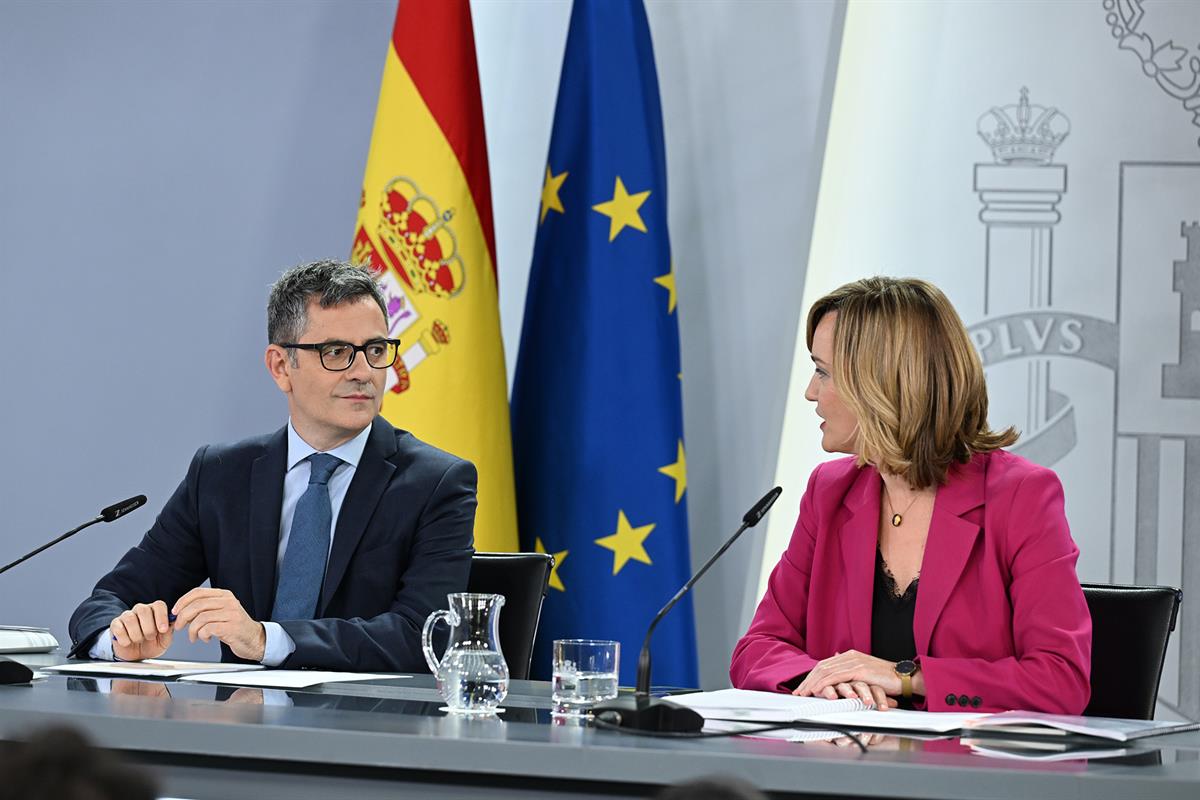 The Minister for the Presidency, Justice and Parliamentary Relations, Félix Bolaños, and the Minister for Education, Vocational Training and Sports and Government Spokesperson, Pilar Alegría, at the press conference after the Council of Ministers (Pool Moncloa / Borja Puig de la Bellacasa)






The Council of Ministers has approved the submission to the Lower House of Parliament of the Organic Law for the Expansion and Strengthening of Judicial and Prosecutors Careers, so that it can begin its parliamentary processing. The bill represents the first major structural revision of the Organic Law of the Judiciary in the last 40 years.
The Minister for the Presidency, Justice and Parliamentary Relations, Félix Bolaños, who presented the draft bill on 21 January, stressed that the regulation "substantially improves the judicial career" and is a "brave reform" that will attract talent and increase the number of judges, prosecutors and magistrates. It also provides more guarantees, more certainty and more transparency in the promotion processes for members of the judiciary. "I think it is adapted to an increasingly demanding society and to European standards that are very high," the minister added.
Equal opportunities in access to judicial and prosecutor careers
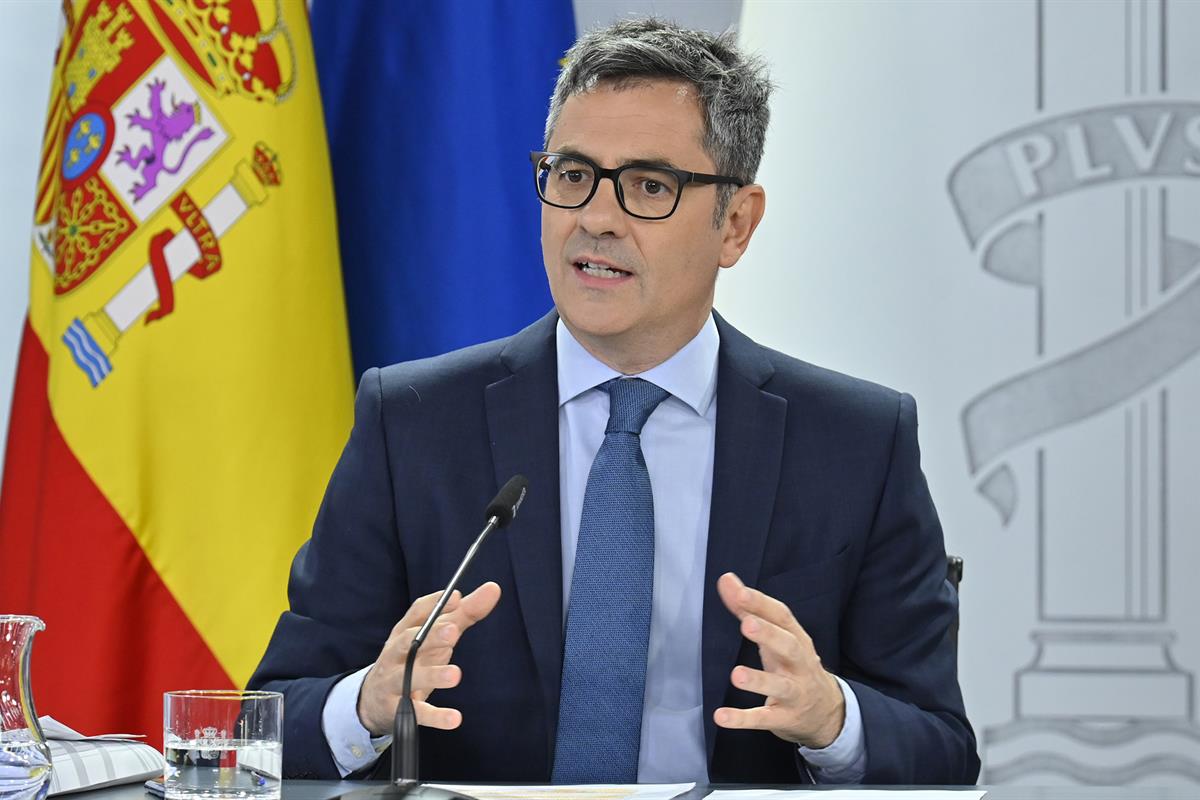 The Minister for the Presidency, Justice and Parliamentary Relations, Félix Bolaños, during his speech at the press conference after the Council of Ministers | Pool Moncloa / José Manuel Álvarez
Félix Bolaños recalled that Spain has always had a very demanding competitive examination system for accessing the posts of judges, prosecutors and magistrates which, with this reform, is maintained and strengthened because the exams will include a written test to assess legal reasoning.
In addition, all candidates whose income falls below a certain level will be able to access a grant with the same value as the Minimum Interprofessional Wage, for a period of up to four years, so they can prepare for the competitive examinations for the judicial career, public prosecutor's career, State Attorney's Office and Justice Administration lawyers.
The Centro de Estudios Jurídicos will become a public centre for the preparation of candidates and will have branches in other provinces so that any candidate can prepare for their exams regardless of the territory in which they live. "We want the most outstanding jurists to continue to gain access to the judicial and prosecutors career and also those outstanding, excellent jurists who, until now, could not afford it," said the minister.
Strengthening and expanding the judicial career
The minister stressed that more judges and prosecutors are needed to speed up the public service of justice. To this end, the so-called fourth round in the prosecutor's career, which does not exist at present, is being created, and the fourth round in the judicial career, which has been in force for four decades, is being modified.
This means that the open examination will be held at the same time as the fourth round, by means of which lawyers of recognised competence with more than 10 years' professional practice can also enter the judicial career. One fourth round vacancy will be offered for every three vacancies for the open round. Currently, according to Bolaños, the number of judges and magistrates recruited through the fourth round is under 8% and the Organic Law of the Judiciary sets a quota of 25%.
On the other hand, the law regulates an extraordinary process for the stabilisation of replacement judges and interim prosecutors, in compliance with the law on the efficiency of the public service of justice and the requirements of the European Commission, to which other legal professionals may also apply.
Career development for judges and magistrates
In terms of professional development, the bill approved today establishes the automatic promotion of judges and magistrates on the basis of seniority, which will take place five years after entry into the judicial career.
In addition, according to the minister, significant improvements will be made to the specialisation processes for judges and magistrates in the areas of commercial law and violence against women, a group that will be on an equal footing with the rest of their colleagues for promotion and advancement, which is not currently the case. The regulation also removes the restriction on replacement judges and replacement magistrates exercising any law-related activity when they are not active.
Greater transparency in the judiciary
The reform also introduces improvements in institutional integrity and transparency. So, it modifies the composition of the Judicial Ethics Commission, which will now have 9 members: five will be judges and magistrates and four will be elected by the Courts from among professors of ethics, philosophy of law or moral philosophy. In addition, it envisages the creation of a public register of judges and magistrates who prepare candidates for competitive examinations, who will have to have their compatibility recognised by the General Council of the Judiciary in order to carry out this activity.
Félix Bolaños added that private financing of judicial associations will be prohibited, the election processes of the Chambers of Government of the Courts will be improved and telematic voting will be regulated.
Reform of the Public Prosecutor's Office
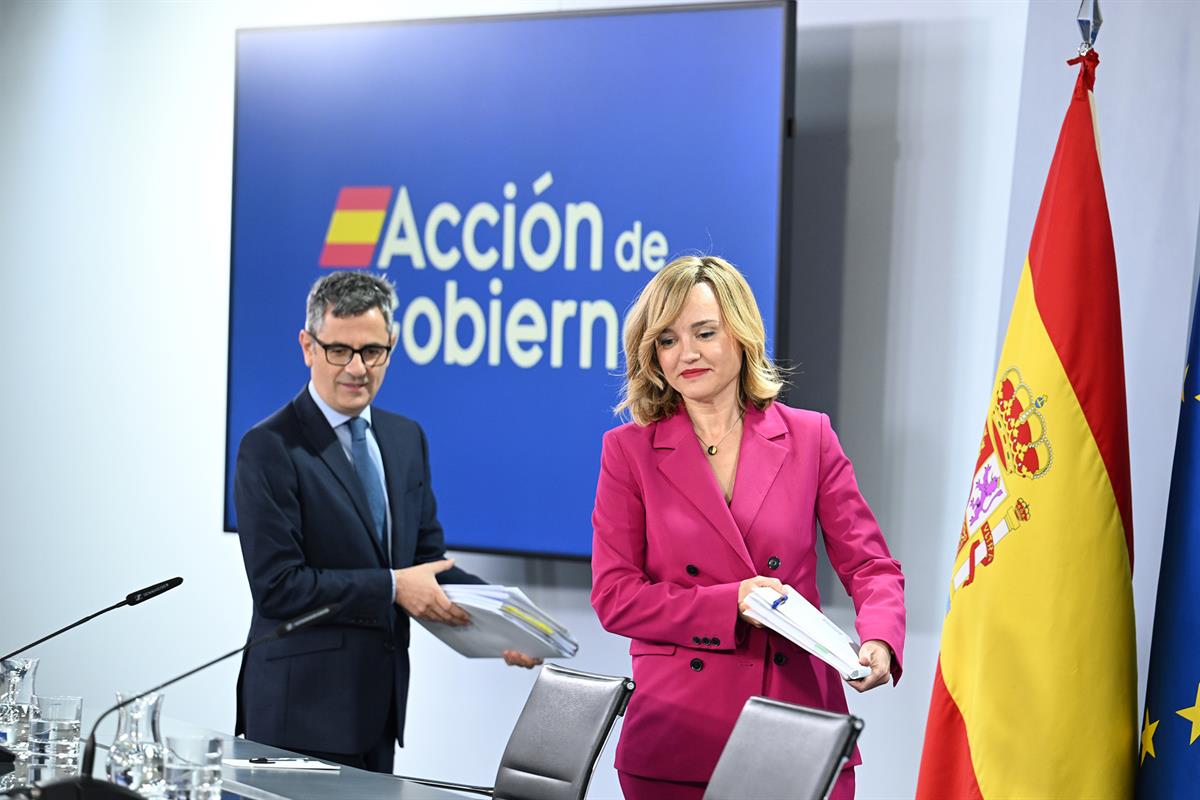 Pool Moncloa / Borja Puig de la Bellacasa
The Council of Ministers has promoted a second reform in the field of justice, that of the Organic Statute of the Public Prosecution Service. The Minister for the Presidency, Justice and Parliamentary Relations described the initiative as a "decisive step" in strengthening the autonomy and effectiveness of the Public Prosecution Service and stressed that the bill includes all the recommendations made by the Council of Europe's Group of States against Corruption (GRECO) and other institutions.
Prosecutors to investigate criminal cases
Once the new Statute has received the mandatory reports, it will be added to the draft Organic Law on Criminal Procedure, due to be approved by the Council of Ministers next summer, so that it can be processed in the General Courts as a single piece of legislation. Félix Bolaños explained that this organic law will incorporate, as an additional provision, the reform of the Public Prosecutor's Office "to ensure they are absolutely parallel", given that one of the keys to the law is that it will be prosecutors who will investigate criminal cases.
The minister recalled that Spain is the only country in Europe where examining magistrates are still responsible for investigating criminal cases. Following the change, the Public Prosecution Service will lead investigations, and a supervisory judge will ensure that the rights of those under investigation are respected. Bolaños added that, in fact, European prosecutors already investigate all cases involving EU financial interests or EU-related crimes in Spain.
The new investigative role of prosecutors is accompanied by other measures: the chief prosecutor will be responsible for appointing the prosecutor who will investigate each case; the Judicial Police will report to the Public Prosecution Service in their crime investigation functions; and the Public Prosecution Service will have the power to impose sanctions on those who do not cooperate with judicial investigations. Furthermore, as is currently the case with judges and magistrates, the grounds for abstention and recusal of prosecutors, who will not be able to prosecute if they have a close friendship or manifest enmity with any of the persons under investigation, will be detailed.
Strengthening autonomy
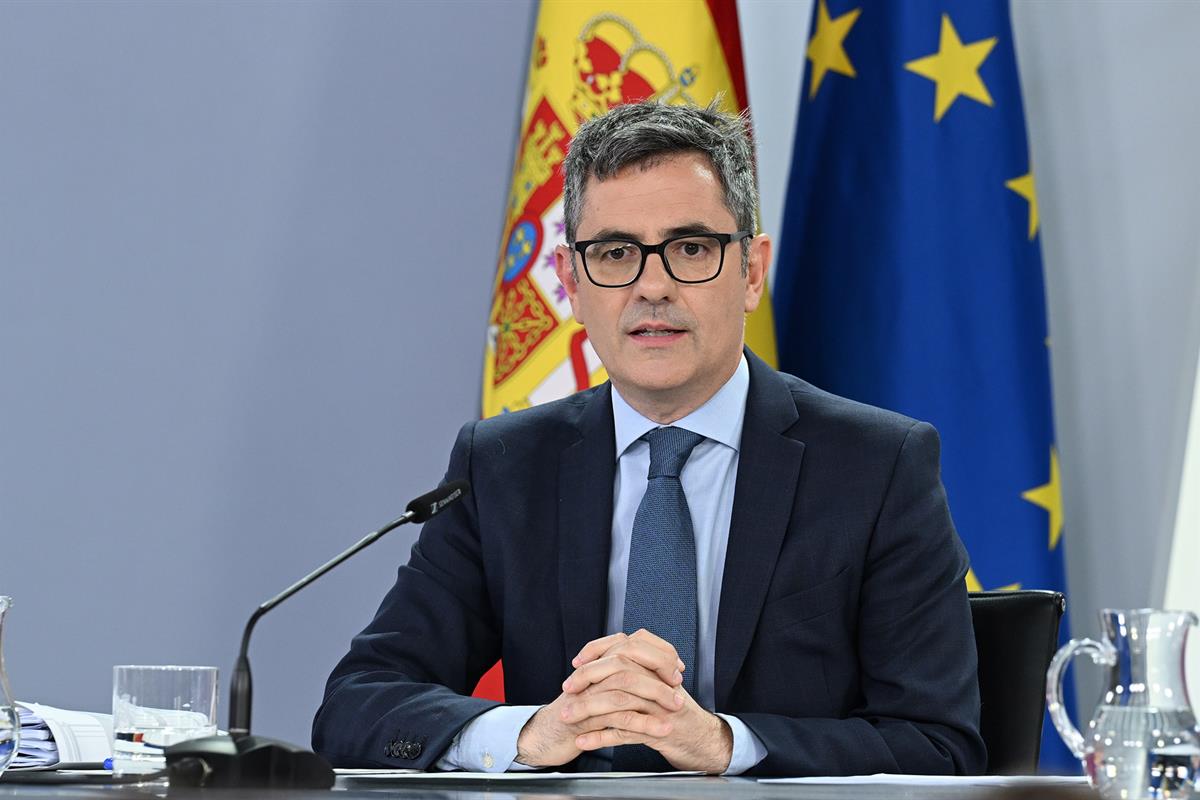 The Minister for the Presidency, Justice and Parliamentary Relations, Félix Bolaños, during his speech at the press conference after the Council of Ministers | Pool Moncloa / Borja Puig de la Bellacasa
In order to strengthen the autonomy of the Public Prosecution Service, the reform, first of all, decouples the term of office of the State Attorney General from that of the Government. The Attorney General will be appointed for five years and, when the Executive changes, will continue to serve until the end of that term. Furthermore, it will be a non-renewable mandate, unless the first mandate has lasted less than one year.
The Attorney General may resign before the end of his or her term of office if he or she resigns voluntarily or if there are any grounds for incompatibility or incapacity. The Minister for the Presidency, Justice and Parliamentary Relations stressed that a new government will not be able to dismiss the Attorney General due to a "loss of confidence" and that their dismissal on the grounds of serious or repeated non-compliance must only be carried out with a prior report from the General Council of the Judiciary.
Furthermore, in order to make interference in the decisions of the Public Prosecution Service impossible, the new Statute expressly prohibits the central government or the autonomous communities from asking the Public Prosecution Service to take any action in relation to a specific criminal procedure. Likewise, the possibility of the Attorney General being called to appear before the Council of Ministers is abolished. The reform establishes that communications between the government and the attorney general will be in writing, exclusively through the Minister for Justice, and public, and will be governed by the general interest.
More organisational autonomy
Félix Bolaños stressed that the new Statute also advances the organisational autonomy of the Public Prosecution Service, which will be responsible for the promotion of prosecutors and the disciplinary regime, two areas in which the Ministry of Justice currently plays a relevant role.
Furthermore, with the aim of making the new Prosecutor's Office work in a more collegiate manner and with more guarantees for the common interest, the role of the Board of Public Prosecutors is strengthened, which will now be able to establish a different criterion to that of the Prosecutor General by a majority of at least three-fifths of its members.
The Crown Prosecutor of the State will also be responsible for the registration of prosecutors' associations, which, as in the case of judicial associations, will not be able to receive private funding.
Cooperation with the European Public Prosecutor's Office
Finally, the Organic Statute regulates collaboration between the European and Spanish Public Prosecutor's Offices, since both will prosecute criminal cases in Spain, and establishes a system for resolving discrepancies. Ultimately, it will be The Crown Prosecutor of the State who decides, according to Félix Bolaños.
Distribution of 2.752 billion for active employment policies
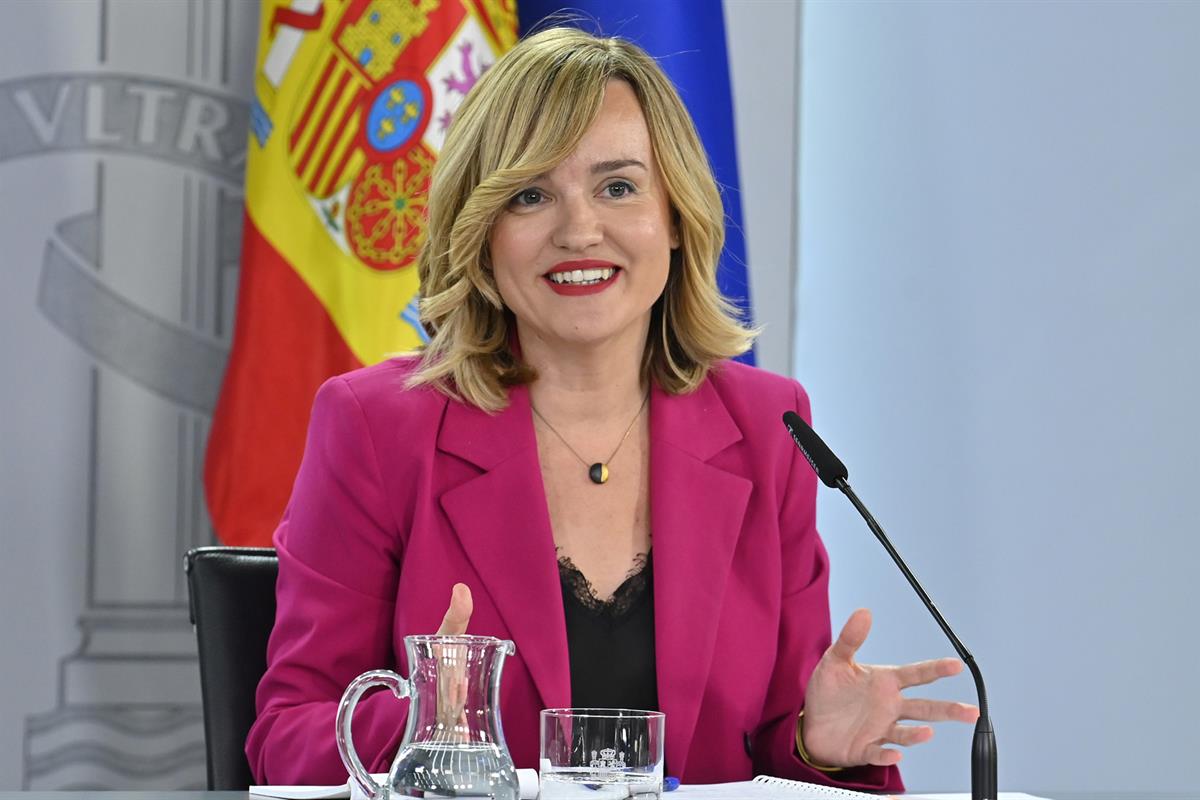 The Minister for Education, Vocational Training and Sports and Government Spokesperson, Pilar Alegría, during her speech at the press conference after the Council of Ministers | Pool Moncloa / José Manuel Álvarez
The Minister for Education, Vocational Training and Sports and Government Spokesperson, Pilar Alegría, has announced the approval of a "very important" distribution to the autonomous communities of 2.752 billion euros that will be used to finance active employment policy programmes in 2025. The final territorial distribution of these funds will be approved at the next Sectoral Conference on Employment and Labour Affairs in which the communities participate.
As the minister explained, this allocation will for the first time prioritise funds for training in areas of special interest, such as artificial intelligence, algorithms and risk prevention in the event of catastrophes and adverse weather events.
It also incorporates a multiannual funding framework until 2029 to give continuity to the implementation of active employment policies and provide stability to the National Employment System.
Appeal against the Government of Aragon's refusal to take in minors
The Executive has also agreed, in the Council of Ministers, to file an appeal before the Constitutional Court for the refusal of the Government of Aragon to comply with Royal Decree-Law 2/2025 collaborating in the reception of unaccompanied migrant children and adolescents. The spokesperson pointed out that the Aragonese government is the only one that has not sent information in due time and form on the number of minors cared for in its regional protection system, data that are essential to establish the reception capacity that corresponds to each community.
According to Alegría, the deadline for submitting this data was 31 March. The minister recalled that Royal Decree-Law 2/2025, which approves urgent measures to guarantee the best interests of children and adolescents in situations of extraordinary migratory contingencies, was approved on 18 March and, "as is the case with any Royal Decree-Law", it is obligatory for all territories.
Statement on the International Day against Homophobia, Transphobia, and Biphobia (IDAHOT)
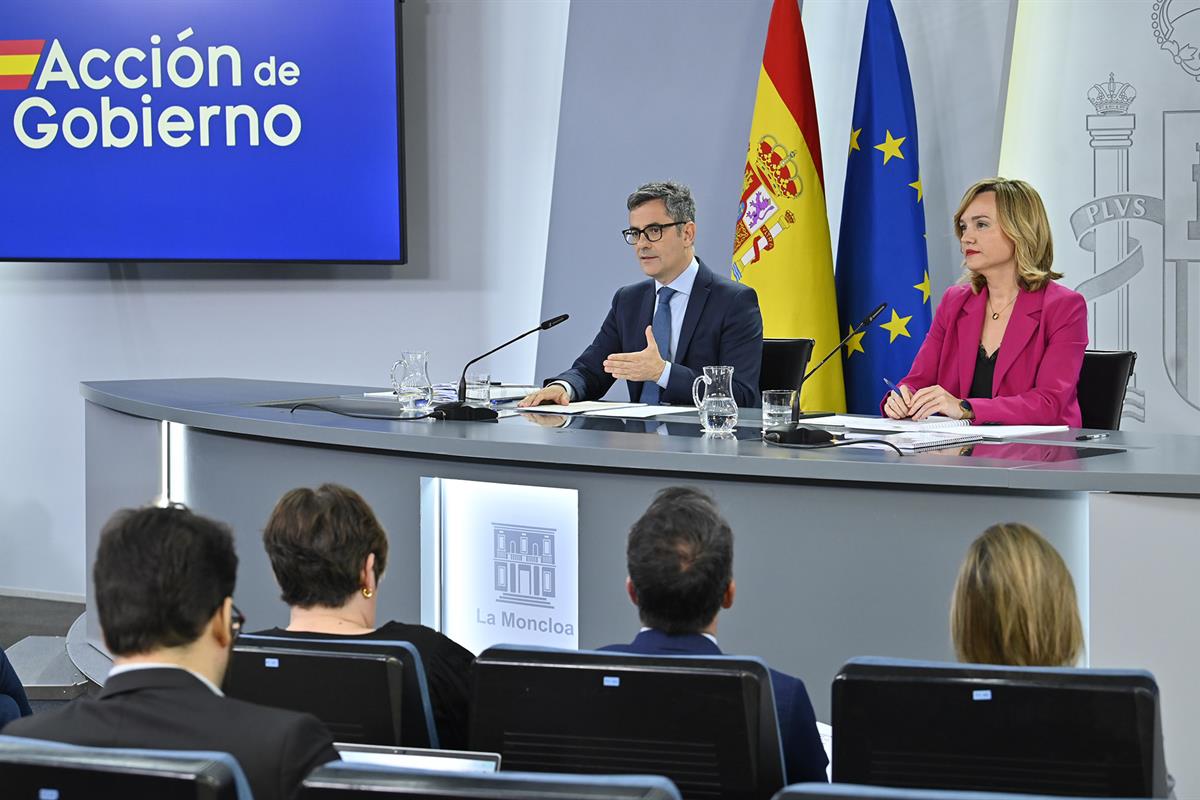 The Minister for the Presidency, Justice and Parliamentary Relations, Félix Bolaños, and the Minister for Education, Vocational Training and Sports and Government Spokesperson, Pilar Alegría, at the press conference after the Council of Ministers | Pool Moncloa / José Manuel Álvarez
Pilar Alegría ended her speech by announcing the approval of an institutional declaration on the occasion of the International Day against Homophobia, Transphobia, and Biphobia, a text that she described as "opportune" at "a time of rising violence against this collective". The text includes some of the challenges faced by LGBTI+ people, such as the increase in online hate speech and discrimination in the workplace, as well as the progress that has made Spain one of the benchmarks in terms of LGTBI+ rights.
Spain is among the countries with the best legal and political environment for the protection of these rights, fourth in ILGA-Europe's 'Rainbow Map 2024' ranking. It was also a pioneer in the legalisation of fully equal same-sex marriage with a law that will be 20 years old next July.
With this institutional declaration, the Executive reiterates its commitment to the real and effective equality of LGTBI+ people and the defence of their rights. "The Government of Spain is committed to policies of progress and, above all, to continue adopting the necessary measures to put an end to LGTBIphobia", Alegría concluded.
Non official translation