Luis Planas assesses the CAP agreement: "We have managed to ensure it remains a European policy"
News - 2026.10.27
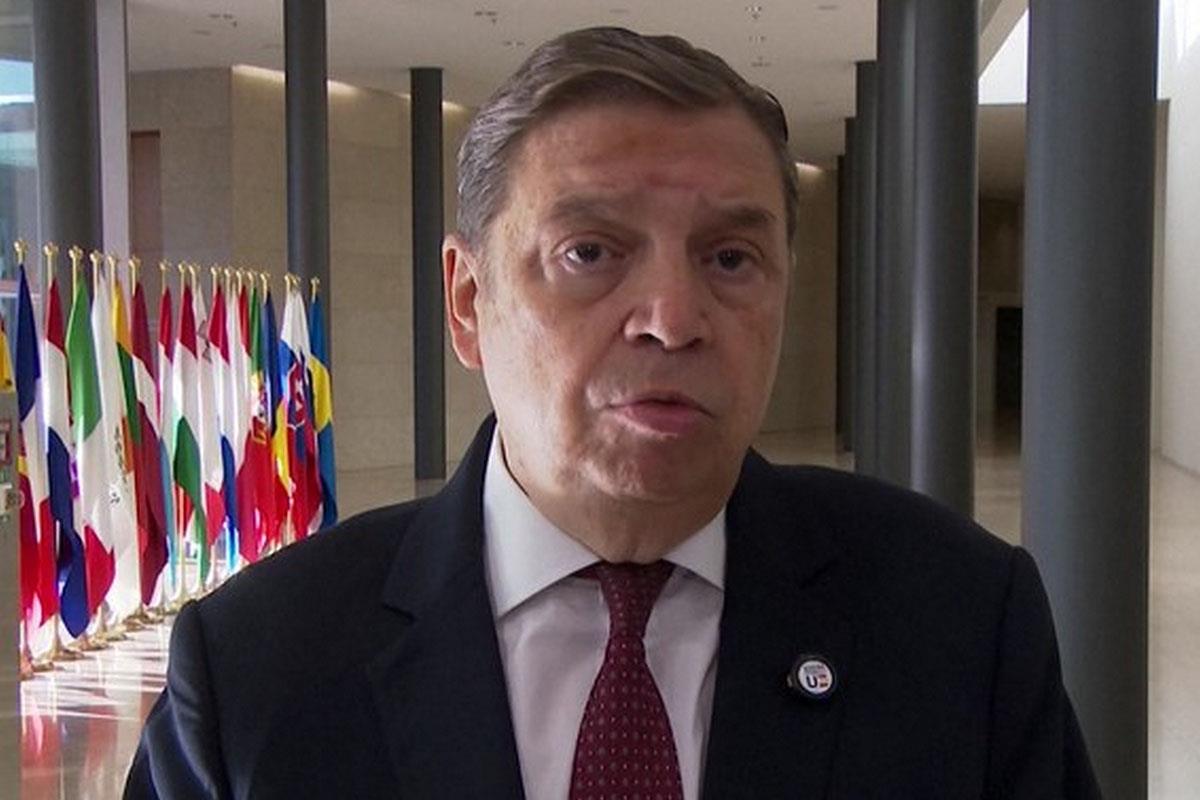 The Minister for Agriculture, Fisheries and Food, Luis Planas, attends the meeting of the EU Council of Agriculture Ministers



Following a 12-hour meeting, the European Union's Council of Agriculture Ministers reached a partial general agreement - unanimously supported by all 27 member states - regarding the regulation that establishes the conditions for the implementation of support under the Common Agricultural Policy (CAP).
The Minister for Agriculture, Fisheries and Food, Luis Planas, has pointed out that "we have managed to keep the CAP as a European policy". "We have achieved a fundamental objective: what appeared vague in the European Commission's initial proposal of July 2025 is now a robust, European regulation," he explained.
The agreement was reached shortly after 10 pm on Monday 26 October. The minister says he is satisfied with the outcome because "this agreement reflects the main points advocated by Spain and agreed with the regional governments, professional agricultural organisations and agri-food cooperatives".
This is a partial agreement, as the regulation must be adopted through the co-decision procedure with the European Parliament, with which negotiations will begin in January 2027. Furthermore, it depends on the agreement on the multiannual financial framework for 2028-2034 to be reached by the heads of government at the European Council, which has two meetings scheduled before the end of the year, and which will be decisive for the funding of the future CAP.
Planas recalled that at the start of these negotiations, in July 2025, the Government of Spain proposed an agreement centred on three points: a strong EU agricultural policy with an adequate budget; a CAP that is fully European and flexible in its national implementation; and preventing its renationalisation. This proposal received the unanimous support of the regional governments, the four professional agricultural organisations (Asaja, COAG, UPA and Unión de Uniones) and Cooperativas Agro-alimentarias.
The agreement reached last night covers the second and third points, whilst the budgetary aspect remains outstanding; this will be decided by the Heads of State or Government at the European Council.
The agreement reached covers aspects such as:
- A dedicated regulation for the CAP, with sufficient tools to support Spanish farmers.
- A policy focused on income support, whilst also being a socially-oriented reform. This new CAP consolidates the support model designed to sustain the profitability of farmers.
- Young people are central to the CAP, which promotes:
- A reform that establishes conditions for support regarding risk management and crisis management.
- A CAP that underpins environmental architecture. Without environmental sustainability, there can be no business sustainability. Eco-schemes are being consolidated, albeit under new names; this was one of the new features of the 2023-2027 CAP and has been widely implemented in Spain across more than 19 million hectares.
- A reform that strongly supports the sectors and their diversity. The livestock and agricultural sub-sectors facing competitive difficulties will receive associated aid to boost their profitability. Sector-specific support for the fruit and vegetable, wine and beekeeping sectors will also continue.
- The agreed text prioritises productive and environmental adaptation investments, as has been the case during this period, such as those aimed at new farms, investments to improve the supply of agricultural products, or those relating to irrigation. Furthermore, this CAP will channel the investments that farmers need to strengthen their businesses and build a more competitive, profitable and resilient sector. Organisations that process and market agri-food products will also be able to benefit from this support.
- This reform supports rural areas, areas with natural constraints and areas facing specific disadvantages. It also supports the LEADER initiatives (to promote rural development), the Agricultural Knowledge and Innovation System (AKIS) and the European Innovation Partnership for Agricultural Productivity and Sustainability (EIP-Agri), which is committed to promoting operational groups that develop innovative agricultural projects.
- A strategy for generational renewal that will be strengthened in Spain.
- Support for new entrants to the sector.- Initial funding for new entrants.
- Support for farm succession/replacement.
Following negotiations within the EU Council of Ministers for Agriculture, it has been agreed to set a maximum limit on aid for members of co-operative enterprises, as well as a degressivity mechanism (a reduction in aid once a certain threshold is reached).
Furthermore, the groundwork has been laid for a smooth transition from the current CAP support schemes to those to be introduced from 2028 onwards.
Non official translation